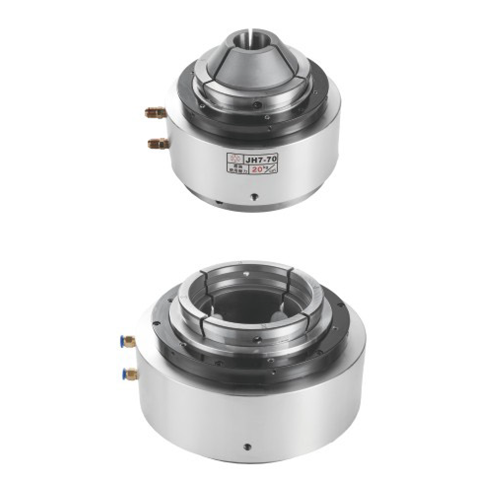
Air / Hydraulic Rotary Collet Chuck
A front-mount rotary collet chuck used when the clamping unit must work close to the spindle nose and reduce overhang.
Pneumatic and hydraulic collet chuck solutions for repeat clamping and small-part workholding.
KORRETTO collet chucks and clamping heads are used when the workpiece is better held by a collet-type mechanism instead of standard chuck jaws. This range includes front-mount pneumatic / hydraulic collet chucks, fixed collet chucks, high-speed pneumatic collet chucks, hydraulic rotary collet chucks, pull-back collet chucks and passive collet chuck units for turning, fixtures and dedicated machines.
A front-mount rotary collet chuck used when the clamping unit must work close to the spindle nose and reduce overhang.
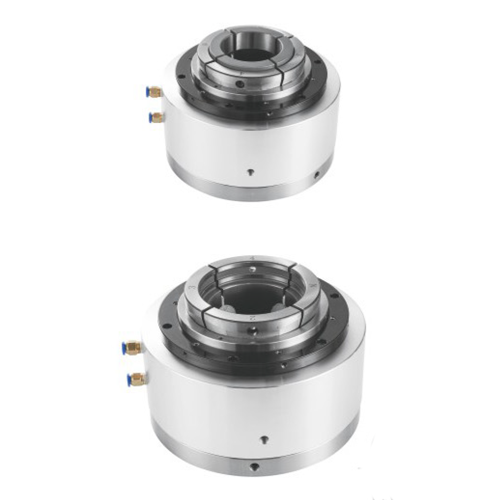
Used when normal spring or air release is not enough and the process needs a more positive release action.
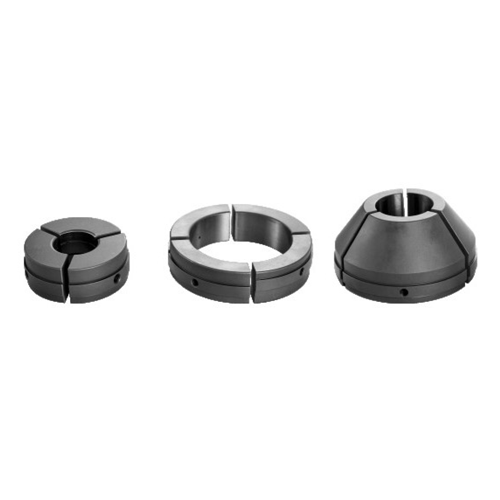
Used as supporting components for compatible collet chuck systems. Confirm model and jaw interface before selection.
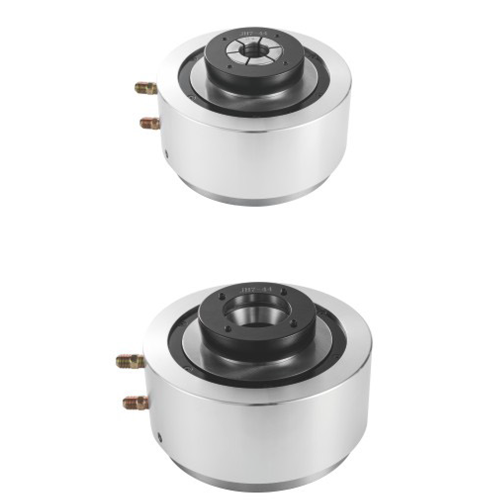
Designed for faster changeover than standard clamping units. Confirm collet type, machine interface and actuation method.
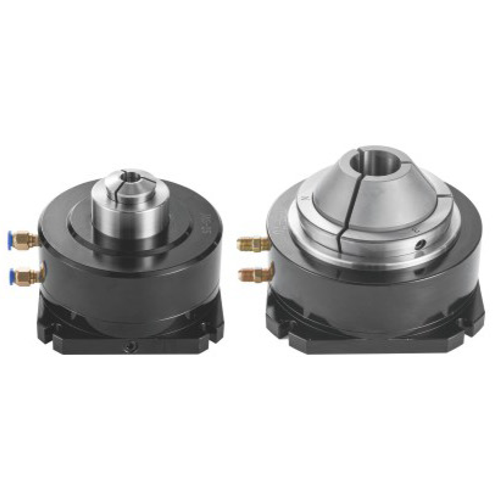
A fixed-station collet chuck used when the workpiece does not rotate with the spindle.
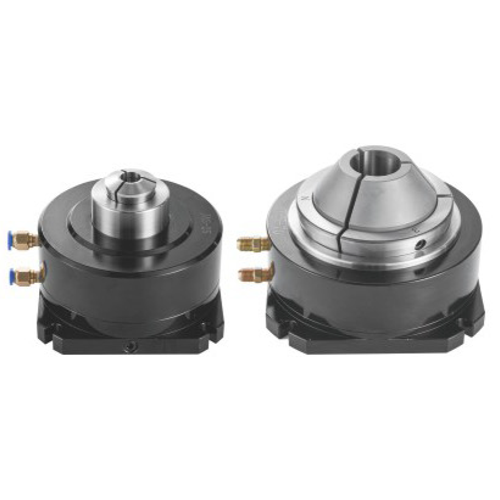
JHS hydraulic fixed collet chuck for stationary hydraulic clamping. It is not the JAS pneumatic fixed collet chuck and is selected when hydraulic force and repeat positioning are required on a non-rotating station.
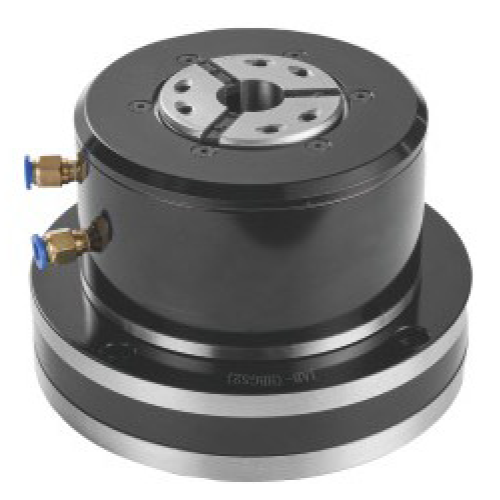
A pneumatic rotary collet chuck for applications requiring fast actuation and clean air operation.
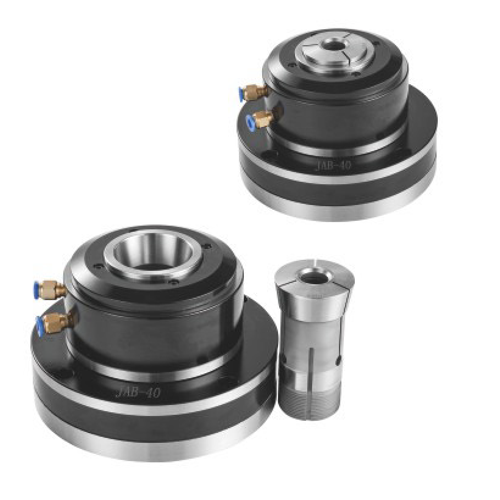
The pull-back action helps seat the workpiece against a locating surface during clamping.
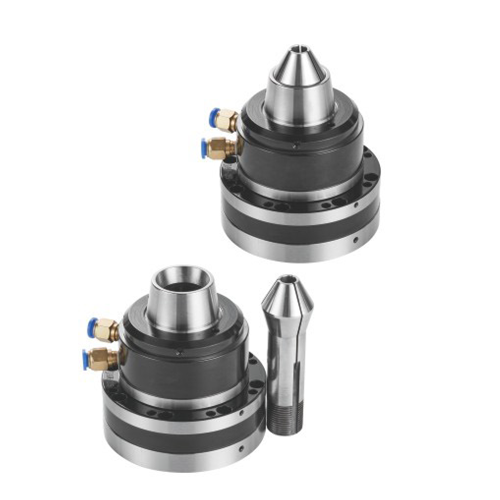
Used where speed, repeatability and clean pneumatic actuation are important.
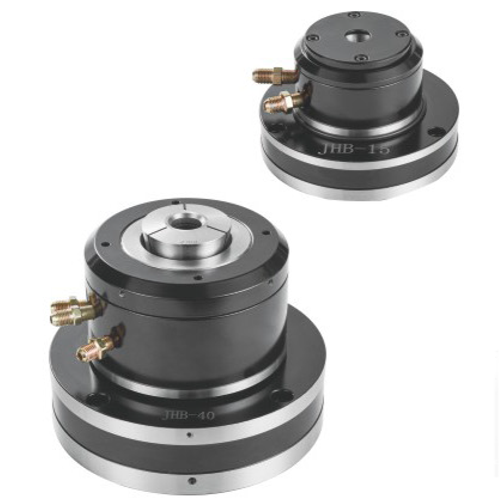
A hydraulic rotary collet chuck for applications requiring more force than pneumatic actuation.
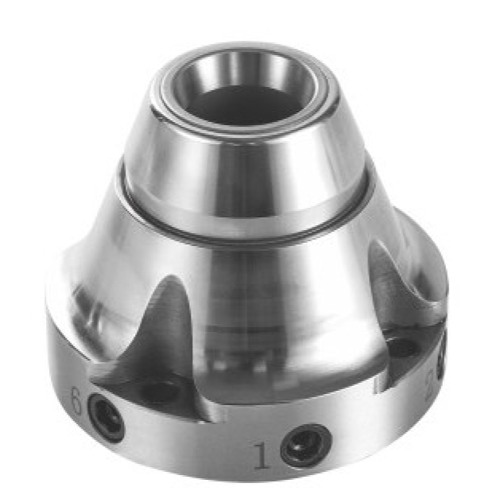
Used where the clamping action is driven by the machine or an external mechanism rather than built-in actuation.
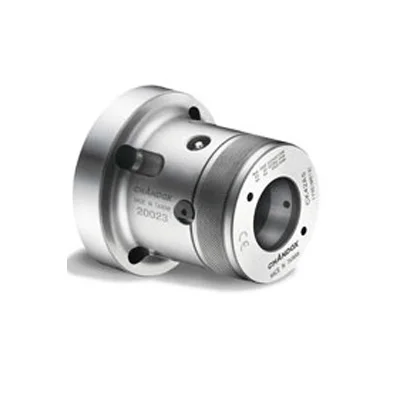
A passive collet chuck option for applications where the push direction and installation space are key selection factors.
| Requirement | Related solution |
|---|---|
| Higher-force jaw clamping | Hydraulic Chucks |
| Clean air-actuated jaw clamping | Pneumatic Chucks |
| Thin-wall or surface-sensitive parts | Rubber-Flex Collets / Diaphragm Chucks |
| Internal bore location | Expanding Mandrels |
| General manual lathe clamping | Manual Chucks |
A collet chuck is used to hold round or near-round workpieces with a collet-type clamping mechanism. It is common for bar stock, small parts and repeat clamping where surrounding contact is preferred.
A jaw chuck clamps with movable jaws. A collet chuck clamps through a collet or sleeve-type mechanism, usually providing more surrounding contact over the workpiece diameter.
Choose a pneumatic collet chuck for clean air operation and fast clamping when the required force is moderate. Choose a hydraulic collet chuck when higher clamping force is required.
A fixed collet chuck is mounted to a stationary fixture or table and does not rotate with the spindle. It is often used in dedicated machines or secondary operations.
A rotary collet chuck is installed on a rotating spindle or rotary unit. It is used for turning or other operations where the workpiece rotates during machining.
A front-mount design can reduce overhang and make installation or maintenance easier when space around the spindle nose is limited.
A pull-back collet chuck pulls the workpiece toward a locating surface during clamping. It is useful when axial seating and consistent length location are important.
They can be, depending on wall thickness, material and contact length. Rubber-flex collets or diaphragm chucks should also be reviewed for deformation-sensitive parts.
Provide the workpiece drawing, diameter range, material, machine model, spindle or fixture interface, actuation method, speed and required clamping force.
It depends on the collet type and clamping range. Usually, different diameters require different collets or sleeves.
Some collet chuck systems use matching jaws, sleeves or accessories. Model compatibility should be confirmed before ordering.