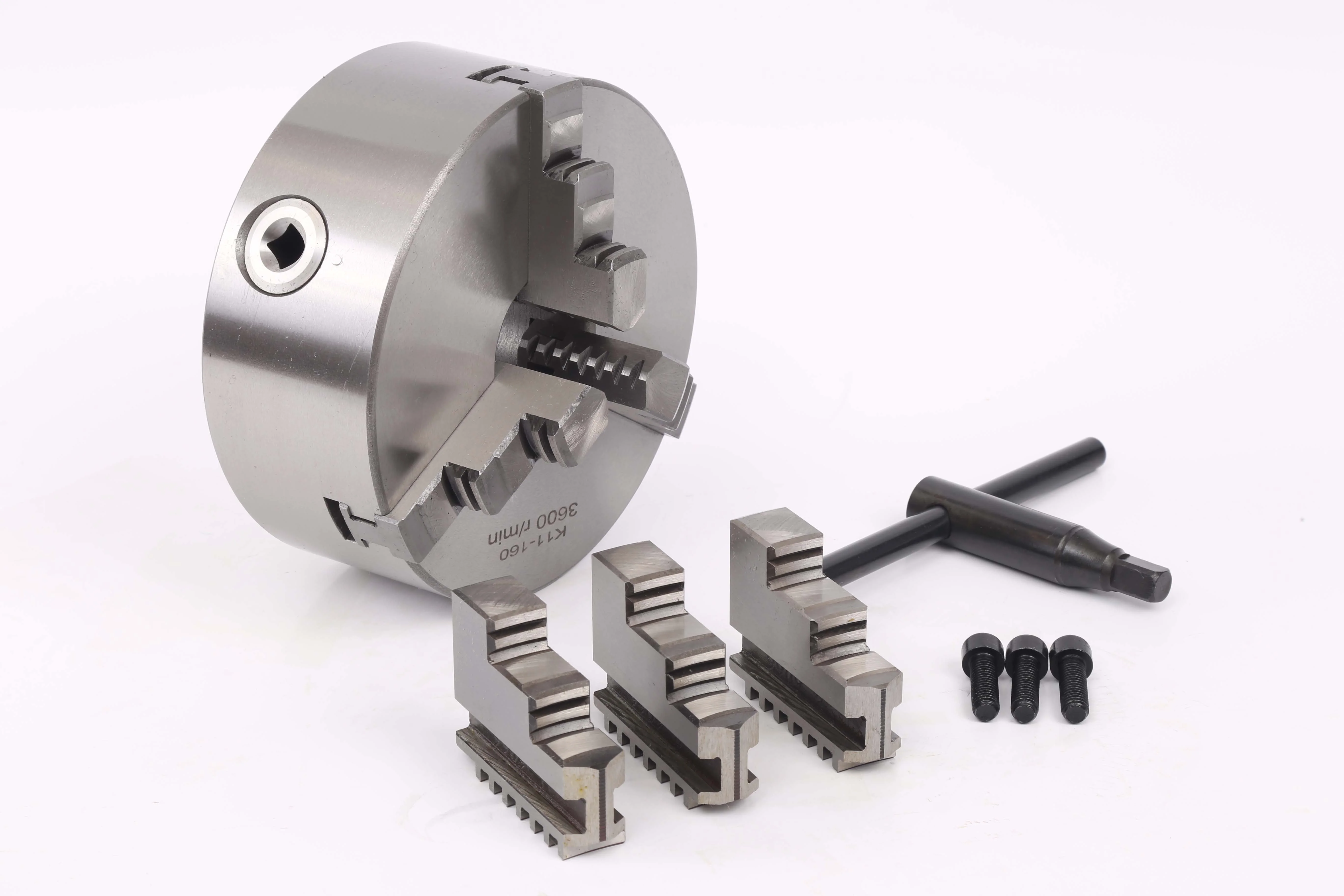
3-Jaw Self-Centering Chuck, Plain Back
A common manual lathe chuck for fast clamping of rotational parts. Check chuck diameter, adapter plate, mounting dimensions, jaw travel and spindle nose before selection.
Manual lathe chucks for general turning, setup work and small-batch machining.
KORRETTO manual chucks cover 3-jaw self-centering chucks, 4-jaw independent chucks, 2-jaw chucks, 6-jaw chucks, heavy-duty chucks, precision adjustable chucks, extra-large chucks and welding/glass chucks. They are suitable for lathe workholding, trial machining, repair work, small-batch production and applications where operators need direct adjustment at the machine. For automated clamping or tighter cycle-time control, hydraulic chucks and pneumatic chucks can be evaluated together with the manual chuck option.
Choose a manual chuck by jaw type, centering method, spindle nose connection and workpiece shape. 3-jaw and 4-jaw chucks cover most general turning tasks; 6-jaw, precision adjustable, heavy-duty, extra-large and welding/glass chucks are used when the workpiece is thin-walled, heavy, large, fragile or difficult to hold with a standard chuck.
A common manual lathe chuck for fast clamping of rotational parts. Check chuck diameter, adapter plate, mounting dimensions, jaw travel and spindle nose before selection.
/IMG_9574.JPG)
Suitable for machines already using A-type spindle nose interfaces. Confirm spindle nose number, mounting holes, chuck size and gripping range.
/IMG_9571.JPG)
Designed for projects where the spindle nose number and connection dimensions must match an existing C-type machine interface.
/主打1.webp)
Used for replacement or matching on machines with D-type spindle noses. Confirm spindle nose number, chuck size and workpiece range.
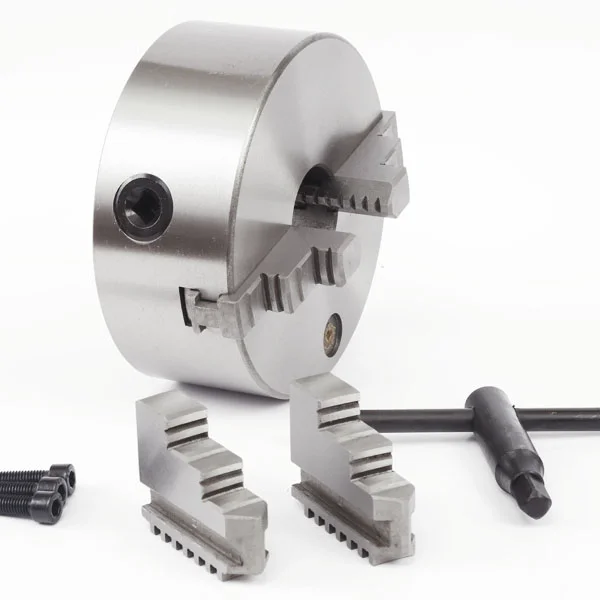
Suitable when a standard 3-jaw chuck cannot hold the workpiece properly. Jaw design should follow the part profile and clamping surface.
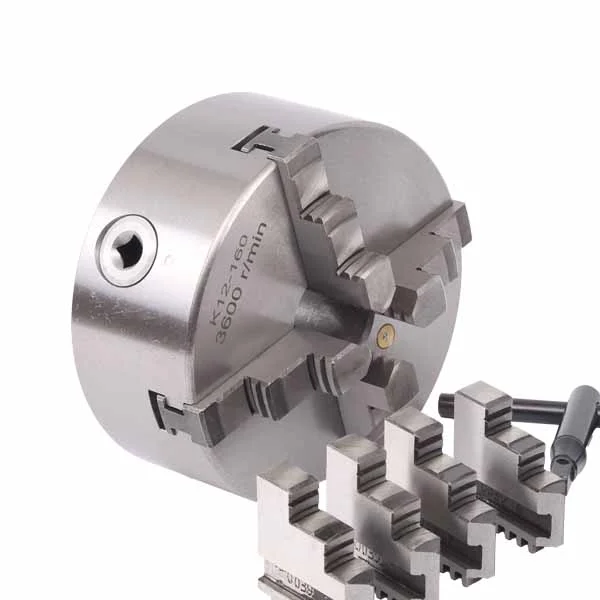
A faster self-centering alternative to independent 4-jaw adjustment when the workpiece shape allows synchronized clamping.
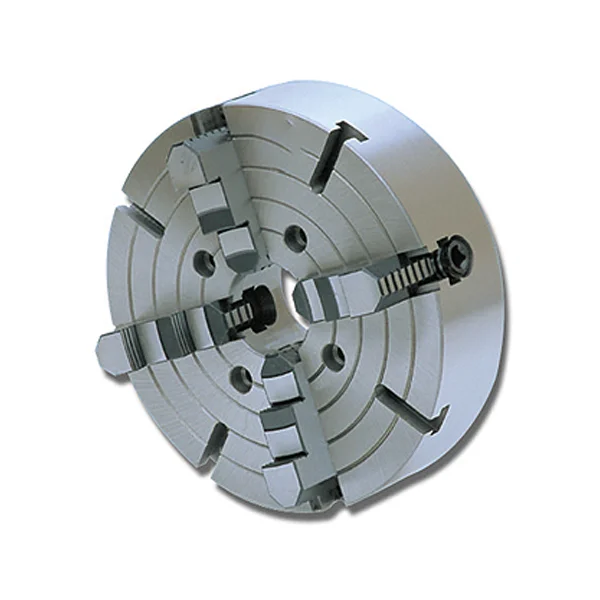
Each jaw can be moved independently for offset or irregular workpieces. Check adapter plate, spindle nose, gripping range and workpiece weight.
Used when independent jaw adjustment is required on a machine with an A-type spindle nose.
Suitable for workpieces that need individual jaw adjustment and accurate alignment to a C-type spindle nose.
Used for manual centering of non-round or offset workpieces on D-type spindle nose machines.
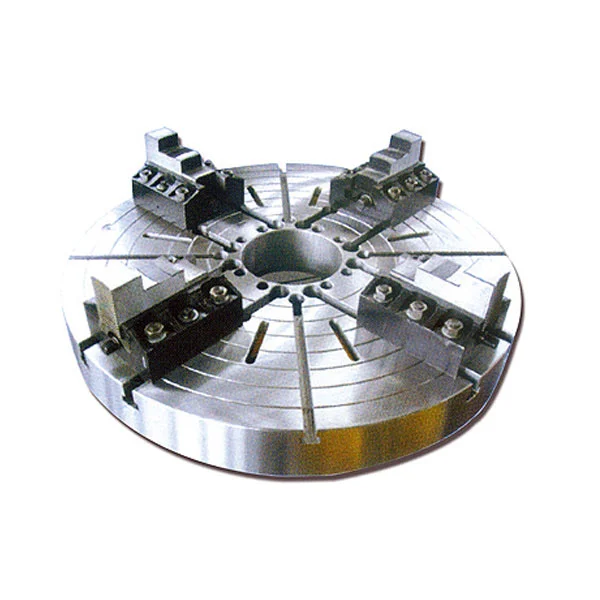
Designed for high-load turning. Confirm machine load capacity, chuck weight, workpiece weight, spindle nose and permissible speed.
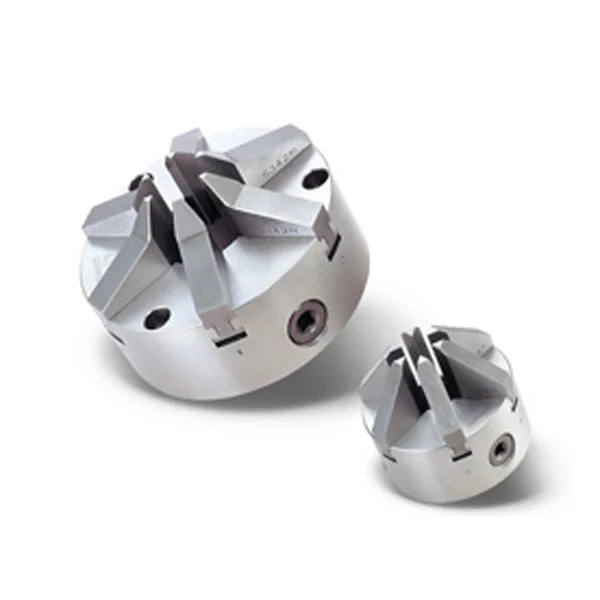
Six jaws distribute clamping force over more contact points. It can be combined with soft jaws or jaw machining for thin-wall workholding.
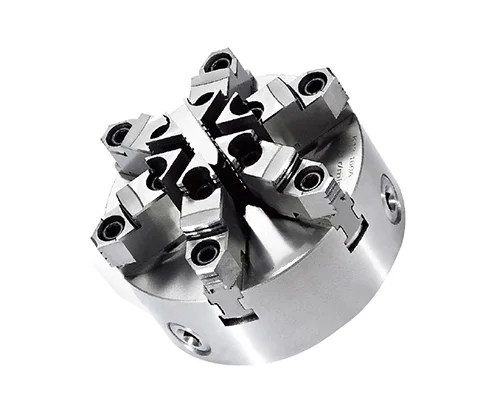
Used when repeatability and fine adjustment are more important than a standard general-purpose manual chuck.
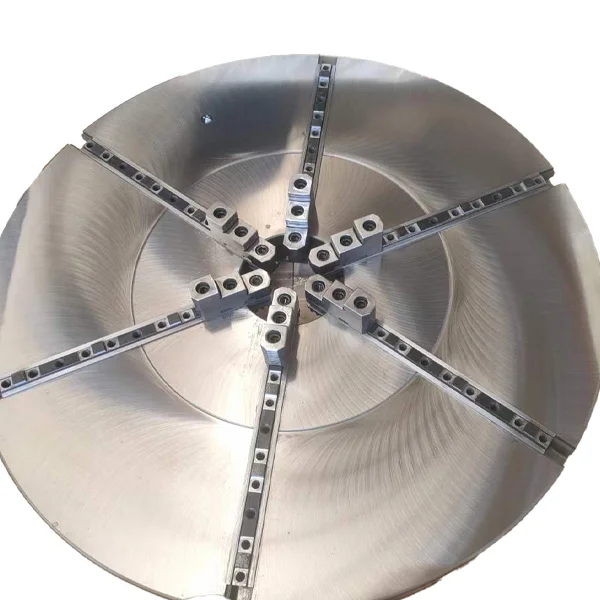
For large-diameter and heavy workpieces. Confirm machine capacity, installation space, workpiece weight and safe operating speed.
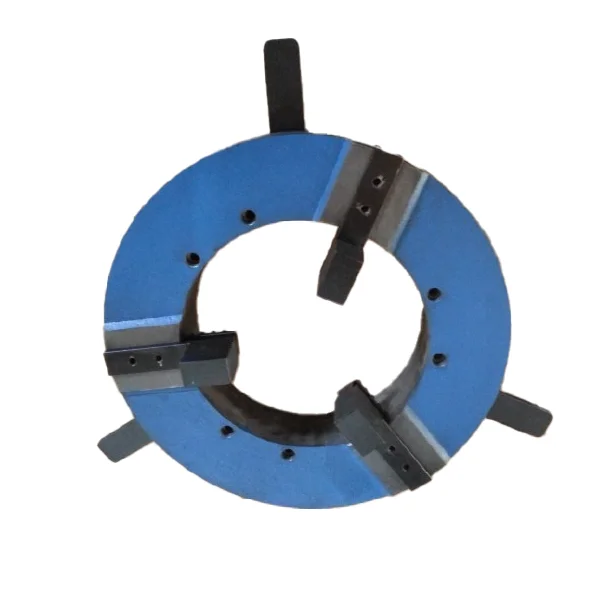
Used when a standard chuck cannot hold the workpiece without marking or instability. Workpiece drawings and contact surface requirements should be reviewed before selection.
Send the workpiece drawing, machine model, spindle nose information and expected production volume. We can help compare 3-jaw, 4-jaw, 2-jaw, 6-jaw, precision adjustable and heavy-duty chuck options, and also check whether a hydraulic or pneumatic chuck is more suitable for your production plan.
Submit Your Project- Trial machining, repair work and small-batch production.
- Jobs where direct wrench adjustment is acceptable.
- Machines without hydraulic or pneumatic clamping systems.
- Workpieces that need simple, robust and easy-to-maintain lathe workholding.
- Automated clamping or short cycle times: check Hydraulic Chucks or Pneumatic Chucks.
- Internal bore location: check Expanding Mandrels.
- Thin-wall parts or sensitive surfaces: check Rubber-Flex Collets, Collet Chucks or Diaphragm Chucks.
- Indexing or multi-angle machining: check Indexing Chucks or Rotary Tables.
| Requirement | Start with |
|---|---|
| Round bar, tube or hex stock with simple setup | 3-Jaw Self-Centering Chuck |
| Eccentric or irregular workpiece requiring manual alignment | 4-Jaw Independent Chuck |
| Square or four-sided workpiece with faster centering | 4-Jaw Self-Centering Chuck |
| Symmetrical shaped part or special jaw profile | 2-Jaw Self-Centering Chuck |
| Thin-wall ring or sleeve where force must be distributed | 6-Jaw Self-Centering Chuck |
| Large-diameter or heavy workpiece | Heavy-Duty 4-Jaw Chuck / Extra-Large Chuck |
| Better setup runout control | Precision Adjustable Chuck |
| Welding fixture or fragile surface | Welding / Glass Chuck |
| Requirement | Related solution |
|---|---|
| Automated clamping and repeatable force | Hydraulic Chucks |
| Clean compressed-air clamping | Pneumatic Chucks |
| Internal bore location | Expanding Mandrels |
| Thin-wall external clamping | Rubber-Flex Collets / Collet Chucks / Diaphragm Chucks |
| Multi-angle or indexed machining | Indexing Chucks / Rotary Tables |
| Milling workholding | Machine Vises |
A 3-jaw chuck usually self-centers round workpieces and is faster for general turning. A 4-jaw independent chuck allows each jaw to be adjusted separately, which is useful for eccentric, square or irregular workpieces. A 4-jaw self-centering chuck is used when four-point synchronized clamping is needed.
A 2-jaw chuck is used for symmetrical shaped parts, special profiles or applications where custom jaws are required. It is often selected when a standard 3-jaw chuck cannot contact the workpiece correctly.
Check the chuck diameter, through hole, jaw stroke, mounting dimensions, maximum speed and spindle nose. For replacements, the existing machine interface and adapter plate should be confirmed before ordering.
A 4-jaw independent chuck requires manual adjustment and measurement during setup. It is useful for irregular parts, but alignment time should be considered when planning production.
Confirm the spindle nose, adapter plate, mounting bolts, locating surfaces, jaw numbering and runout after installation. Installation and maintenance should follow the machine and chuck documentation.
No. Welding and glass chucks are used for special contact surfaces, positioning or fragile workpieces. The workpiece drawing, contact area and protection requirements should be reviewed before selection.