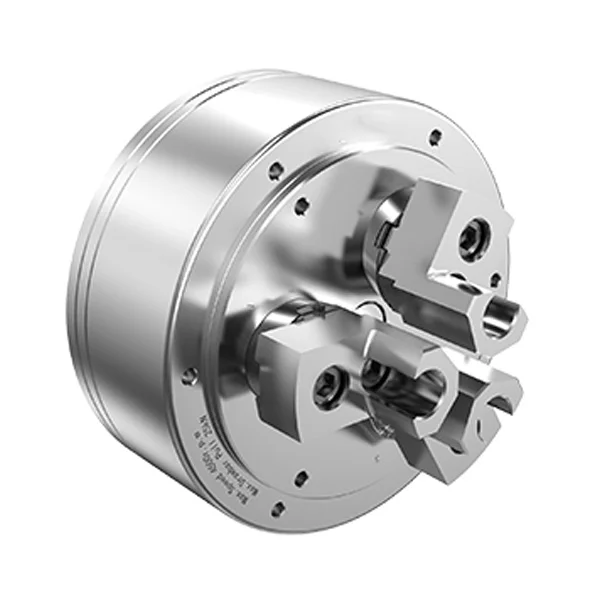
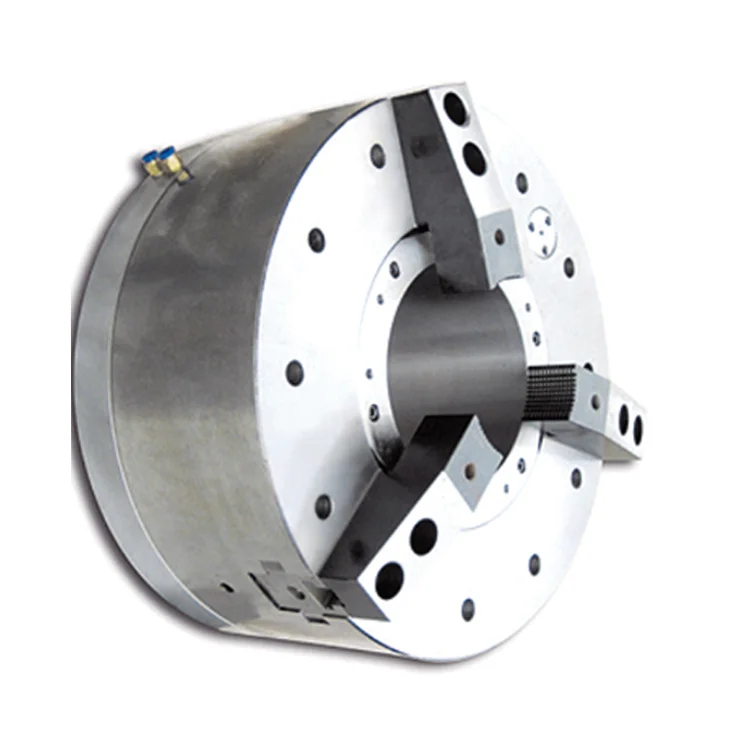
Pull-Back Hydraulic Chuck
The pull-back action helps pull the workpiece toward the locating surface during clamping. It is used when axial position consistency matters.
Special hydraulic chuck solutions for pull-back clamping, floating compensation, face clamping and pipe-thread workholding.
KORRETTO special hydraulic chucks are designed for workpieces that cannot be held reliably by standard hydraulic jaw chucks. This range includes pull-back hydraulic chucks, ball-joint hydraulic chucks, compensating hydraulic chucks with floating jaws, finger / face-clamping chucks and oil pipe thread chucks. They are used when the process requires axial pull-down, end-face location, compensation for irregular surfaces, long-shaft support, reduced outside-diameter interference or pipe-thread machining.
The pull-back action helps pull the workpiece toward the locating surface during clamping. It is used when axial position consistency matters.
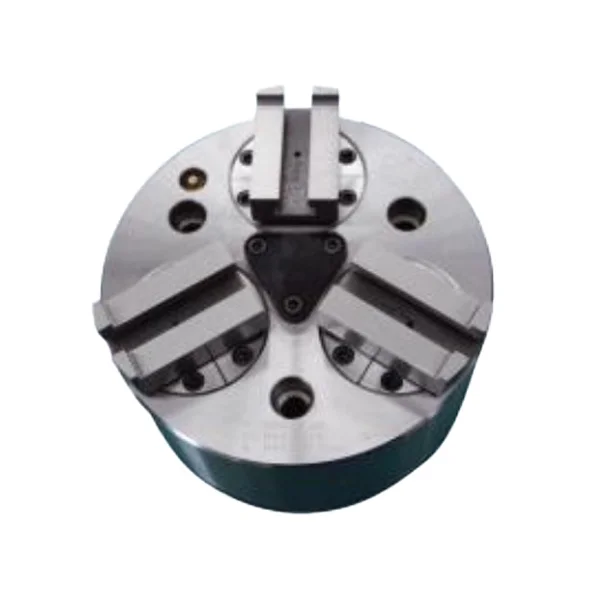
The ball-joint structure helps support workpieces where standard radial clamping cannot provide stable alignment alone.
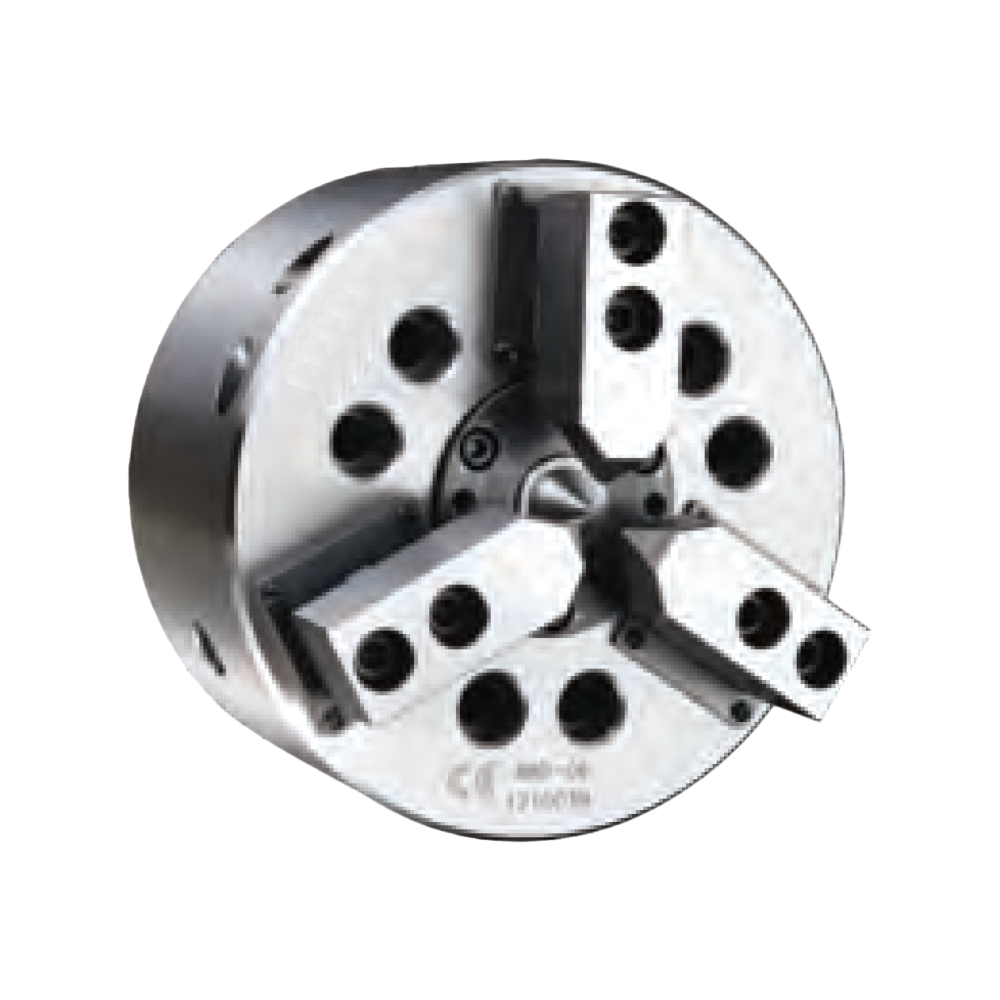
Floating jaws allow the clamping points to adapt to uneven or irregular surfaces, helping support castings, forged blanks and out-of-round workpieces more evenly.
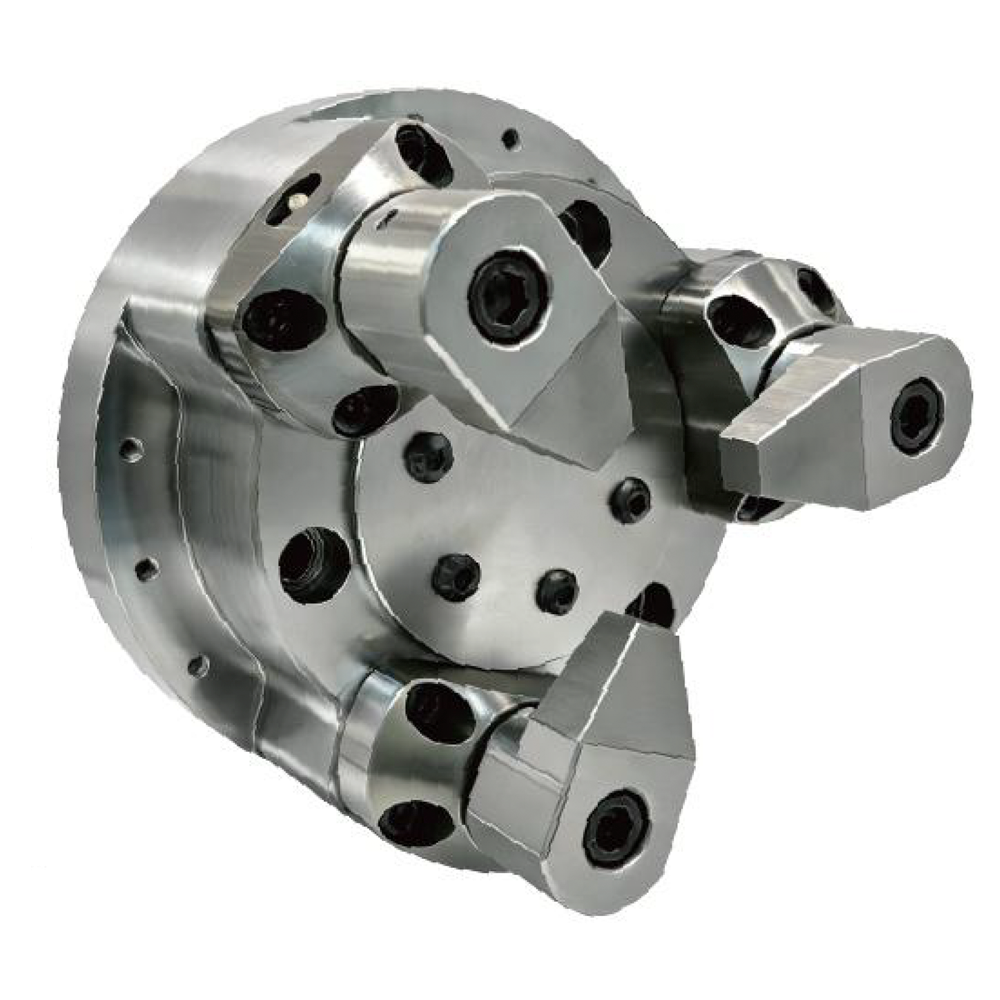
Finger-type clamping holds the part from the end face or limited contact areas, reducing interference with the outer profile.
This product is used for oil pipe thread machining. “Front-mounted pneumatic” describes the structure; “oil pipe thread chuck” describes the application.
| Requirement | Start with |
|---|---|
| Need axial pull-down or length control | Pull-Back Hydraulic Chuck |
| Long shaft or center-supported workpiece | Ball-Joint Hydraulic Chuck |
| Irregular casting or out-of-round blank | Compensating Hydraulic Chuck with Floating Jaws |
| End-face clamping or limited outside-diameter access | Finger / Face-Clamping Chuck |
| Oil pipe or tube thread machining | Oil Pipe Thread Chuck |
| Standard round workpiece production | Hydraulic Chucks |
A standard hydraulic chuck is usually selected by jaw number, through-hole size and clamping range. A special hydraulic chuck solves a specific workholding problem, such as pull-back location, floating compensation, face clamping, pipe-thread machining or long-shaft support.
They are often used to describe similar axial seating concepts. The exact structure should be confirmed by the chuck drawing, drawbar stroke and locating method.
A compensating chuck is used when the workpiece surface is uneven, irregular or out of round. The floating jaw mechanism helps the jaws adapt to the workpiece surface.
Some suppliers may describe this type of workholding as a floating-jaw chuck. On this page, we use “compensating hydraulic chuck with floating jaws” to describe the structure more clearly: the jaws can adapt to uneven or irregular workpiece surfaces during clamping.
A finger chuck is used when the part must be held by limited contact points or by the end face, especially when outside-diameter clamping causes interference.
Send the workpiece drawing, material, clamping surface, locating method, spindle nose, through-hole requirement, drawbar stroke, rotary cylinder force and machining process.