Type D short-taper camlock 4-jaw independent chuck for manual lathe workholding.
4-Jaw Independent Chuck, Type D
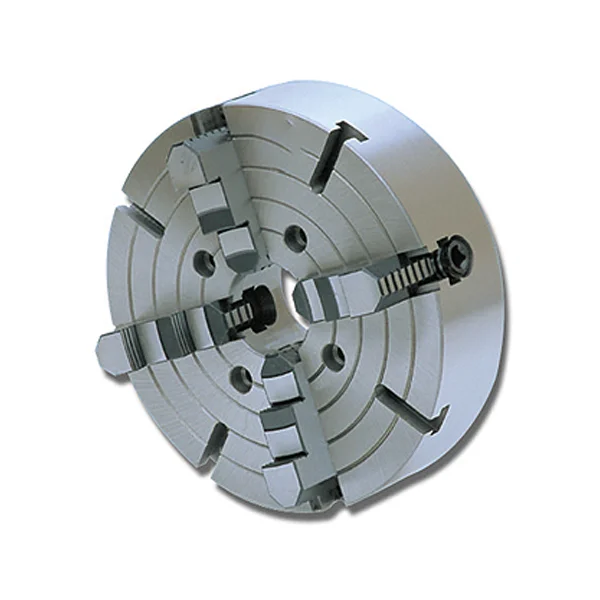
KORRETTO 4-Jaw Independent Chuck Type D is a manual independent chuck with four separately adjustable jaws and a short-taper camlock mounting interface. It is used for non-round, irregular or offset workpieces where individual jaw setting is required.
Product Overview
The Type D 4-jaw independent chuck supports flexible workpiece positioning on machines that use a short-taper camlock mounting arrangement. Each jaw can be adjusted independently, making it suitable for irregular shapes, castings, forgings, square parts and special offset setups.
Selection should confirm the chuck size, short-taper camlock spindle interface, mounting dimensions, clamping range, workpiece geometry, required adjustment accuracy and machine compatibility.
Key Features
| Feature | Description |
|---|---|
| Four independent jaws | Allows each jaw to be set separately for special workpiece shapes. |
| Type D short-taper camlock mounting | Designed for machines requiring a short-taper camlock interface. |
| Suitable for irregular workpieces | Useful for cast, forged, square, rectangular or eccentric parts. |
| Manual adjustment flexibility | Provides control for setup work where self-centering action is not suitable. |
| Different from heavy-duty and extra-large chucks | This page covers the Type D independent chuck interface. |
Typical Applications
- Short-taper camlock manual lathe setups
- Irregular workpiece clamping
- Square and rectangular parts
- Offset turning operations
- Castings and forgings
- Individual jaw positioning work
Technical Data and Dimensions
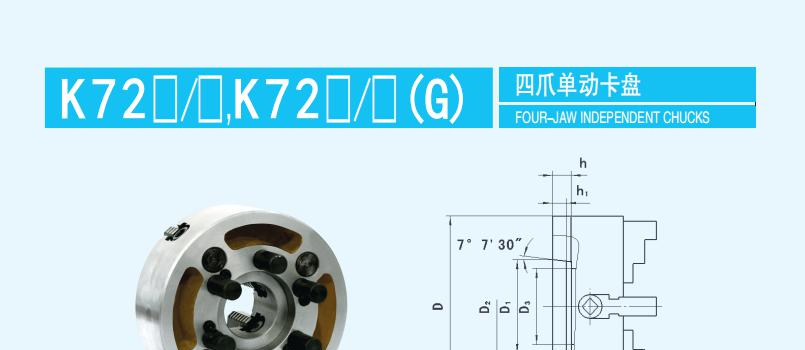
Use the drawing and parameter table to check chuck size, spindle interface, mounting dimensions, jaw travel, net weight and machine compatibility.
| Size D | Spindle Nose No. | D1 | D2 | D3 | H | H1 | h | h1 | z-d | Net Weight (kg) |
|---|---|---|---|---|---|---|---|---|---|---|
| 160 | 3 | 53.975 | 70.6 | 45 | 95 | 67 | 13 | 10 | 3-M10×1 | 9 |
| 200 | 3 | 53.975 | 70.6 | 51 | 107 | 75 | — | 10 | 3-M10×1 | 15 |
| 200 | 4 | 63.513 | 82.6 | 56 | 107 | 75 | 13 | 10 | 3-M10×1 | 15 |
| 250 | 4 | 63.513 | 82.6 | 61 | 120 | 80 | — | 10 | 3-M10×1 | 23 |
| 320 350 | 4 | 63.513 | 82.6 | 61 | 134 | 90 | — | 10 | 3-M10×1 | 40, 53 |
| 200 | 5 | 82.563 | 104.8 | 56 | 107 | 75 | 15 | 12 | 6-M12×1 | 15 |
| 250 | 5 | 82.563 | 104.8 | 75 | 120 | 80 | 15 | 12 | 6-M12×1 | 23 |
| 320 350 | 5 | 82.563 | 104.8 | 79 | 134 | 90 | — | 12 | 6-M12×1 | 40, 53 |
| 400 | 5 | 82.563 | 104.8 | 79 | 143 | 95 | — | 12 | 6-M12×1 | 55 |
| 250 | 6 | 106.375 | 133.4 | 75 | 120 | 80 | 16 | 13 | 6-M16×1.5 | 23 |
| 320 350 | 6 | 106.375 | 133.4 | 95 | 134 | 90 | 16 | 13 | 6-M16×1.5 | 40, 53 |
| 400 | 6 | 106.375 | 133.4 | 95 | 143 | 95 | 16 | 13 | 6-M16×1.5 | 55 |
| 500 | 6 | 106.375 | 133.4 | 103 | 161 | 106 | — | 13 | 6-M16×1.5 | 102 |
| 320 350 | 8 | 139.719 | 171.4 | 95 | 134 | 90 | 18 | 14 | 6-M20×1.5 | 40, 53 |
| 400 | 8 | 139.719 | 171.4 | 125 | 143 | 95 | 18 | 14 | 6-M20×1.5 | 55 |
| 500 | 8 | 139.719 | 171.4 | 136 | 161 | 106 | — | 14 | 6-M20×1.5 | 106 |
| 400 | 11 | 196.869 | 235.0 | 125 | 143 | 95 | 20 | 16 | 6-M22×1.5 | 68 |
| 500 | 11 | 196.869 | 235.0 | 160 | 161 | 106 | 20 | 16 | 6-M22×1.5 | 102 |
| 630 | 11 | 196.869 | 235.0 | 180 | 180 | 118 | 20 | 16 | 6-M22×1.5 | 159 |
| 500 | 15 | 285.775 | 330.2 | 160 | 161 | 106 | 21 | 17 | 6-M24×1.5 | 106 |
| 630 | 15 | 285.775 | 330.2 | 180 | 180 | 118 | 21 | 17 | 6-M24×1.5 | 159 |
Related Manual Chuck Pages

FAQ
What is a Type D 4-jaw independent chuck?
It is a 4-jaw independent manual chuck with a Type D short-taper camlock mounting interface.
How is it different from a 4-jaw self-centering chuck?
The jaws are adjusted independently. A self-centering chuck moves all jaws together toward the center.
When should I choose Type D?
Choose Type D when the lathe spindle and mounting arrangement require a short-taper camlock chuck interface.
Can this chuck be used for offset work?
Yes. Independent jaw adjustment allows offset setup when the workpiece, machine and process allow it.
Is this the same as a heavy-duty 4-jaw chuck?
No. This page covers the Type D mounting version. Heavy-duty 4-jaw chucks are handled separately.
What information is needed for selection?
Provide chuck size, short-taper camlock spindle information, workpiece drawing, clamping range, machine model and required adjustment accuracy.
Can soft jaws or special jaws be supplied?
Yes. They can be confirmed according to the model and workpiece requirements. If the workpiece surface is easy to mark or the shape is special, a drawing is recommended.
What information is needed for quotation?
Please provide the machine model, Type D spindle nose number, chuck diameter, workpiece drawing or photos, clamping range, machining method, and current chuck photos if available.