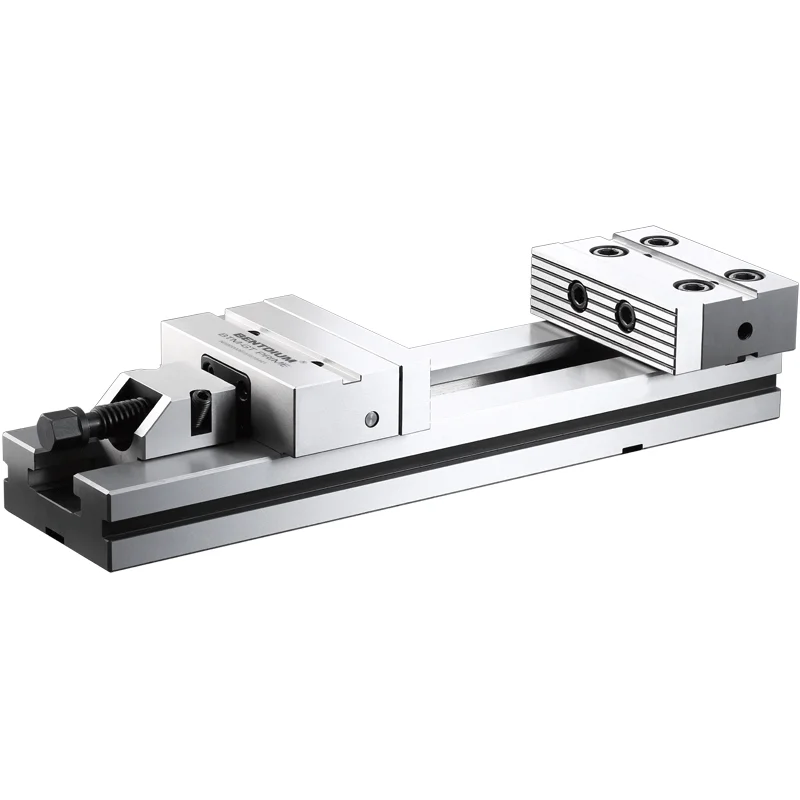
Standard Precision Vise
Standard precision vises are used for general milling and machining center workholding. They provide reliable single-station clamping for rectangular workpieces and common machining operations.
CNC milling workholding for machining centers.
A milling machine vise holds a workpiece on a milling machine or CNC machining center while the cutting tool removes material. KORRETTO supplies standard, quick-load, self-centering, double-station, multi-workpiece and 5-axis precision vise series for single-part clamping, repeated changeover, centerline positioning, batch production and multi-sided machining.
Not sure which vise fits your part and machine? Send the machine type, workpiece size, clamping direction, batch size and machining process, and we will help check the suitable vise series.
Select the machine vise series according to workpiece shape, clamping direction, batch size, machine type, table space and required accessibility. Standard, quick-load, self-centering, double-station, multi-workpiece and 5-axis vises are used for different CNC milling and machining center conditions.
Standard precision vises are used for general milling and machining center workholding. They provide reliable single-station clamping for rectangular workpieces and common machining operations.
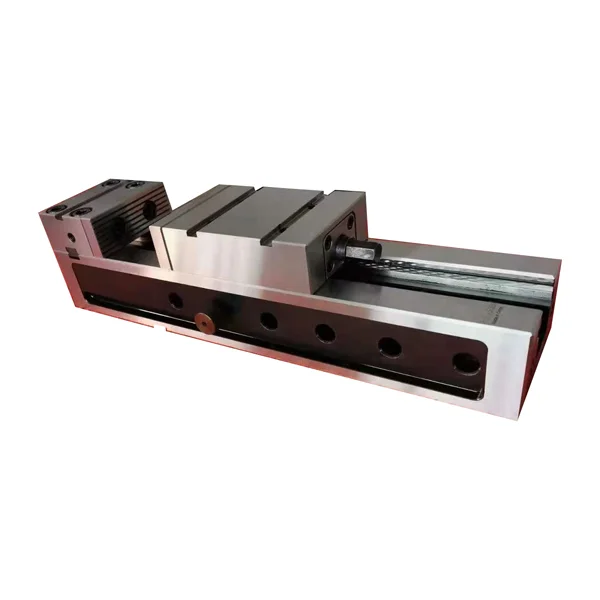
Quick-load precision vises are designed for applications that require frequent workpiece changes. They help reduce setup time while keeping stable clamping for milling and machining center operations.
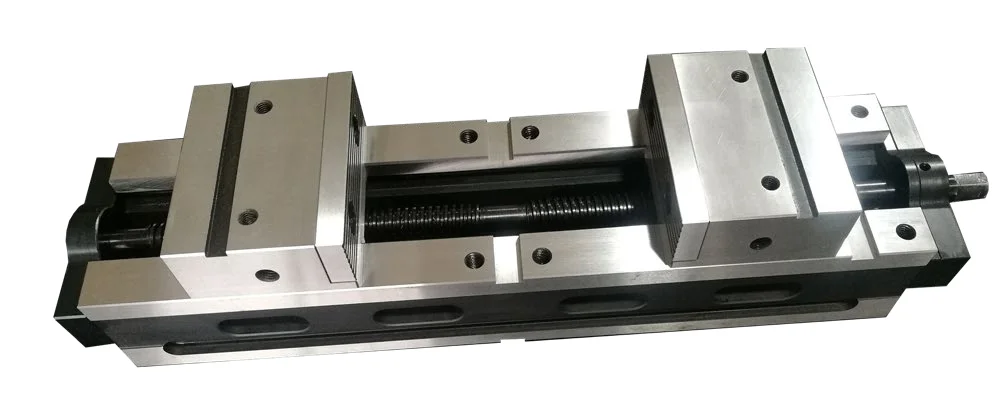
Self-centering vises clamp the workpiece from both sides toward the center. They are suitable for symmetrical parts and machining operations where repeatable center positioning is important.
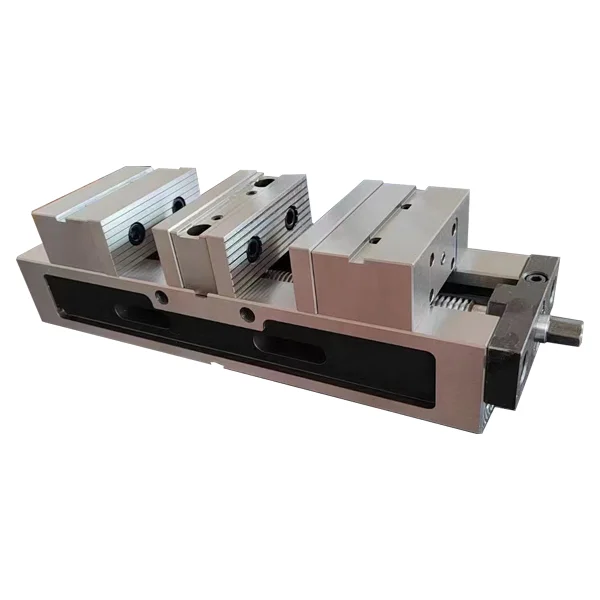
Double-station precision vises allow two workpieces to be clamped in one vise body. They are suitable for paired machining, repeat production and layouts that require higher machining efficiency.
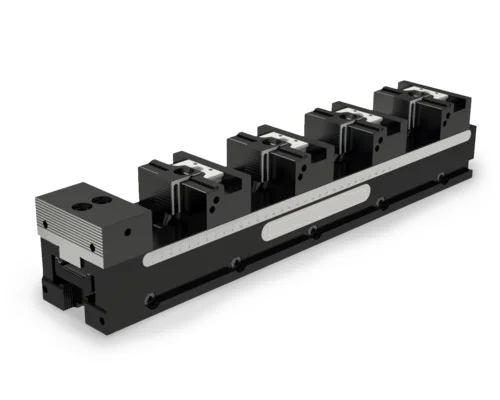
Multi-workpiece precision vises are used for clamping several small parts or similar workpieces in one setup. They help improve production efficiency for batch machining and workpiece family processing.
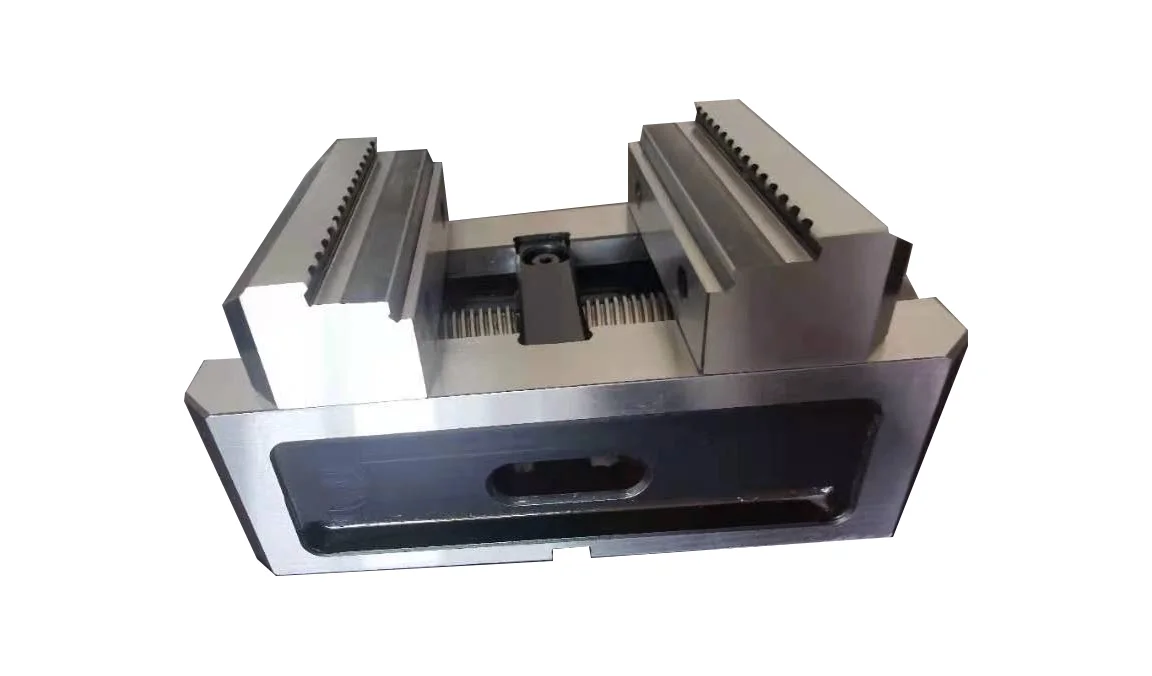
5-axis precision vises use a compact and low-profile structure to improve tool access during multi-sided machining. They are suitable for 5-axis machines and machining centers that require larger tool approach angles.
A machine vise locates the workpiece against its jaws and transfers screw-generated clamping force through the movable jaw. The vise body mounts to the machine table, while the jaw faces and locating surfaces establish the clamping datum. Stable machining depends on matching the jaw opening, contact height, clamping direction and body size to the actual part and cutting access.
Standard and quick-load vises use a conventional fixed-and-moving-jaw layout. A self-centering vise moves both jaws toward the centerline. Double-station and multi-workpiece designs increase the number of parts held in one setup. A 5-axis vise uses a compact body and concentrated jaw contact to leave more of the workpiece accessible to the tool.
Send the machine type, workpiece size, material, clamping direction, machining process and batch size. We can help compare standard, quick-load, self-centering, double-station, multi-workpiece and 5-axis vise options.
These values summarize the model tables on the six linked English product pages. Use them for initial comparison, then open the relevant series page for complete dimensions and individual model data.
| Vise Series | Published Models | Published Clamping Force | Detail Page |
|---|---|---|---|
| Standard Precision Vise | 11 HT108 models | 28–62 kN | View models and dimensions |
| Quick-Load Precision Vise | 6 models | 24–42 kN | View models and dimensions |
| Self-Centering Vise | 8 models | 12–28 kN | View models and dimensions |
| Double-Station Precision Vise | 8 models | 12–28 kN | View models and dimensions |
| Multi-Workpiece Precision Vise | 8 models | See the series table for dimensions | View models and dimensions |
| 5-Axis Precision Vise | 8 models | 20–45 kN | View models and dimensions |
Selection note: a published clamping-force value does not by itself confirm suitability. Workpiece material, wall thickness, jaw contact, cutting load and the permitted clamping datum must also be reviewed.
Before selecting a vise, confirm the machine type, workpiece size, clamping direction, required accessibility and batch quantity. The correct vise should match both the machining process and the part family.
Confirm whether the part is rectangular, block-type, plate-type or irregular. Jaw opening, jaw height and vise body size should match the workpiece.
Decide whether the workpiece needs standard side clamping, self-centering clamping, paired clamping or multi-position clamping.
The vise should fit the machine table, T-slot layout and available working envelope. For 5-axis machines, body height and tool clearance are especially important.
For frequent part changes or batch production, quick-load, double-station and multi-workpiece vises may reduce non-cutting time.
| Vise Series | Typical Use | Key Selection Point |
|---|---|---|
| Standard Precision Vise | General milling and single-part clamping | Use for common rectangular workpieces and stable clamping |
| Quick-Load Precision Vise | Frequent changeover and small-batch machining | Use when setup time reduction is important |
| Self-Centering Vise | Symmetrical parts and centerline positioning | Use when the part must stay centered during clamping |
| Double-Station Precision Vise | Two-part clamping and paired machining | Use when two workpieces can be machined in one setup |
| Multi-Workpiece Precision Vise | Batch machining of small parts | Use when multiple similar parts need to be clamped together |
| 5-Axis Precision Vise | 5-axis machining and multi-sided access | Use when low profile and tool clearance are priorities |
A machine vise is used to clamp workpieces on milling machines and CNC machining centers. It provides mechanical holding force for rectangular, block-type, plate-type and similar workpieces during milling and machining operations.
Milling vise and machine vise are often used for the same workholding category. A milling vise is a machine vise designed to secure a workpiece on a milling machine or machining center. The correct series still depends on the workpiece, machine table, required access and production method.
Use a standard vise for general single-part clamping. Use a self-centering vise when the workpiece should remain centered during clamping, especially for symmetrical parts or operations where centerline positioning matters.
Use a double-station vise when two similar parts can be clamped and machined in one setup. Use a multi-workpiece vise when several small parts or a workpiece family need to be clamped together for batch production.
A 5-axis precision vise provides a compact and low-profile clamping structure that improves tool access during multi-sided machining. It is useful when tool clearance and approach angle are important.
The published English product tables cover 12–28 kN for self-centering and double-station vises, 20–45 kN for 5-axis vises, 24–42 kN for quick-load vises, and 28–62 kN for standard precision vises. Confirm the exact model, workpiece contact and operating conditions before selection.
Please provide the machine type, table size, workpiece dimensions, material, clamping direction, machining process and batch quantity. If possible, include drawings or photos of the existing setup, required tool access and the clamping datum.