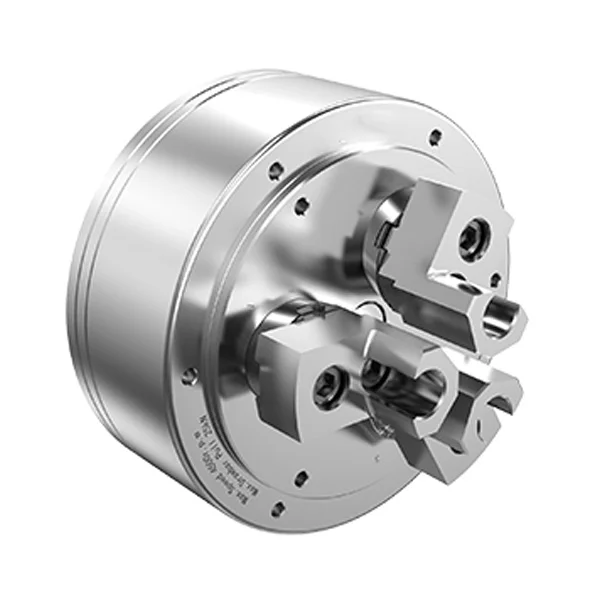
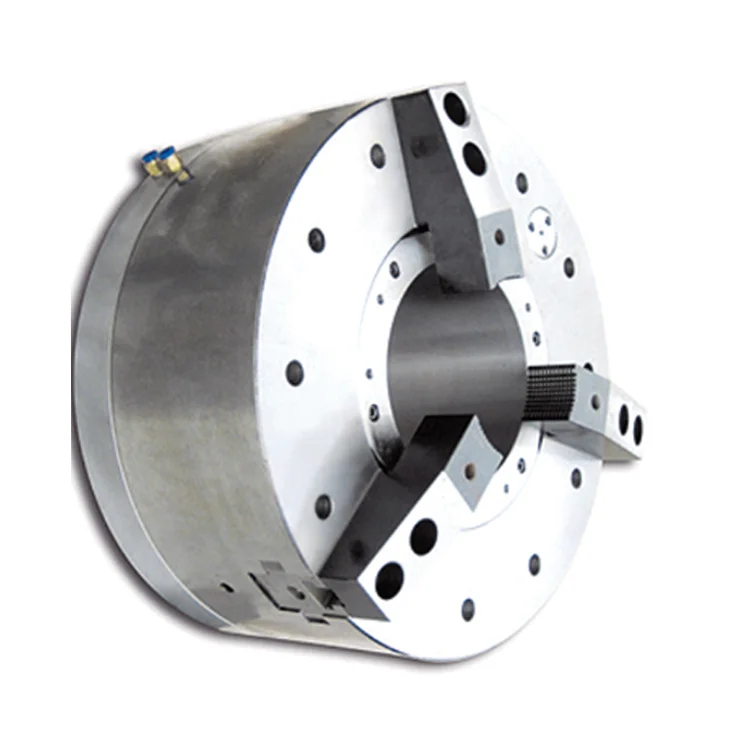
Pull-Back Power Chuck
This application-specific power chuck pulls the workpiece toward the locating surface during clamping. It is used when axial position consistency matters.
Application-specific powered workholding for pull-back location, ball-lock support, floating compensation, face clamping and pipe-thread applications.
Application-Specific Power Chucks are powered chuck-side workholding solutions for special clamping shapes, force directions, thin-wall parts, floating compensation, face clamping, pipe-thread clamping and other custom CNC lathe workholding needs. Actuation method depends on the selected product. This category is different from standard Hydraulic Chucks, different from Indexing Chucks, and different from Dividing Heads / Rotary Tables.
Select an application-specific power chuck by clamping direction, locating method, workpiece shape, contact area, spindle interface, drawbar stroke, rotary cylinder data and machining sequence. These chucks are used when a standard hydraulic chuck cannot solve the clamping problem.
This application-specific power chuck pulls the workpiece toward the locating surface during clamping. It is used when axial position consistency matters.
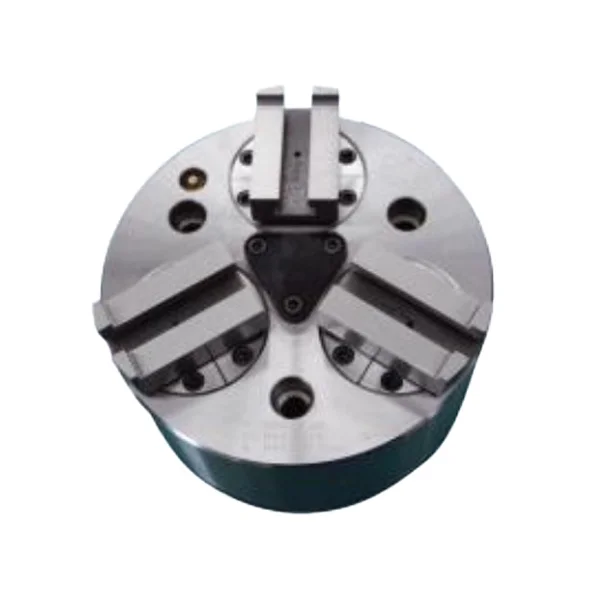
The Ball Lock structure helps the jaws adapt to forged blanks, castings and irregular clamping surfaces where a standard hydraulic chuck cannot fit evenly.
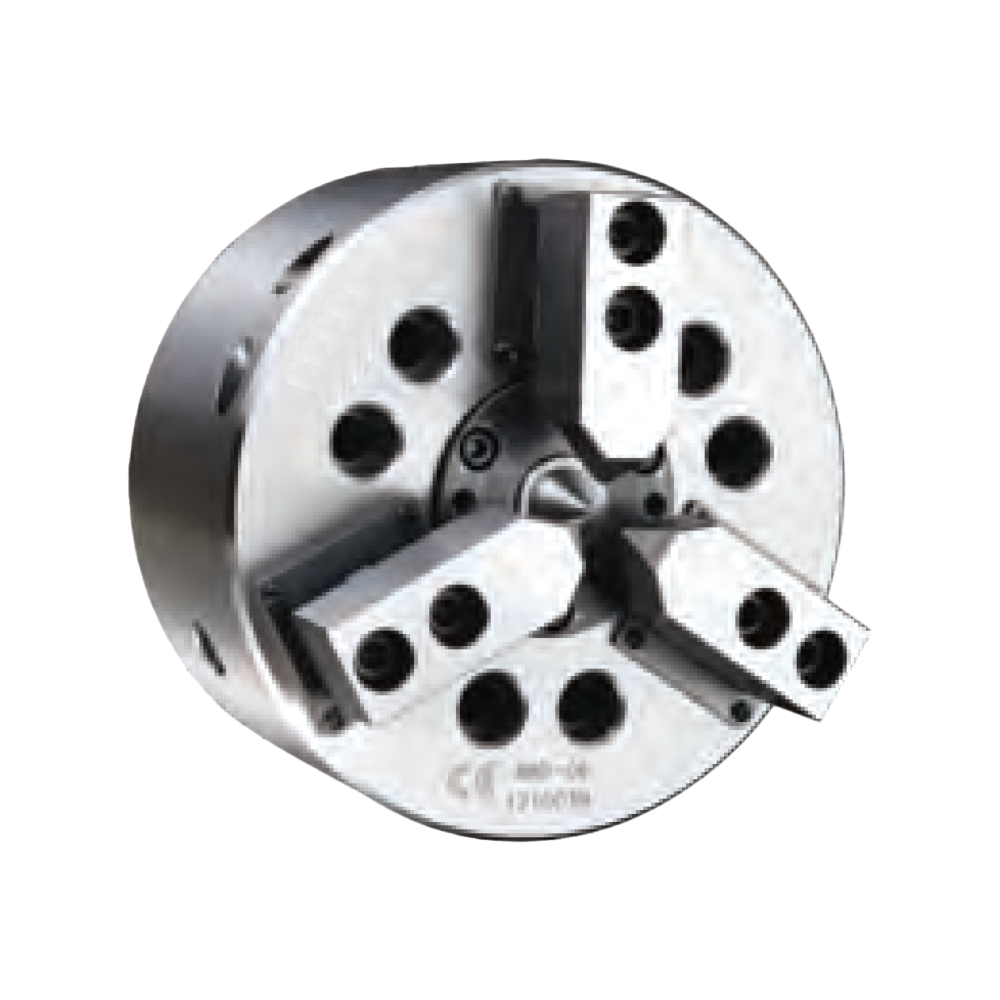
This application-specific power chuck uses floating compensation to adapt to long shafts, slender parts and non-uniform blanks more gently than a rigid chuck.
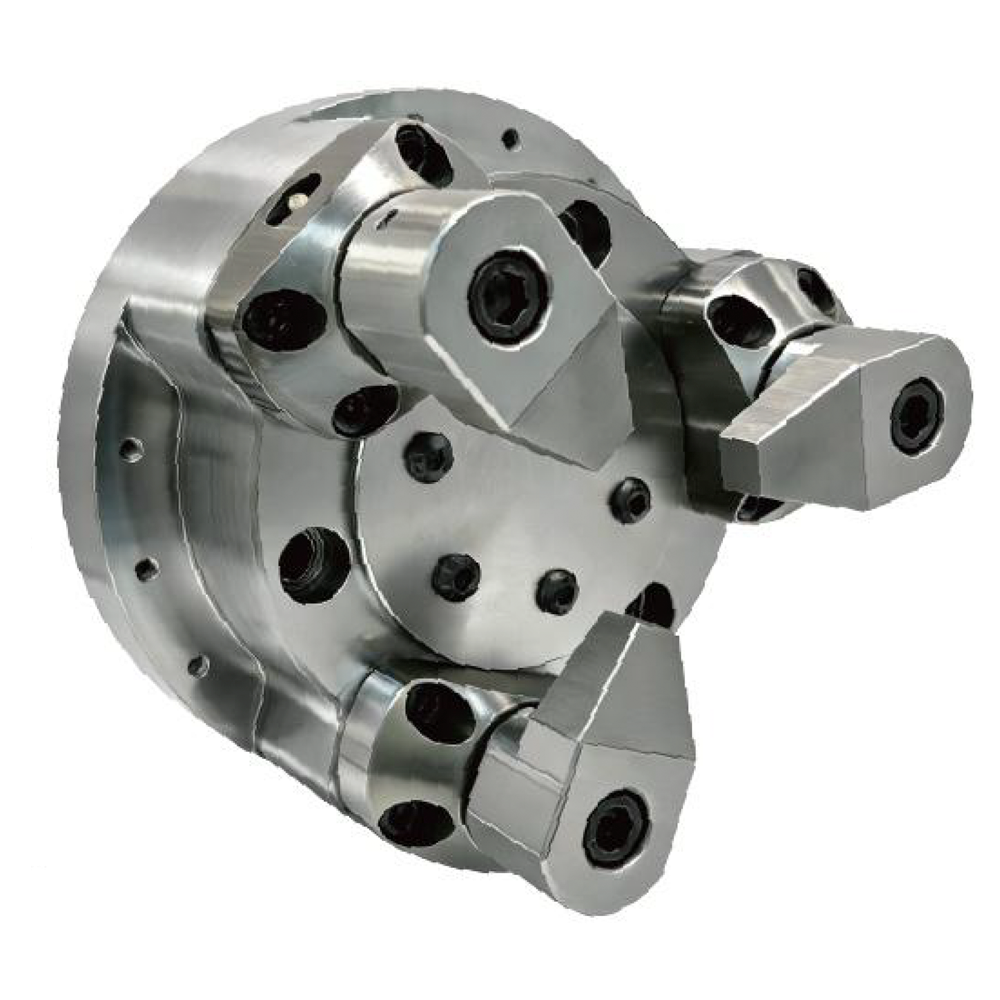
This finger-type application-specific power chuck holds the part from the end face or limited contact areas, reducing interference with the outer profile.
This product is used for oil pipe thread machining. “Front-mounted pneumatic” describes the structure; “oil pipe thread chuck” describes the application.
| Requirement | Start with |
|---|---|
| Need axial pull-down or length control | Pull-Back Power Chuck |
| Forged blanks, castings or irregular clamping surfaces | Ball Lock Power Chuck |
| Irregular casting, long shaft or non-uniform blank requiring compensation | Floating Compensation Power Chuck |
| End-face clamping or limited outside-diameter access | Finger Chuck |
| Oil pipe or tube thread machining | Oil Pipe Thread Chuck |
| Standard round workpiece production | Power Chucks |
Application-specific power chucks are powered workholding solutions used where standard clamping is not enough. Typical cases include hydraulic pull-back location, ball-lock support, floating compensation and face clamping, plus pneumatic pipe-thread clamping.
Standard hydraulic chucks focus on routine radial clamping of regular workpieces. Application-specific power chucks are selected when the process needs a special clamping direction, compensation function, contact geometry or application-specific structure.
Choose by the real clamping requirement: pull-back for axial seating, ball lock for support adaptation, floating for compensation on uneven blanks, finger for face or limited-area contact, and pipe-thread chucks for pipe-end threading operations.
Provide the workpiece drawing, material, clamping surface, locating method, spindle interface, through-hole requirement, drawbar stroke, rotary cylinder data and machining sequence.
Yes. Application-specific power chucks are commonly configured for specific workpieces and process constraints. Customization is based on the drawing, machine interface, clamping path and production requirements.
No. Application-specific power chucks are for application-specific clamping structures. Indexing chucks are for repeatable angular indexing within a chuck system.
No. Dividing heads and rotary tables are machine tool accessories for table-side rotary positioning. Application-specific power chucks are chuck-side workholding products.