Ball Lock hydraulic power chuck for forged blanks, castings, rough parts and irregular workpieces.
Ball Lock Hydraulic Chuck
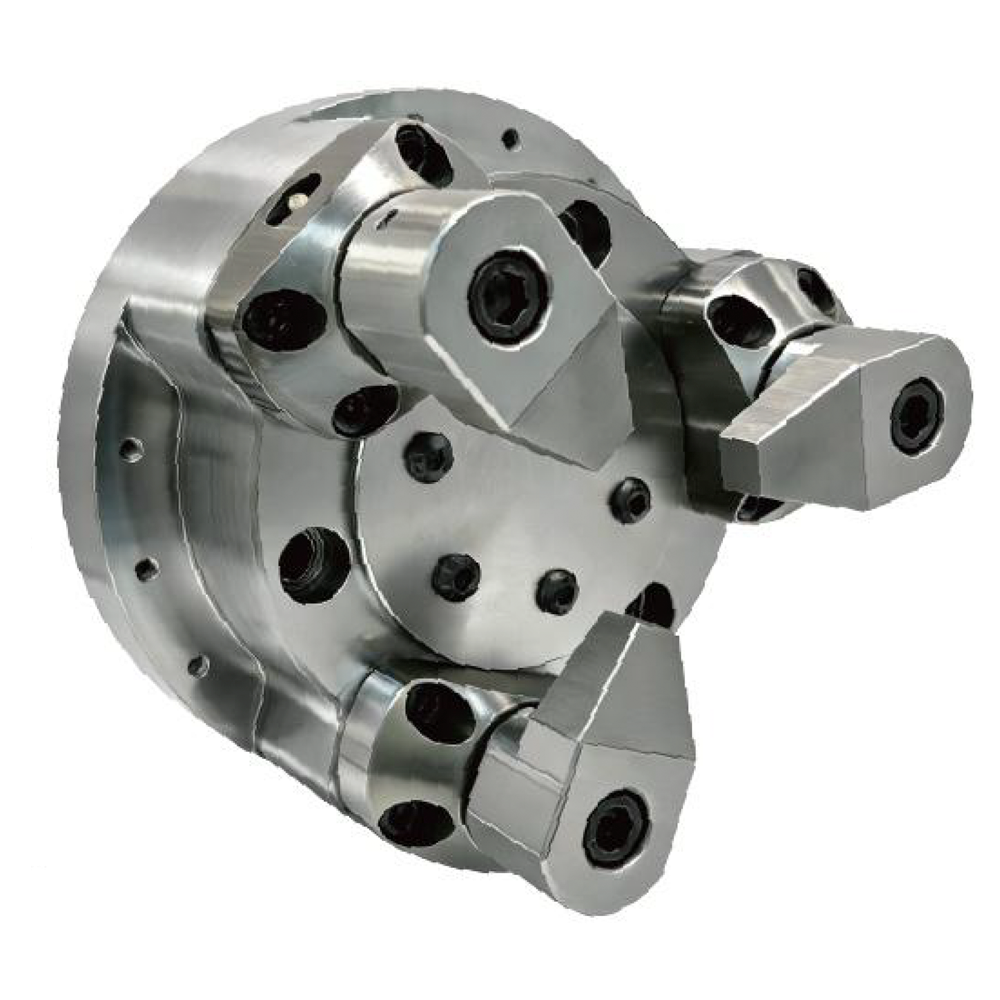
KORRETTO Ball Lock Hydraulic Chuck is an application-specific power chuck for forged blanks, castings, rough parts and irregular workpieces. The Ball Lock structure helps the jaws adapt to workpiece surface variation within a limited range, improving contact stability when standard hydraulic chuck jaws cannot fit the clamping surface evenly. Selection should be based on the workpiece drawing, clamping area, spindle interface and machining process.
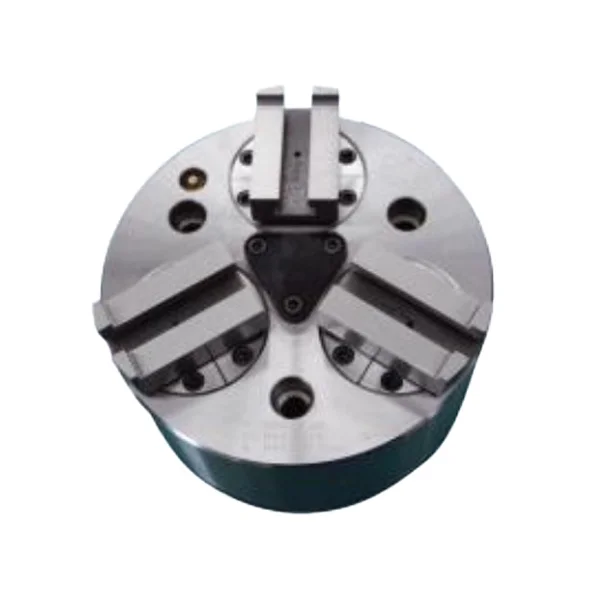
Product Overview
The Ball Lock Hydraulic Chuck is an application-specific power chuck for forged blanks, castings, rough parts and irregular workpieces. It uses a Ball Lock contact structure so the jaws can adapt within a limited range to workpiece surface variation and improve clamping stability.
This page only covers the Ball Lock Hydraulic Chuck. It should be selected according to the workpiece drawing, clamping position, contact surface, spindle interface and machining process, rather than as a direct substitute for a standard hydraulic chuck.
Key Features
| Feature | Description |
|---|---|
| Ball Lock adaptive contact | Helps the jaws adapt to workpiece surface angle and shape variation within a limited range. |
| Suitable for rough and irregular blanks | Used for forged parts, castings, rough blanks and workpieces with unstable clamping surfaces. |
| Hydraulic chuck actuation | Works as a application-specific power chuck in CNC lathe and production clamping setups. |
| Improved jaw fit | Helps improve jaw contact stability when ordinary rigid jaws cannot fit the workpiece evenly. |
| Application-specific selection | Must be selected from the actual workpiece drawing, contact surface and machining load. |
Typical Applications
- Forged workpieces and castings
- Rough blanks and irregular outside profiles
- Workpieces with unstable clamping surfaces
- Special hydraulic chuck applications for non-uniform parts
- CNC lathe workholding that needs more stable jaw contact
Technical Data and Dimensions
Use the drawing and parameter tables to check installation dimensions, spindle nose, allowable drawbar force, maximum clamping force, maximum speed, weight and matching machine conditions.
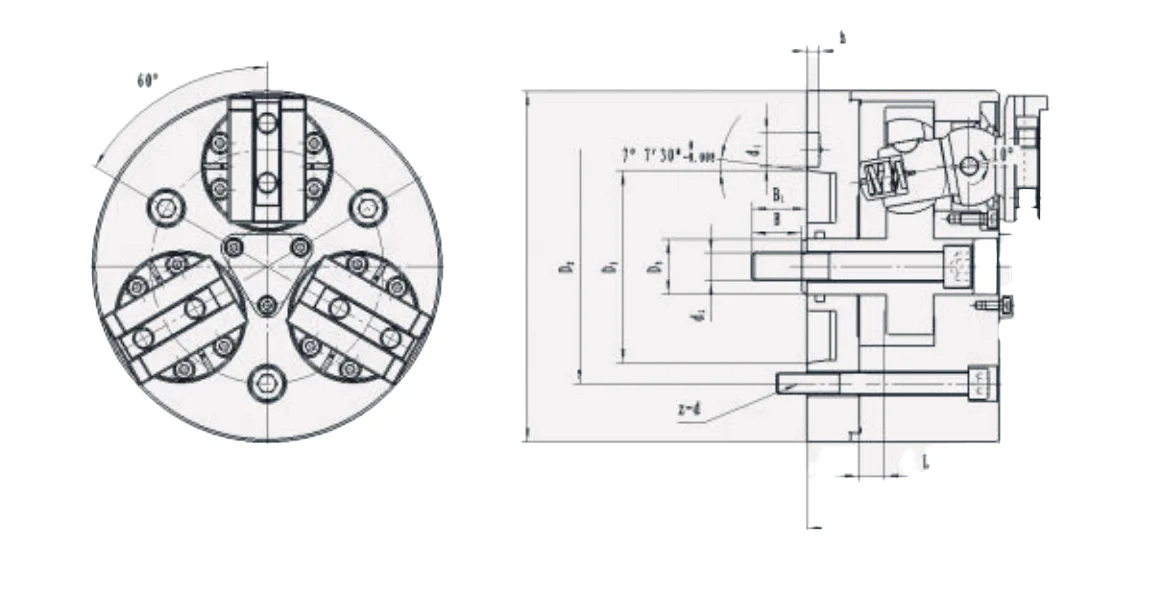
Use this drawing to confirm installation dimensions and technical parameters.
| Model | D | D1 | D2 | D3 | d1 | d2 | H1 | H | h1 | P | Q max | Q min | R max | R min | B | B max | B min | z-d |
|---|---|---|---|---|---|---|---|---|---|---|---|---|---|---|---|---|---|---|
| 160 | 160 | 82.563 | 104.8 | 30.16 | 16.3 | M16 | 85.3 | 104.6 | 6.5 | 24 | 73.15 | 22.2 | 20.3 | 30.8 | 28.5 | 42.7 | 31.5 | 3-M10 |
| 200 | 200 | 106.375 | 133.4 | 31.75 | 19.5 | M16 | 110 | 133 | 6.5 | 34 | 88.95 | 25.35 | 25.15 | 35 | 28.5 | 45.7 | 31.5 | 3-M12 |
| 250 | 254 | 139.719 | 171.4 | 41.27 | 24.2 | M20 | 119 | 148 | 8 | 44 | 112.7 | 30.3 | 35.7 | 45.5 | 35 | 57.5 | 38.5 | 3-M16 |
| 315 | 315 | 196.869 | 235 | 41.27 | 29.4 | M20 | 119 | 148 | 10 | 44 | 133.2 | 50.8 | 50.5 | 59 | 35 | 57.5 | 38.5 | 3-M20 |
| Model | Wedge Stroke (mm) | Jaw Stroke (Diameter, mm) | Allowable Push/Pull Force kN (kgf) | Max. Clamping Force kN (kgf) | Max. Speed (r/min) | Clamping Range (mm) | Matching Cylinder | Weight (kg) |
|---|---|---|---|---|---|---|---|---|
| 160 | 11.2 | 7.9 | 27 | 81 | 4000 | 12.7-120 | 100 | 18 |
| 200 | 14.2 | 9.5 | 36 | 108 | 3500 | 16-152 | 125 | 27 |
| 250 | 19 | 12.7 | 45 | 135 | 3000 | 50-203 | 125 | 45 |
| 250 | 19 | 12.7 | 45 | 162 | 2500 | 63-240 | 160 | 67.5 |
Ball Lock Hydraulic Chuck Selection Notes
- Confirm the workpiece shape variation, clamping surface and contact position.
- Check whether the part is a forging, casting, rough blank or irregular workpiece.
- Review spindle nose, drawbar force, jaw stroke, maximum speed and cutting load.
- For heavy cutting, confirm clamping force, workpiece weight and Ball Lock contact condition together.
- Do not select this chuck only by name; the workpiece drawing or blank photos must be reviewed.
Related Application-Specific Power Chuck Pages
FAQ
What workpieces is this Ball Lock Hydraulic Chuck used for?
It is used for forged blanks, castings, rough parts and irregular workpieces where adaptive jaw contact is needed because the clamping surface is not stable enough for a standard hydraulic chuck.
How does the Ball Lock structure help during clamping?
The Ball Lock structure lets the clamping contact adapt within a limited range to workpiece surface angle or shape variation, helping the jaws fit the part more stably.
How is it different from a standard hydraulic chuck?
A standard hydraulic chuck is usually selected for regular round workpieces. A Ball Lock Hydraulic Chuck is a application-specific power chuck for rough blanks, irregular shapes and contact conditions that need more adaptation.
Is it suitable for forged and cast workpieces?
Yes. Forged and cast workpieces are typical applications because the Ball Lock structure can help improve jaw contact on uneven clamping surfaces.
Can it replace a standard hydraulic chuck directly?
No. It should not be selected only by chuck diameter. The workpiece shape, clamping area, spindle interface and machining process must be checked first.
Is it suitable for heavy cutting?
That depends on workpiece weight, clamping surface, clamping force, Ball Lock structure and cutting load. Heavy-cutting projects should be reviewed with the workpiece data and process conditions.
Can it be used for automated production?
It can be evaluated for automation, but the consistency of workpiece loading, clamping surface variation and loading method should be confirmed.
What information is needed for quotation?
Please provide the workpiece drawing or blank photos, shape variation, clamping position, contact surface, machine model, spindle nose and machining process.