Indexing Chuck Customer Case: Machining Valve Bodies
This customer case shows how an indexing chuck can be used for valve body machining when the workpiece needs stable clamping and repeatable angular positioning. A valve body case should be reviewed around the actual datum, port direction, jaw support and machining sequence. The indexing function is useful only when the clamping and locking method can support the cutting process.
Video Overview
The video presents a valve body machining case using an indexing chuck. Valve bodies often include several ports, sealing areas and machined faces. Some operations may be aligned with one direction, while other operations require the part to be turned to another angle.
If the part is removed and re-clamped for every direction, the process may become slower and less consistent. An indexing chuck can help by keeping the workpiece in one clamping system and rotating it to defined positions.
How This Differs from a General Valve Article
This page should be understood as a customer case rather than a general industry overview. The focus is the review of a specific valve body application. The important questions are practical: how the part is located, where the jaws contact, how the cutting force is supported, and whether the machine has enough tool clearance.
A customer case may not apply directly to every valve body. Even similar-looking valve parts can have different datum requirements, casting conditions and tolerance targets.
Key Workholding Review Points
For valve body machining, the workholding review should confirm:
- the primary datum surface or bore;
- the port direction used for each operation;
- the number of required indexing positions;
- the jaw contact area;
- whether sealing surfaces must be protected;
- whether the cutting force is supported;
- whether chips collect near the datum or jaw area;
- whether the tool path clears the chuck body and jaws.
These points determine whether the indexing chuck can support a repeatable process.
How Indexing Helps Valve Body Machining
An indexing chuck can rotate the valve body to defined angles without fully removing the workpiece. This can help reduce manual orientation steps and keep the relationship between machined features more consistent.
For repeated production, the operator can follow a clearer sequence: locate the valve body, clamp, machine the first direction, index, lock, machine the next direction, and then unload after the process is complete. The exact sequence depends on the workpiece and machine.
Suitable Applications
This setup is suitable for valve bodies with repeated geometry, stable datum surfaces and defined angular positions. It is also useful when batch production justifies a more repeatable workholding process.
It may be less suitable for highly irregular castings, one-off valve repair, very heavy workpieces, or parts where no safe jaw contact area is available. A dedicated fixture may be needed when the valve body cannot be supported properly by a chuck-based layout.
Reuse Rules for Another Valve Body
| Input | Case-specific decision | Reuse rule |
|---|---|---|
| Datum bore or face | Defines the relationship between ports and index positions | Reuse only when the new part has the same functional datum scheme |
| Casting and machining allowance | Controls where jaws and locators can contact reliably | Recheck whenever supplier, pattern or allowance changes |
| Jaw geometry | Supports the demonstrated cutting direction and body shape | Do not reuse solely because nominal valve size is similar |
| Index sequence | Matches the demonstrated ports, tools and machine access | Revalidate after any operation-order or tool-clearance change |
| Tolerance target | Determines the required datum retention and process verification | Confirm by inspection and trial cutting on the actual setup |
Selection Notes
For a valve body customer case review, provide the drawing, material, casting condition, datum surfaces, port directions, sealing areas, machining sequence, tolerance targets, batch size, machine model and actuation conditions. If the current process has problems, photos or videos of the existing setup can help identify the issue.
The review should also separate what is specific to this customer case from what can be reused on future valve body projects. Jaw geometry, datum choice and indexing sequence may need adjustment when the casting, port direction or machining allowance changes.
Related Workholding Pages
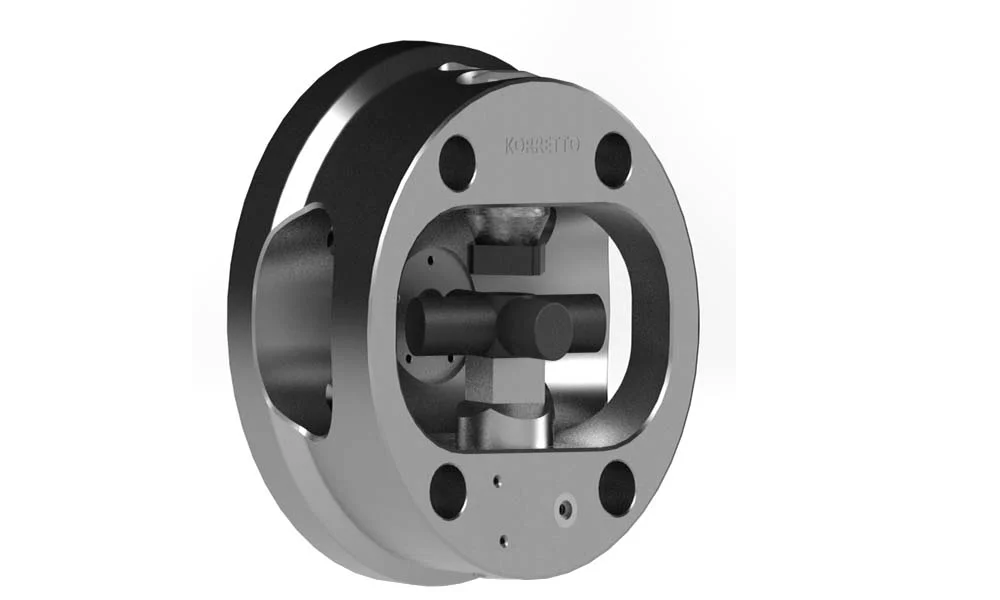
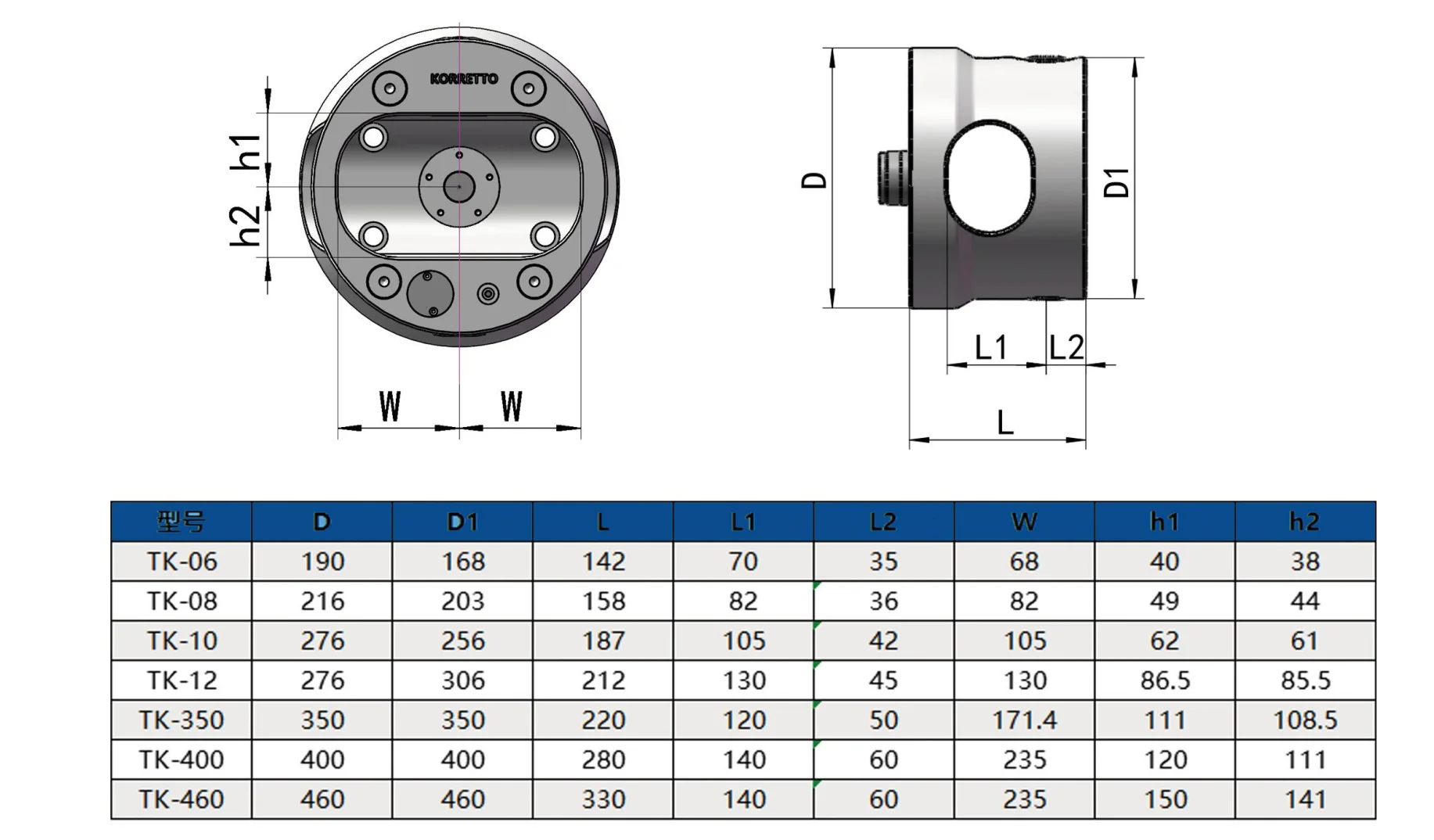
For related solutions, see the KORRETTO indexing chuck series and application-specific power chucks. For broader valve machining context, see Indexing Chuck in the Valve Industry and Three Typical Machining Methods for Valve Workpieces.
FAQ
What does this valve body customer case show?
It shows an indexing chuck used to support clamping and angular positioning for a valve body machining process.
Why are valve bodies difficult to hold?
Valve bodies may have multiple ports, casting variation, sealing areas and several machining directions, so the datum and jaw support must be reviewed.
How does indexing improve the process?
Indexing can reduce repeated manual repositioning by rotating the part to defined angles while it remains in one clamping system.
When is this setup not suitable?
It may not be suitable when the casting is too irregular, the datum is unstable, the workpiece is too heavy, or the jaw contact cannot support the cutting force.
What should be provided for a customer case review?
Drawings, material, datum surfaces, port directions, sealing areas, machining sequence, tolerance targets, batch size and machine model are recommended.