Indexing Chuck Demonstration for Clamping 90-Degree Elbows
A 90-degree elbow is difficult to clamp because the part has curved geometry, two port directions and limited straight contact surfaces. An indexing chuck can be considered when the elbow needs repeatable angular positioning, but the datum, jaw contact, tool clearance and cutting force direction must be checked before the workholding method is selected.
Video Overview
This video demonstrates an indexing chuck used for clamping a 90-degree elbow workpiece. Elbows are common in valve, pipe-fitting and fluid control applications, but they are not simple round parts. Their shape may make it difficult to hold the part with a standard three-jaw chuck.
The value of an indexing chuck is that it can hold the workpiece and present it at controlled angular positions. This can help when the elbow requires machining on more than one side or port direction.
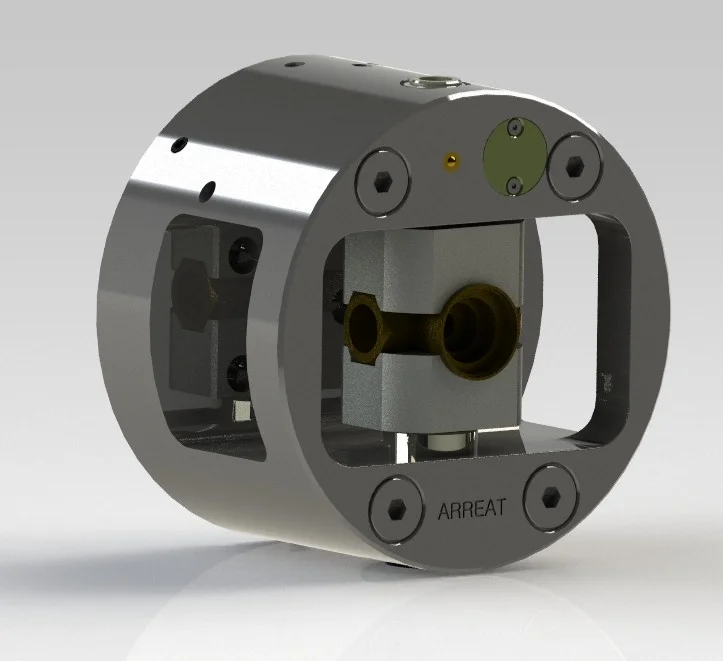
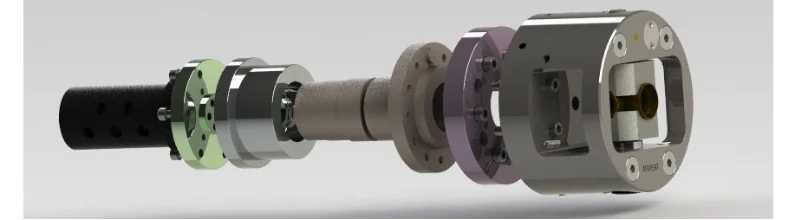
Why Elbows Are Difficult to Clamp
A 90-degree elbow usually has two port axes that meet at an angle. The outside shape may be curved, cast or uneven. The available straight surfaces for jaw contact may be limited. Depending on the machining operation, the cutting force may push the workpiece in a direction that is not well supported by standard jaws.
The workholding review should consider:
- which port, bore or face can be used as the datum;
- where the jaws can safely contact the elbow;
- whether the curved body can be supported;
- whether the required machining direction is accessible;
- whether the indexing angle matches the port direction;
- whether the tool path clears the chuck body and jaws.
If these points are not checked, clamping may look acceptable during setup but become unstable during cutting.
How Indexing Can Help
An indexing chuck can rotate the elbow to defined positions while keeping it in one clamping system. This may reduce repeated manual repositioning and help keep the port directions more consistent across a batch.
For example, one port direction may be machined first, then the chuck indexes to another position for a second operation. The part does not need to be fully removed for every step, which can help reduce setup variation.
The chuck still needs a jaw or fixture layout that matches the actual elbow body. Indexing only controls angular position; it does not automatically solve poor support, casting variation or a tool path that conflicts with the chuck.
Suitable Applications
This setup is suitable when the elbow geometry is repeatable, the required angles are known, and enough jaw contact area is available. It can be useful for batch machining of elbows, pipe fittings and similar multi-angle components.
It may be less suitable for highly irregular castings, very large elbows, thin-wall parts with sensitive surfaces, or one-off repair work. If the elbow cannot be supported safely by the available jaw contact area, a dedicated fixture may be needed.
90-Degree Elbow Workholding Acceptance Table
| Check | Acceptable direction | Dedicated-fixture trigger |
|---|---|---|
| Datum | A repeatable port bore, end face or previously machined reference locates the elbow | Only a variable as-cast curve is available for location |
| Jaw contact | Contact supports the expected cutting direction without touching a functional surface | Contact is narrow, unstable or concentrated on a thin wall |
| Index position | The required port direction is reached and positively locked | The elbow angle varies beyond the adjustment or jaw allowance |
| Clearance | Tool, wheel, jaws and chuck body remain clear at both positions | The second port cannot be reached without collision |
Selection Notes
Before selecting an indexing chuck for 90-degree elbows, provide the drawing, port directions, datum requirement, material, casting condition, required machining directions, cutting load, batch size and machine interface. If the part has a sensitive surface or thin wall, this should be reviewed before jaw design is confirmed.
If several elbow sizes are planned for one machine, each size should be checked separately. A jaw set that supports one radius or port diameter may not safely support another without adjustment.
Related Workholding Pages
For related workholding options, see the KORRETTO indexing chuck series, hydraulic auto indexing chuck and application-specific power chucks. For broader multi-angle part examples, see Indexing Chuck for Multi-Angle Workpieces.
FAQ
Why are 90-degree elbows difficult to clamp?
They have curved geometry, angled port directions and limited straight jaw contact surfaces, which can make stable clamping difficult.
When should an indexing chuck be considered?
It should be considered when the elbow requires repeatable angular positioning and can be supported safely in a chuck-based workholding system.
What datum should be checked?
The port bore, machined face or another repeatable locating surface should be checked before the chuck and jaw layout are selected.
When is a custom fixture needed?
A custom fixture may be needed when the elbow is highly irregular, too large, too thin-walled, or cannot be supported by the available jaw contact area.
What drawings should be provided?
A workpiece drawing, port directions, datum requirements, material, machining sequence and target tolerance information are recommended.