Indexing Chuck Rotation Detection and System Alarm Test
Rotation detection and system alarm testing are important for indexing chuck applications where the machine must confirm the chuck position before cutting begins. The purpose of this type of test is to check whether the system can detect position status and respond to abnormal conditions. It should be treated as part of the machine integration review, not as a universal safety guarantee.
Video Overview
This video shows a rotation detection and system alarm test for an indexing chuck. In an indexing chuck setup, the chuck may move between defined angular positions. Before machining starts, the machine control should confirm that the chuck has reached the required position and that the locking condition is suitable for the next operation.
If the position is not confirmed, or if the chuck is not in the expected state, the system may need to stop the sequence and show an alarm. This helps prevent machining from starting under an incorrect setup condition.
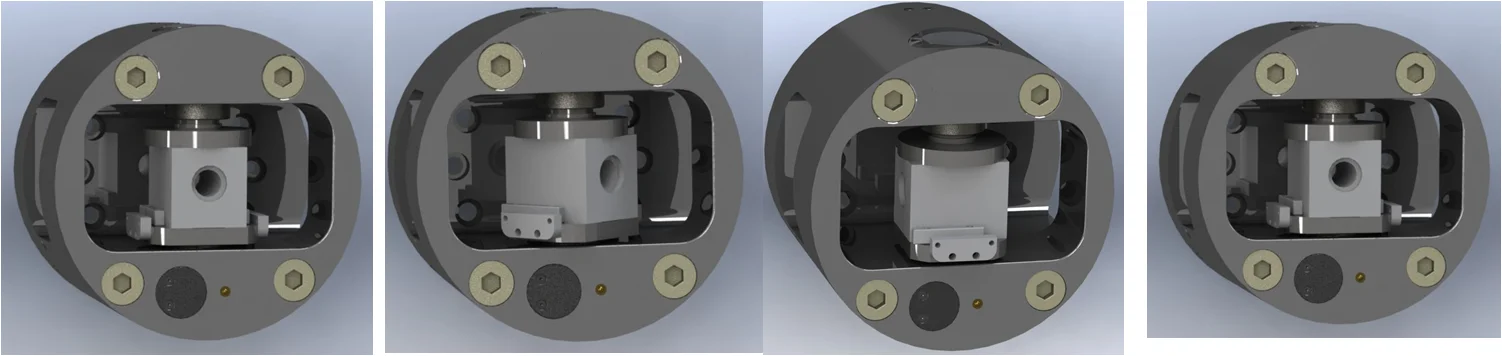
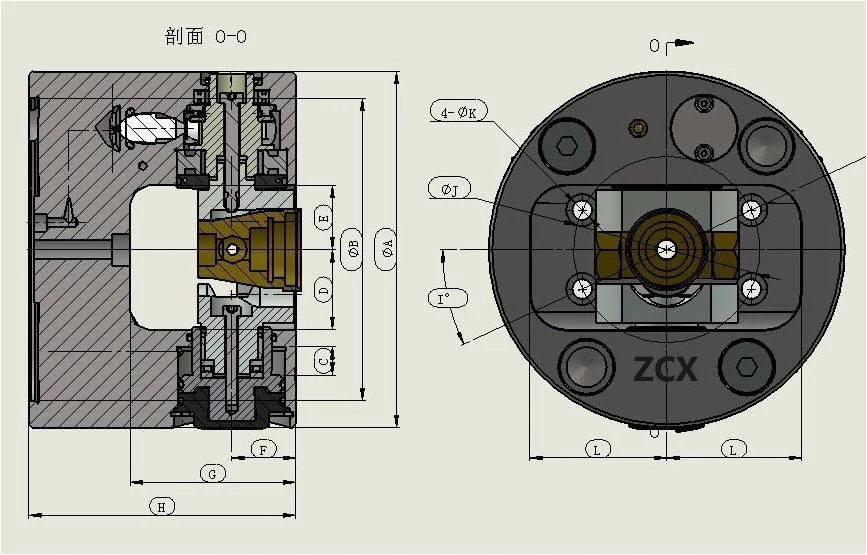
Why Position Detection Matters
An indexing chuck is different from a simple fixed chuck because it adds an angular positioning function. The machine and chuck must work together in a defined sequence. A typical sequence may include unclamp or release, rotate or index, confirm position, lock, clamp, then allow machining.
If the machine starts cutting before the chuck is locked, or if the chuck stops at the wrong angle, the part, tool and workholding system may be at risk. Position detection helps the control system verify the status before continuing.
What an Alarm Test Can Check
A rotation detection and alarm test may check:
- whether the expected angle is detected;
- whether the chuck reaches the commanded position;
- whether the lock signal is confirmed;
- whether the machine blocks the next step when the signal is missing;
- whether the alarm message is clear enough for the operator;
- whether the reset process is controlled;
- whether the system sequence matches the machining program.
The exact logic depends on the machine, control system, sensors and chuck design.
What This Test Does Not Replace
A system alarm test does not replace mechanical workholding review. It cannot correct insufficient jaw support, weak clamping, wrong datum selection or unsuitable cutting direction. It also does not replace machine builder safety requirements.
The alarm logic is only one part of a complete application review. The mechanical chuck design, hydraulic or pneumatic conditions, sensor layout, wiring, control program and machine interlock must be checked together.
Suitable Applications
Rotation detection and alarm logic are especially useful for automated or semi-automated indexing chuck applications, repeated batch production, multi-angle valve machining and processes where the operator cannot manually confirm every step.
It may be less necessary for simple manual demonstration setups, but any production process that depends on indexed positions should still define how position and lock status are confirmed.
Indexing Sequence and Interlock Decision Table
| Sequence state | Status to confirm | Block the next step when |
|---|---|---|
| Clamp | The workpiece is within the defined clamping state or stroke window | Clamp confirmation is missing or outside the permitted range |
| Release for indexing | The mechanism is in the permitted state for rotation | Lock or clamp status conflicts with the index command |
| Index | The commanded angular position is reached | The expected position signal does not arrive within the defined sequence |
| Lock | Mechanical locking is confirmed before cutting | Position exists but lock confirmation is absent |
| Reset after alarm | The cause is cleared and the chuck state is known | A reset would resume from an uncertain position or clamping state |
Selection Notes
For an indexing chuck detection and alarm review, provide the machine model, control system, required indexing angles, sensor requirements, hydraulic or pneumatic circuit, machining sequence and expected alarm logic. If the chuck will be used with a robot or automated loading system, the loading sequence and interlock requirements should also be provided.
The review should also define who is responsible for signal validation: the chuck supplier, machine builder, integrator or end user. Clear responsibility helps avoid gaps between mechanical workholding design and the final machine control sequence.
Related Workholding Pages
For related workholding options, see the KORRETTO indexing chuck series and hydraulic auto indexing chuck. For automation-related workholding, see Indexing Chuck with Gantry Robot Collaboration.
FAQ
What is rotation detection in an indexing chuck?
It is a way to confirm whether the chuck has reached the expected angular position before the next machine step continues.
Why is a system alarm useful?
An alarm can stop the process or warn the operator when the chuck position, lock signal or expected sequence is not confirmed.
Does alarm testing guarantee safe machining?
No. Alarm testing supports system integration, but mechanical clamping, jaw support, cutting load and machine safety requirements still need review.
What should be checked before using rotation detection?
The indexing angles, sensor layout, lock confirmation, control sequence, machine interface and alarm reset logic should be checked.
Is this feature useful for automation?
Yes. Position detection and alarm logic are useful when an indexing chuck works in an automated or semi-automated machining sequence.