DT Long-Nose Rubber Collet in a Machining Setup
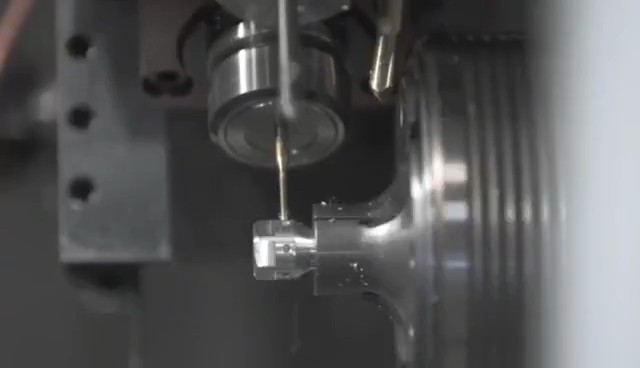
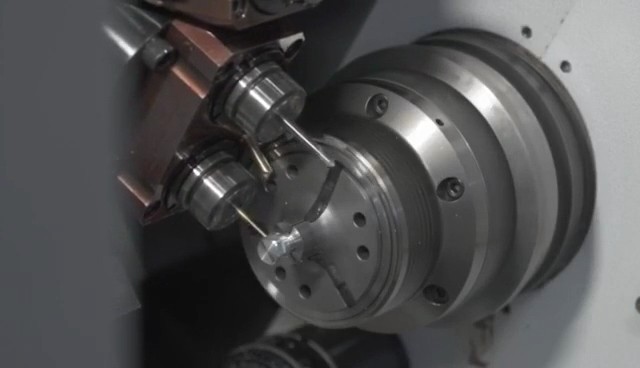
The camera moves from the workpiece tip to the complete chuck. The long-nose collet brings the gripping position forward. A slender part projects from its nose. The wider view shows the clearance between the collet, chuck body and working area.
How the grip works
A rubber-flex collet has metal gripping segments joined by vulcanised rubber. The metal contacts the part. The rubber links allow the segments to move and fill the gaps between them. Circumferential contact spreads the grip over the workpiece surface. The collet and chuck are matching components with different jobs.
Start with the part diameter and contact length. Then check the chuck, drawtube and spindle passage. Control the clamping force on thin walls. Place the indicator at the working location you need to inspect. A check near the chuck and a check at the free end measure runout at different positions.
What to check in this setup
- Set clearance between the nose and the tool.
- Arrange support for the actual part projection.
- Match the collet contact length to the gripping section.