Three-jaw semi-through-hole pneumatic chuck for partial bore clearance and repeat compressed-air clamping.
BK-KQ 3-Jaw Semi-Through-Hole Pneumatic Chuck
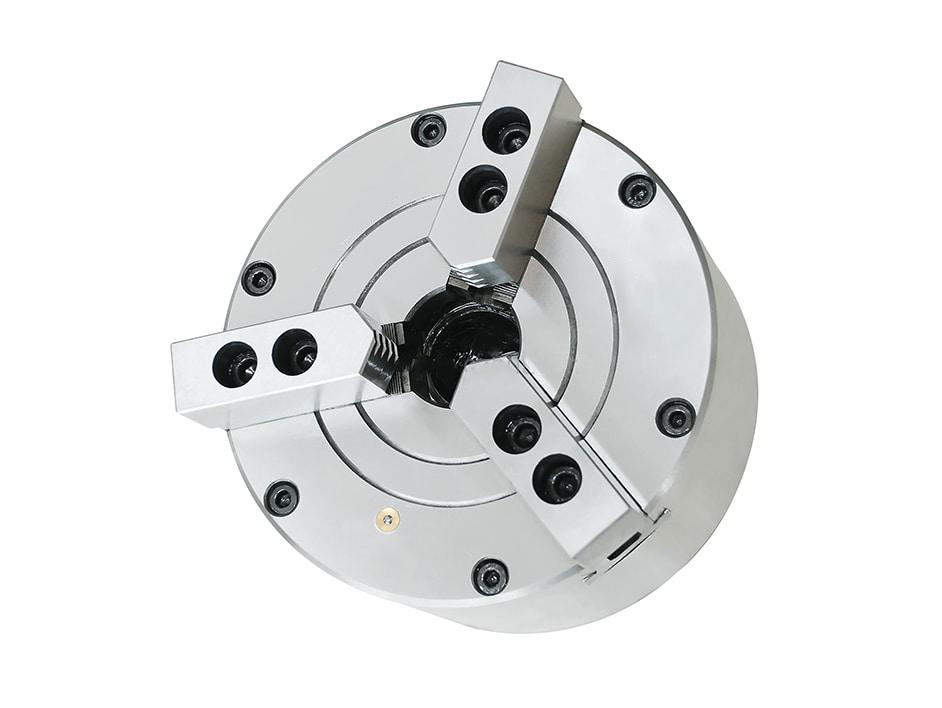
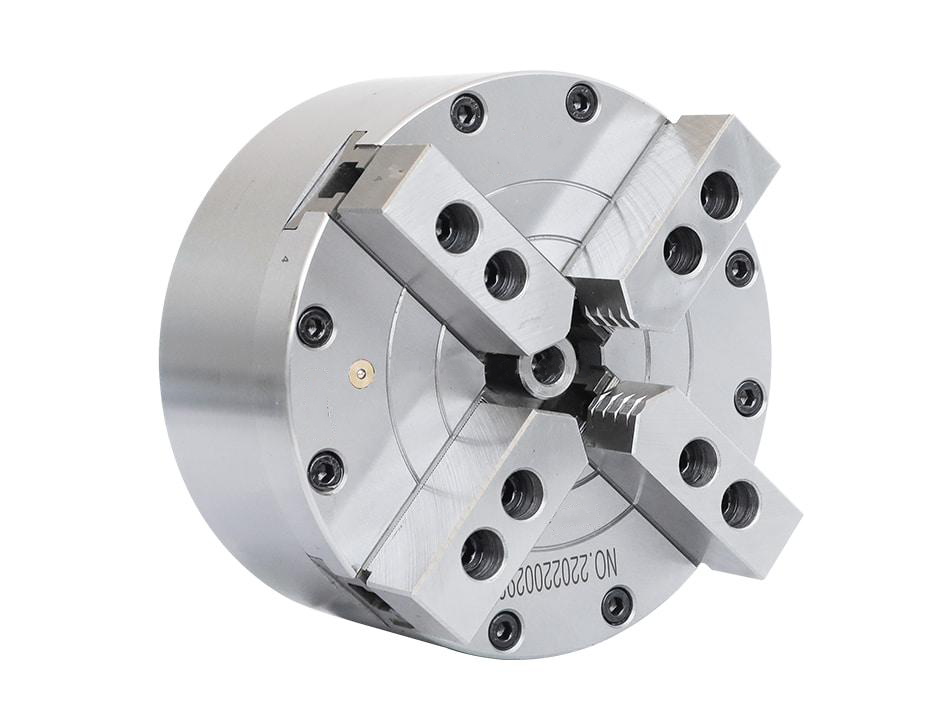
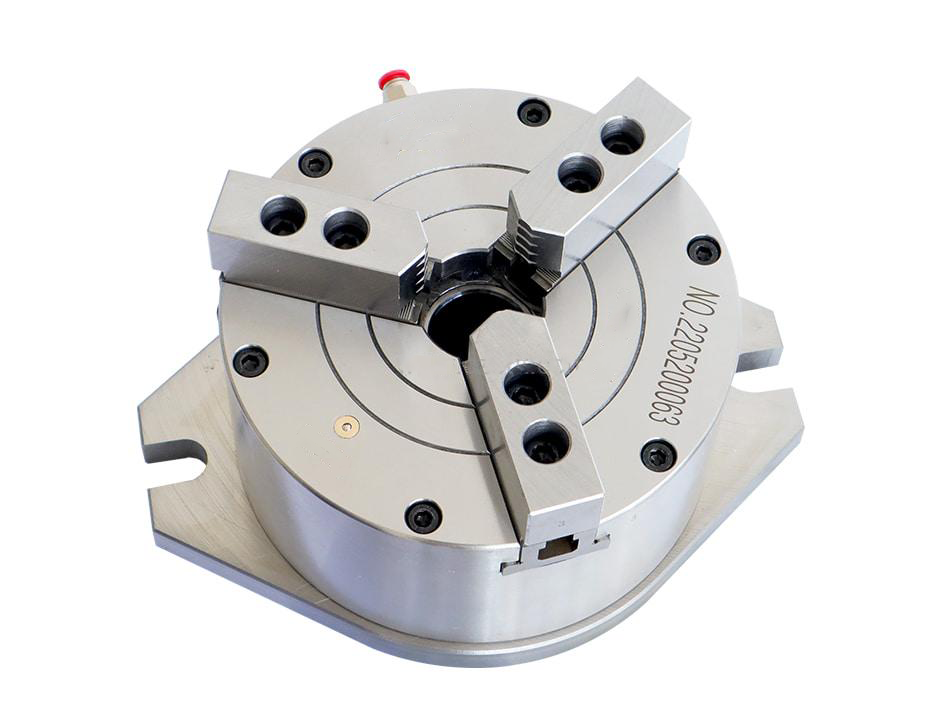
KORRETTO BK-KQ 3-jaw semi-through-hole pneumatic chuck is used when the workpiece or fixture layout needs partial bore clearance but does not require a full through-hole chuck. It provides three-jaw pneumatic clamping and compressed-air operation for round workpieces, sleeves and short to medium-length parts, while keeping the semi-through-hole structure separate from solid and full through-hole pneumatic chuck designs.
Product Overview
The BK-KQ 3-jaw semi-through-hole pneumatic chuck sits between a solid pneumatic chuck and a full through-hole pneumatic chuck. It is selected when partial bore clearance or limited internal clearance is needed but full spindle-through passage is not required.
BK-KQ is a 3-jaw pneumatic chuck with a semi-through bore. Its central cavity provides limited internal clearance for the workpiece or fixture but is not a full through-spindle passage.
Key Features
| Feature | Description |
|---|---|
| Semi-through-hole structure | Provides partial bore clearance without using a full through-hole layout. |
| 3-jaw pneumatic clamping | Suitable for round and near-round workpieces. |
| Air-driven operation | Uses compressed air for clamping and release. |
| Intermediate structure option | Used when solid chucks are not enough but full through-hole is unnecessary. |
| Semi-through-hole clearance | Provides limited internal clearance; confirm usable depth and do not treat it as a through-spindle bore. |
Typical Applications
- Parts requiring partial bore clearance
- Short to medium-length round workpieces
- Sleeve-type components
- Pneumatic clamping fixtures
- Applications where full through-hole passage is not required
Technical Data for Semi-Through-Hole Pneumatic Chucks
Use the drawing and parameter tables to check semi-through-hole clearance, chuck size, mounting dimensions, jaw stroke, air pressure, clamping force, speed and weight.
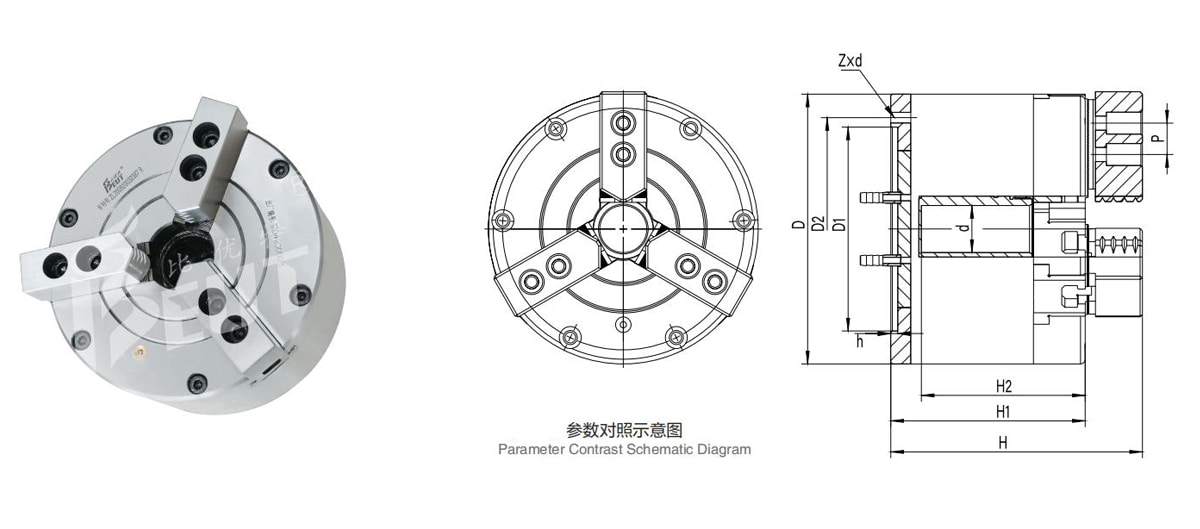
| Model | D | D1 | D2 | d | H | H1 | H2 | h | p | Z × d | Power Wedge Serration | Matching Jaw Model |
|---|---|---|---|---|---|---|---|---|---|---|---|---|
| BK160KQ | 172 | 130 | 142 | 30 | 135.5 | 99.5 | 84 | 4.5 | 20 | 3-M8 | 1×53° | BK160Z1 |
| BK200KQ | 210 | 165 | 180 | 40 | 139.5 | 103.5 | 85.5 | 4.5 | 25 | 3-M10 | 1×53° | BK200Z1 |
| BK250KQ | 250 | 206 | 226 | 80 | 154 | 108 | 90.5 | 5 | 30 | 3-M12 | 1×53° | BK250Z1 |
| BK320KQ | 325 | 270 | 290 | 120 | 221 | 160 | 140.5 | 5 | 32 | 6-M12 | 1.5×60° | BK320Z2-60 |
| BK400KQ | 400 | 340 | 368 | 120 | 242 | 168 | 147 | 6 | 40 | 6-M16 | 1.5×60° | — |
| Model | Jaw Stroke t (Diameter, mm) | Max. Clamping Force (kN) | Max. Expanding Force (kN) | Allowable Pressure (MPa) | Max. Speed (r/min) | Clamping Range (mm) | Expanding Range (mm) | Net Weight (kg) |
|---|---|---|---|---|---|---|---|---|
| BK160KQ | 3.7 | 32.9 | 18.5 | 0.4–0.8 | 4500 | 2–170 | 20–180 | 15 |
| BK200KQ | 4.2 | 49.1 | 29.1 | 0.4–0.8 | 4500 | 5–210 | 20–240 | 23 |
| BK250KQ | 4.8 | 58.7 | 32.5 | 0.4–0.8 | 2800 | 10–260 | 30–280 | 32 |
| BK320KQ | 9.5 | 106.1 | 62.2 | 0.4–0.8 | 2300 | 10–350 | 40–360 | 76 |
| BK400KQ | 12.7 | 137.8 | 77 | 0.4–0.8 | 1000 | 15–420 | 50–430 | 140 |
Related Pneumatic Chuck Pages
FAQ
What is the BK-KQ semi-through-hole pneumatic chuck used for?
It is used for pneumatic clamping layouts where the workpiece or fixture needs partial bore clearance or partial internal clearance but not a full through-hole passage.
How is it different from a hydraulic chuck?
A pneumatic chuck uses compressed air for clamping and release, while a hydraulic chuck uses hydraulic pressure. The correct choice depends on the required clamping force, cycle target and available air supply.
What does semi-through-hole mean?
It means the chuck provides partial internal clearance, but it is not the same as a full through-hole chuck for complete through-spindle passage.
What air pressure should be confirmed?
The available compressed air pressure, pressure stability and force margin for the workpiece should be checked before the model is selected.
What machine or fixture interface should be checked?
Check the mounting interface, bolt pattern, jaw stroke, available installation space and the required semi-through-hole clearance path.
Can it be used for automated loading and unloading?
Yes. It can be used in automated clamping layouts if the air circuit, part transfer method and safety controls are properly matched.
What should be checked before installation?
Check the workpiece length, semi-through-hole boundary, clamping range, air connection and interference clearance before installation.
What information is needed for quotation?
Provide the workpiece drawing, required internal clearance, clamping diameter, operating air pressure, machine interface and target clamping force.