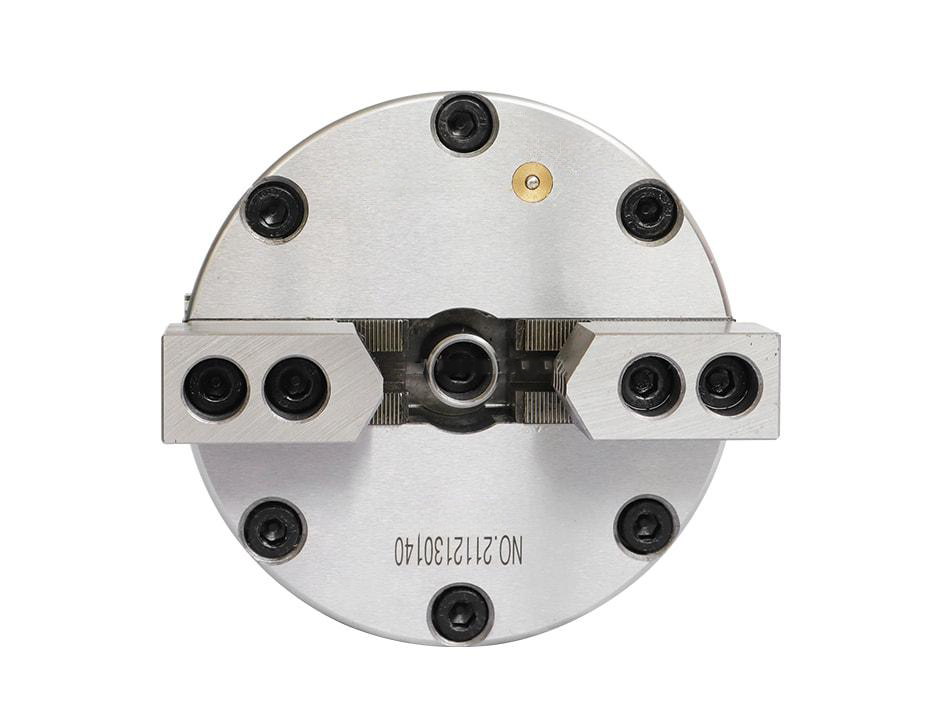
Two-jaw solid pneumatic chuck for shaped parts, opposing-jaw clamping and custom jaws.
BK-SQ 2-Jaw Solid Pneumatic Chuck
KORRETTO BK-SQ 2-jaw solid pneumatic chuck is designed for workpieces that require two opposing clamping points instead of standard three-jaw clamping. It is suitable for symmetrical shaped parts, square or rectangular profiles, custom soft jaws, opposing-jaw pneumatic clamping and short workpieces that do not require through-spindle passage. Selection should confirm workpiece shape, chuck size, mounting dimensions, jaw stroke, air pressure, clamping force and machine layout.
Product Overview
The BK-SQ 2-jaw solid pneumatic chuck is used when a workpiece cannot be held correctly by a standard 3-jaw chuck. The two-jaw structure allows opposing pneumatic clamping contact and is often used with custom jaws matched to the part profile.
This page only covers the BK-SQ 2-jaw solid pneumatic chuck. It does not include 3-jaw, 4-jaw, semi-through-hole, vertical or front-mounted pneumatic chuck structures.
Key Features
| Feature | Description |
|---|---|
| 2-jaw pneumatic clamping | Suitable for symmetrical shaped parts and opposing-surface gripping. |
| Solid structure | Used for short workpieces that do not require through-spindle passage. |
| Custom jaw compatibility | Can be used with custom jaws shaped to the workpiece profile. |
| Pneumatic actuation | Clamping and release are driven by compressed air. |
| Application-specific selection | Selected when standard 3-jaw clamping does not fit the part shape. |
Typical Applications
- Symmetrical shaped parts
- Square or rectangular workpieces
- Special profiles requiring two-point clamping
- Short blanks without through-hole requirements
- Custom jaw pneumatic clamping projects
Technical Data for 2-Jaw Solid Pneumatic Chucks
Use the drawing and parameter table to check chuck size, mounting dimensions, jaw stroke, air pressure, clamping force, speed, weight and workpiece compatibility. Parameter values must be checked together with the machine layout and custom jaw design.
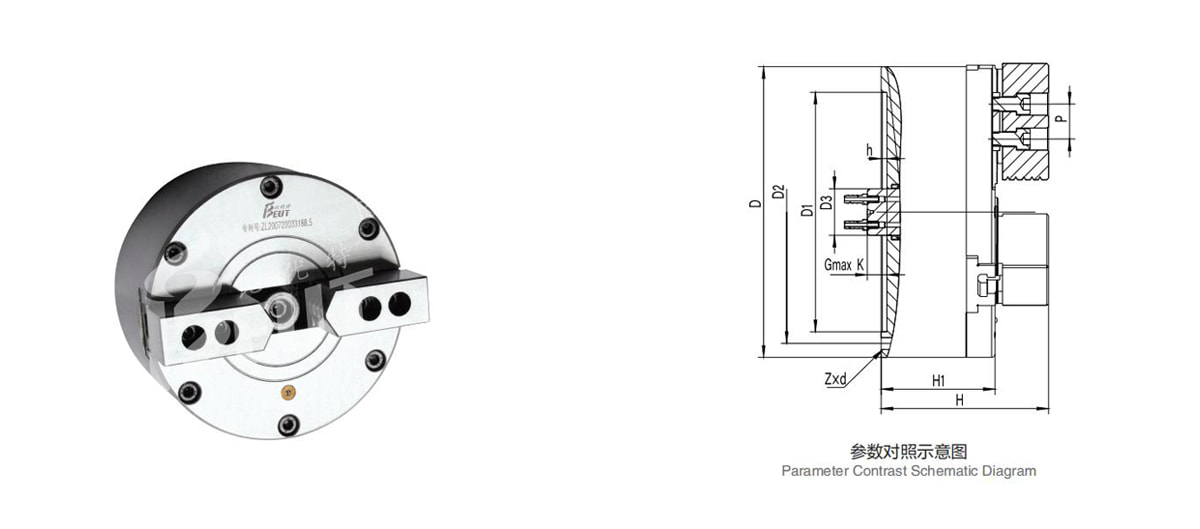
| Model | D | D1 | D2 | D3 | H | H1 | h | Gmax K | p | Z × d | Power Wedge Serration | Matching Jaw Model |
|---|---|---|---|---|---|---|---|---|---|---|---|---|
| BK110SQ-2 | 115 | 72 | 102 | 22 | 106 | 81 | 3 | 17 | 16 | 3-M8 | 1×53° | BK110Z1 |
| BK130SQ-2 | 135 | 95 | 108 | 25 | 123 | 92 | 4.5 | 15.5 | 18 | 3-M8 | 1×53° | BK130Z1 |
| BK160SQ-2 | 172 | 130 | 142 | 25 | 129 | 93 | 4.5 | 17.5 | 20 | 3-M8 | 1×53° | BK160Z1 |
| BK200SQ-2 | 210 | 165 | 180 | 32 | 133 | 97 | 5 | 17 | 25 | 3-M10 | 1×53° | BK200Z1 |
| BK250SQ-2 | 250 | 206 | 226 | 40 | 145 | 99 | 5 | 17 | 30 | 3-M12 | 1×53° | BK250Z1 |
| BK320SQ-2 | 325 | 270 | 290 | 50 | 177 | 116 | 5 | 29 | 32 | 6-M12 | 1.5×60° | BK320Z2-60 |
| BK400SQ-2 | 400 | 340 | 368 | 60 | 212 | 141 | 6 | 33 | 40 | 6-M16 | 1.5×60° | — |
| BK500SQ-2 | 500 | 440 | 465 | 70 | 256 | 183 | 6 | 34 | 60 | 6-M16 | 3×60° | — |
| Model | Jaw Stroke t (Diameter, mm) | Max. Clamping Force (kN) | Max. Expanding Force (kN) | Allowable Pressure (MPa) | Max. Speed (r/min) | Clamping Range (mm) | Expanding Range (mm) | Net Weight (kg) |
|---|---|---|---|---|---|---|---|---|
| BK110SQ-2 | 3.7 | 14 | 7.4 | 0.4–0.8 | 4800 | 2–115 | 15–120 | 6 |
| BK130SQ-2 | 3.2 | 21.2 | 11.5 | 0.4–0.8 | 4800 | 2–130 | 20–140 | 9 |
| BK160SQ-2 | 3.7 | 36.5 | 19.3 | 0.4–0.8 | 4200 | 2–170 | 20–180 | 14 |
| BK200SQ-2 | 4.2 | 53.8 | 30.7 | 0.4–0.8 | 5000 | 5–210 | 20–240 | 22.6 |
| BK250SQ-2 | 4.8 | 73.2 | 46.9 | 0.4–0.8 | 2800 | 10–260 | 30–280 | 33.4 |
| BK320SQ-2 | 8.5 | 116.6 | 78.3 | 0.4–0.8 | 2300 | 10–350 | 40–360 | 73 |
| BK400SQ-2 | 11.5 | 158.2 | 102.9 | 0.4–0.8 | 1000 | 15–420 | 50–430 | 128 |
| BK500SQ-2 | 20 | 203.9 | 138.6 | 0.4–0.8 | 1000 | 20–520 | 50–530 | 200 |
Related Pneumatic Chuck Pages
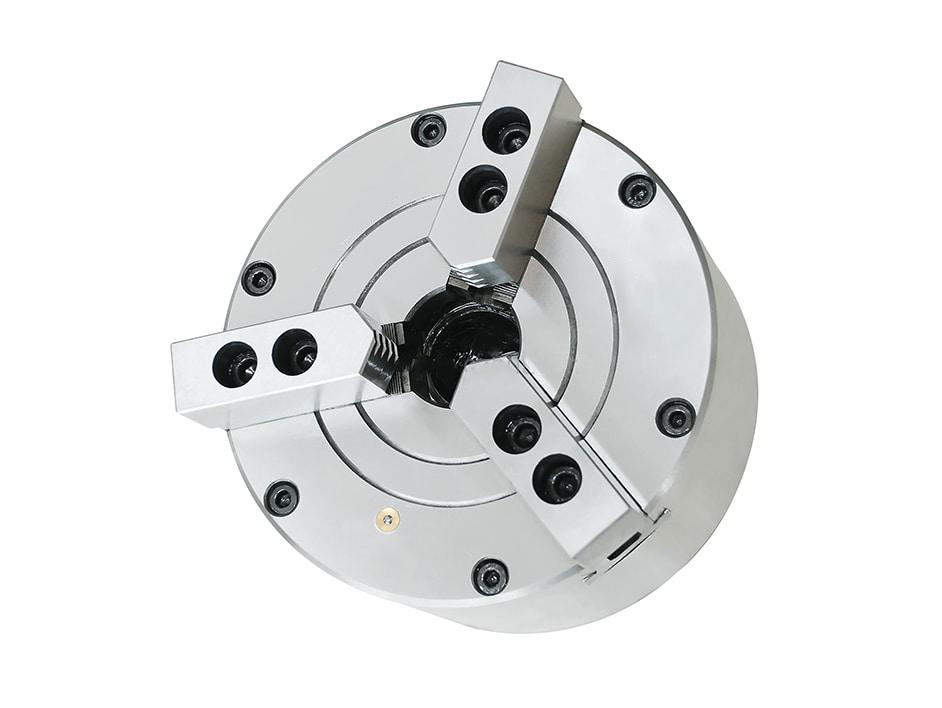
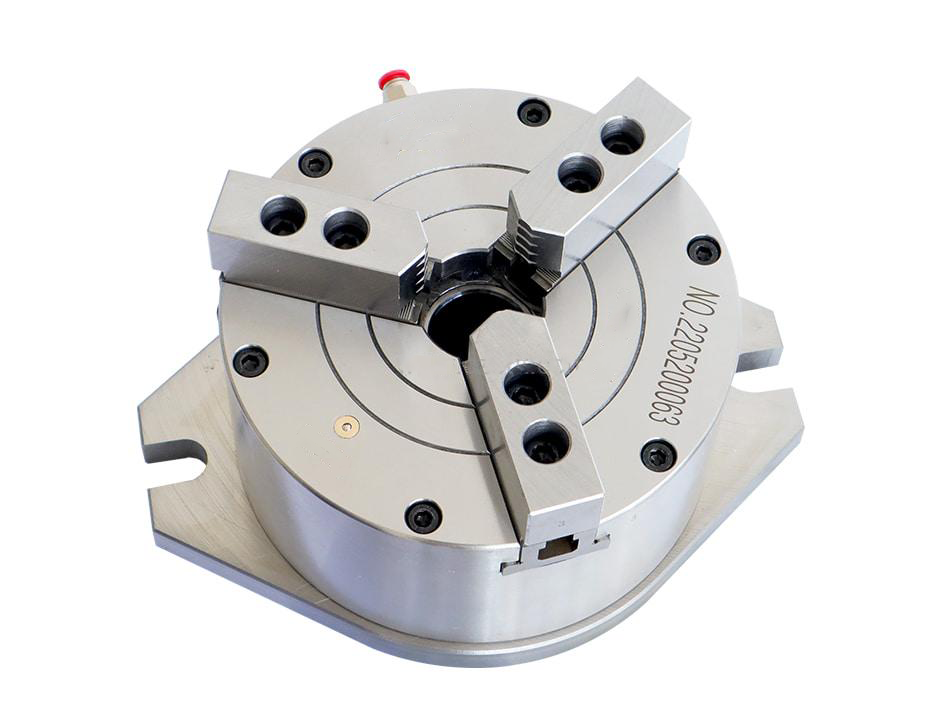
FAQ
What is the BK-SQ 2-jaw solid pneumatic chuck used for?
It is used for shaped, symmetrical or non-round workpieces that need two opposing pneumatic clamping points instead of standard three-jaw clamping.
How is it different from a hydraulic chuck?
A pneumatic chuck uses compressed air for clamping and release, while a hydraulic chuck uses hydraulic pressure. Final selection depends on the required clamping force, workpiece shape and cycle target.
What workpieces are suitable for a 2-jaw solid pneumatic chuck?
It is commonly selected for valve bodies, pump bodies, custom profiles, symmetrical flats and workpieces that are better supported by two opposing jaws.
Can this chuck use custom jaws?
Yes. A 2-jaw pneumatic chuck is often used with soft jaws or custom jaws machined to the workpiece profile.
What air pressure should be confirmed?
Check the available operating air pressure, pressure stability and the clamping force margin needed for the workpiece.
What machine or fixture interface should be checked?
Check the mounting interface, bolt pattern, jaw stroke, installation space and whether the workpiece needs a solid non-through-hole structure.
What should be checked before installation?
Check jaw height, interference, clamping stroke, custom jaw profile and repeatability requirement before installation.
What information is needed for quotation?
Provide the workpiece drawing, clamping surfaces, material, chuck size requirement, operating air pressure, machine layout and whether custom jaws are needed.