Vertical solid pneumatic chuck for compact three-jaw compressed-air fixture clamping.
BK-SL 3-Jaw Vertical Solid Pneumatic Chuck
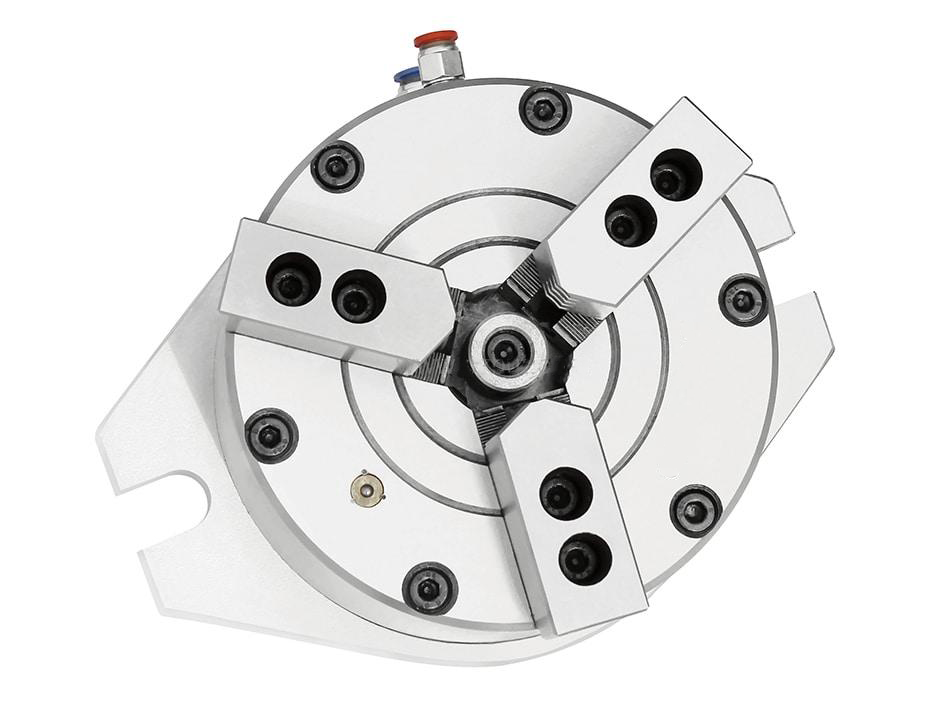
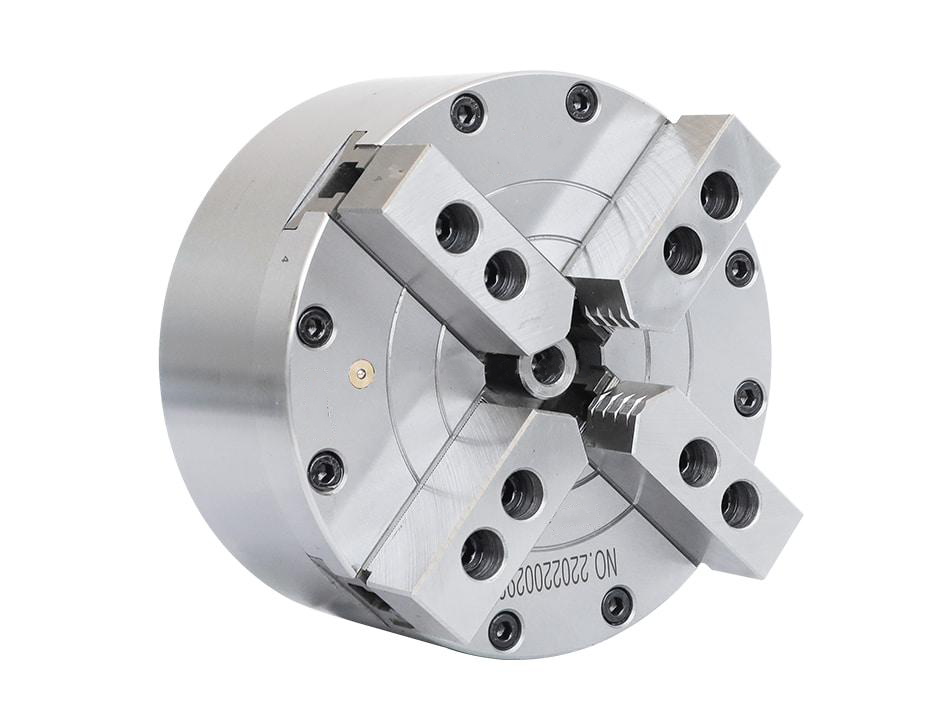
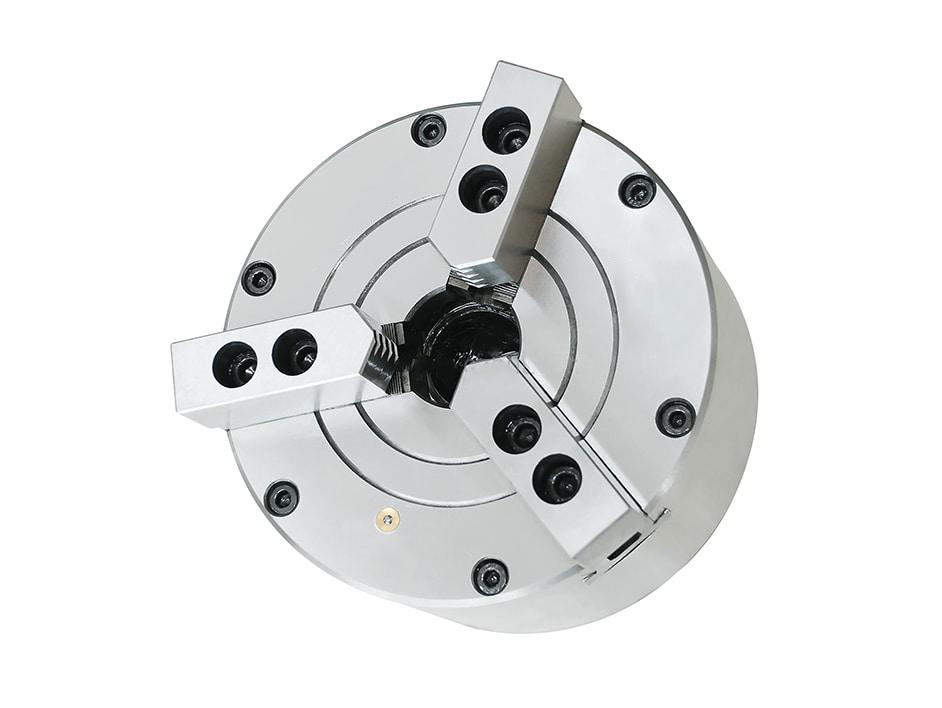
KORRETTO BK-SL 3-jaw vertical solid pneumatic chuck is used for vertical clamping layouts where the workpiece does not require through-hole clearance. It provides three-jaw compressed-air clamping for short round parts, individual blanks and fixture-based clamping setups, while remaining clearly separate from BK-KL vertical through-hole and BK-KQ semi-through-hole pneumatic chuck structures.
Product Overview
The BK-SL 3-jaw vertical solid pneumatic chuck is selected when vertical air-actuated clamping is needed and the workpiece does not pass through the chuck. The solid structure is suitable for short parts, stationary pneumatic chuck layouts and compact fixture clamping.
This page only covers the BK-SL 3-jaw vertical solid pneumatic chuck. It does not include vertical through-hole, semi-through-hole or front-mounted through-hole pneumatic chuck designs.
Key Features
| Feature | Description |
|---|---|
| Vertical solid structure | Used for vertical layouts without through-hole clearance requirements. |
| 3-jaw pneumatic clamping | Suitable for short round or near-round workpieces. |
| Compact air-actuated setup | Uses compressed air for quick clamping and release. |
| Fixture-based use | Suitable for workstations, special machines and vertical clamping fixtures. |
| Separate from through-hole type | Different from BK-KL vertical through-hole pneumatic chuck. |
Typical Applications
- Vertical pneumatic clamping fixtures
- Short round workpieces
- Individual blanks
- Workstation clamping setups
- Applications where through-hole clearance is not required
Technical Data for Vertical Solid Pneumatic Chucks
Use the drawing and parameter tables to check chuck size, installation dimensions, jaw stroke, air pressure, clamping force, maximum speed, weight and vertical mounting conditions.
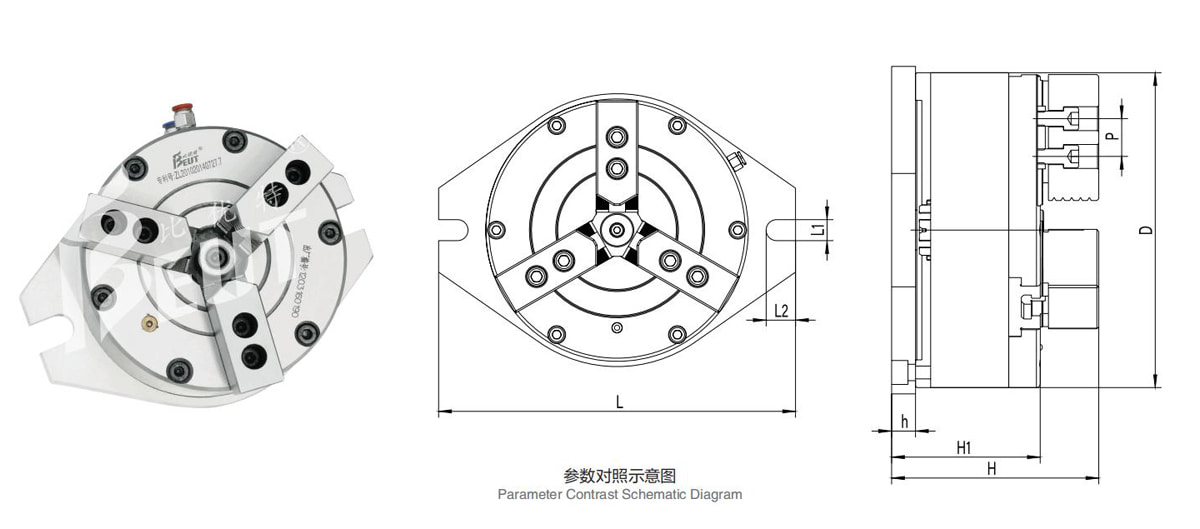
| Model | D | L | L1 | L2 | H | H1 | h | p | Power Wedge Serration | Matching Jaw Model |
|---|---|---|---|---|---|---|---|---|---|---|
| BK110SL | 115 | 165 | 13 | 18.5 | 125 | 100 | 19 | 16 | 1×53° | BK110Z1 |
| BK130SL | 135 | 205 | 18 | 24 | 142 | 111 | 19 | 18 | 1×53° | BK130Z1 |
| BK160SL | 172 | 238 | 20 | 28 | 148 | 112 | 19 | 20 | 1×53° | BK160Z1 |
| BK200SL | 210 | 290 | 20 | 28 | 152 | 116 | 19 | 25 | 1×53° | BK200Z1 |
| BK250SL | 250 | 340 | 20 | 28 | 164 | 118 | 19 | 30 | 1×53° | BK250Z1 |
| BK320SL | 325 | 415 | 20 | 28 | 202 | 141 | 25 | 32 | 1.5×60° | BK320Z2-60 |
| BK400SL | 400 | 500 | 20 | 28 | 242 | 171 | 30 | 40 | 1.5×60° | — |
| Model | Jaw Stroke t (Diameter, mm) | Max. Clamping Force (kN) | Max. Expanding Force (kN) | Allowable Pressure (MPa) | Clamping Range (mm) | Expanding Range (mm) | Net Weight (kg) |
|---|---|---|---|---|---|---|---|
| BK110SL | 3.7 | 14 | 7.4 | 0.4–0.8 | 2–115 | 15–120 | 8.2 |
| BK130SL | 3.2 | 21.2 | 11.5 | 0.4–0.8 | 2–130 | 20–140 | 12 |
| BK160SL | 3.7 | 36.5 | 19.3 | 0.4–0.8 | 2–170 | 20–180 | 17.6 |
| BK200SL | 4.2 | 53.8 | 30.7 | 0.4–0.8 | 5–210 | 20–240 | 27.6 |
| BK250SL | 4.8 | 73.2 | 46.9 | 0.4–0.8 | 10–260 | 30–280 | 40 |
| BK320SL | 8.5 | 116.6 | 78.3 | 0.4–0.8 | 10–350 | 40–360 | 81 |
| BK400SL | 11.5 | 158.2 | 102.9 | 0.4–0.8 | 15–420 | 50–430 | 160 |
Related Pneumatic Chuck Pages
FAQ
What is the BK-SL vertical solid pneumatic chuck used for?
It is used for vertical pneumatic clamping or stationary fixture layouts where the workpiece does not require through-hole clearance.
How is it different from a hydraulic chuck?
A pneumatic chuck uses compressed air for clamping and release, while a hydraulic chuck uses hydraulic pressure. Final selection depends on the required clamping force, cycle target and available air supply.
How should solid and through-hole structures be selected?
Choose a solid pneumatic chuck when the workpiece does not need center passage. Choose a through-hole or semi-through-hole chuck when internal clearance through the chuck body is required.
What air pressure should be confirmed?
Check the available operating air pressure, pressure stability and the clamping force margin required for the workpiece.
What machine or fixture interface should be checked?
Check the vertical mounting surface, bolt pattern, air inlet arrangement, jaw stroke and available installation space before confirming the model.
Can it be used for automated loading and unloading?
Yes, it can be used in automated fixtures and workstations if the air circuit, cycle signal and safety controls are properly matched.
What should be checked before installation?
Check the mounting direction, clamping diameter, jaw travel, air connection, interference envelope and fixture accessibility before installation.
What information is needed for quotation?
Provide the workpiece drawing, clamping diameter, part length, vertical layout, operating air pressure, machine interface and target clamping force.