KORRETTO · CLAMPING HEAD SYSTEMS
Through-Hole Clamping Head Chuck
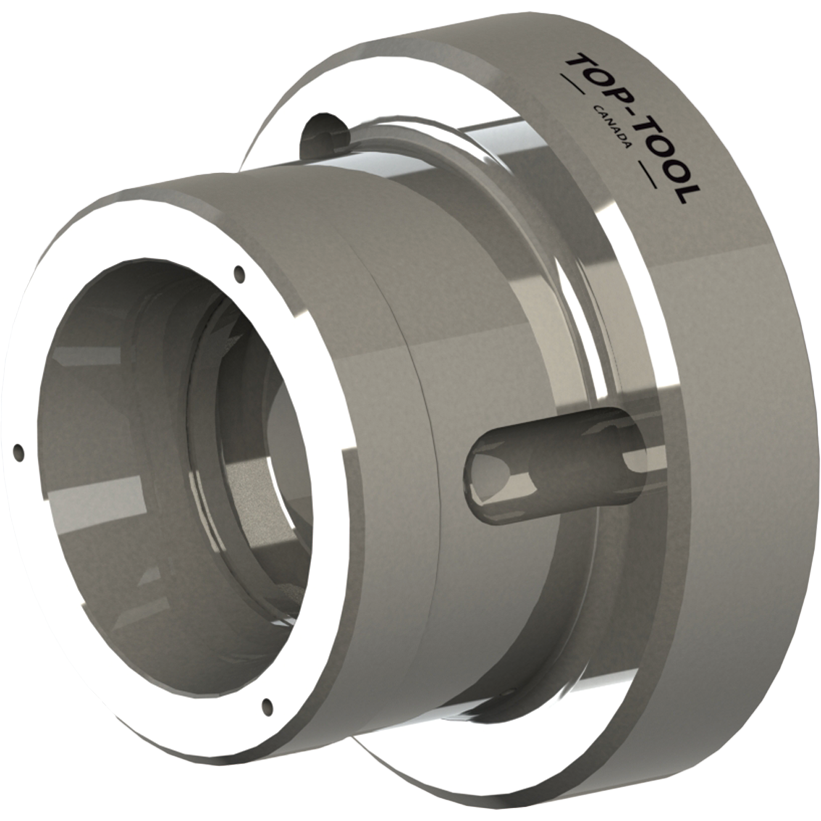
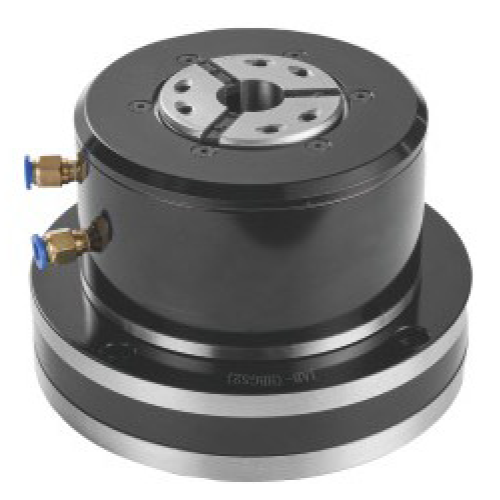
The KORRETTO Through-Hole Clamping Head Chuck is a quick-change collet chuck for CNC lathe workholding. A matching rubber-flex clamping head grips the workpiece outside diameter while the center opening accommodates longer bar stock or a suitable locating arrangement.
How It Works
Drawtube movement operates the clamping head through the chuck body. The segmented head closes around the outside diameter with a pull-back effect. The front mounting threads accept a suitable workpiece stop when axial location is needed.
Selection should confirm the workpiece shape, clamping diameter, workpiece tolerance, collet type, draw force, radial clamping force, maximum speed and machine spindle or fixture layout.
Key Features
Through access
For longer bar stock or workpieces used with a front locating device.
Replaceable gripping head
Change the head to suit another compatible diameter or profile.
Broad contact
Distributed steel-segment contact supports the gripping surface.
Spindle connection
Match the flange, drawtube connection and available stroke to the machine.
Typical Applications
- Round shafts and sleeves
- Square and hex workpieces
- Thin-wall or mark-sensitive parts
- Precision turning and finishing
- Repeated CNC lathe clamping
- Workpieces requiring uniform outside support
Technical Data: Through-Hole Clamping Head Chuck
Use the drawing and parameter tables to check chuck structure, collet stroke, maximum draw force, maximum radial clamping force, maximum clamping diameter, recommended workpiece tolerance and maximum speed.
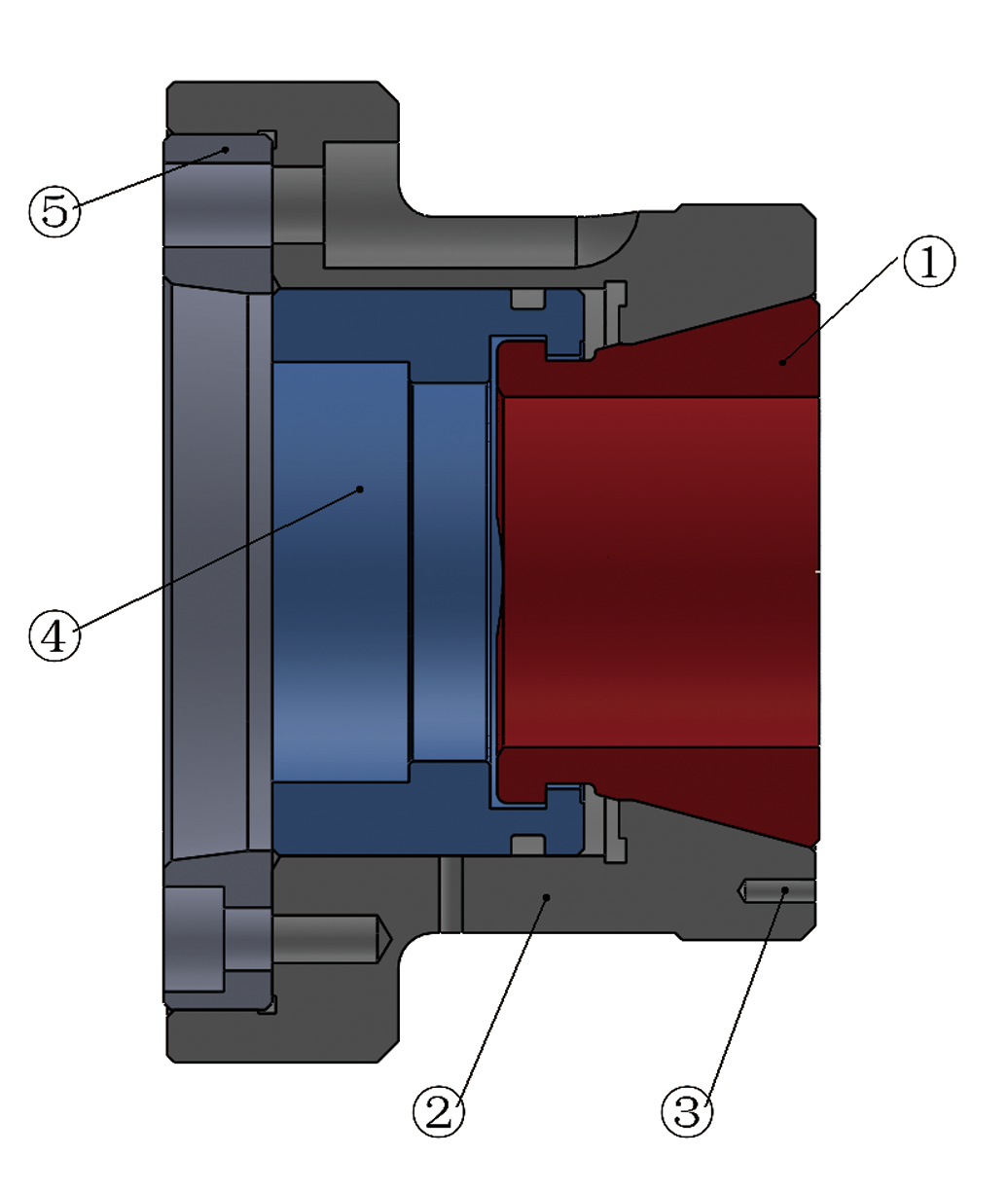
| No. | Component |
|---|---|
| 1 | Vulcanized segmented steel clamping head with pull-back effect |
| 2 | Hardened-steel chuck body |
| 3 | Front stop mounting threads |
| 4 | Drawtube connection mounting threads |
| 5 | Spindle flange |
| Specification | Stroke (mm) | Maximum Draw Force (kN) | Maximum Radial Clamping Force (kN) | Maximum Clamping Diameter (mm) | Recommended Workpiece Tolerance (mm) | Maximum Speed (r/min) |
|---|---|---|---|---|---|---|
| 32 | 2.5+3 | 25 | 70 | 32 | ±0.3 | 8000 |
| 42 | 2+2.5 | 35 | 80 | 42 | ±0.5 | 7000 |
| 52 | 2+2.5 | 40 | 94 | 52 | ±0.5 | 7000 |
| 65 | 2+2.5 | 45 | 105 | 65 | ±0.5 | 6000 |
| 80 | 2+2.5 | 50 | 115 | 80 | ±0.5 | 5500 |
| 100 | 3+5 | 65 | 150 | 100 | ±1.0 | 5000 |
| 125 | 3+6 | 70 | 165 | 125 | ±1.0 | 3200 |
| 160 | 3+3 | 100 | 235 | 160 | ±1.0 | 3200 |
The matching rubber-flex collet series may be referenced according to KORRETTO rubber-flex collet data: collet accuracy ≤ 0.01 mm, chuck body accuracy ≤ 0.005 mm and collet hardness HRC 58–62. These values describe the matching rubber-flex collet series and should be checked together with the selected chuck model, workpiece tolerance and clamping condition.
Clamping Head Workholding Guide
The clamping head and rubber flex collet guide explains segmented steel and vulcanized rubber construction, full-length contact, changeover, runout inspection, comparison with soft jaws and typical CNC turning applications.
What to Provide Before Quotation
- Spindle nose, adapter and drawtube interface
- Workpiece diameter, tolerance and gripping length
- Required speed, pulling force and locating method
Related Clamping Head Systems
FAQ
What is the Through-Hole Clamping Head Chuck used for?
It is suitable for bar-fed workpieces, long outside-diameter clamping, thin-wall rotating parts, appearance-sensitive parts and materials that can be marked easily. Final suitability should still be checked against wall thickness, gripping length, cutting load and trial clamping results.
What is the purpose of the through-hole structure?
The through-hole structure allows bar stock or long workpieces to pass through the chuck. It is often selected for continuous machining or applications that benefit from reduced re-clamping.
Why does the segmented clamping head have both hardness and elasticity?
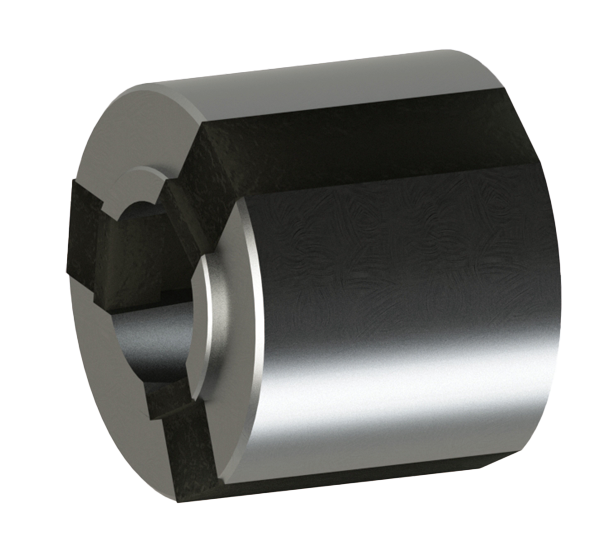
The metal clamping sections keep the required gripping hardness, while the vulcanized rubber layer gives the segmented structure elastic movement. The rubber-filled slots also help reduce chip entry and sticking in the segment gaps.
Can a segmented clamping head reduce thin-wall deformation?
The larger clamping head contact area can help distribute clamping force and reduce local marking or deformation risk, but the final result still depends on wall thickness, material, gripping length and cutting conditions.
How do I choose between the Through-Hole Clamping Head Chuck and a standard hard-jaw chuck?
A clamping head chuck is often preferred when the workpiece is sensitive to jaw marks, thin-wall deformation or short gripping lengths. For heavy interrupted cutting or rough machining, a hard-jaw or hydraulic chuck may still be more suitable.
What are the key parameters of the segmented clamping head series?
KORRETTO segmented clamping head series data may be referenced as collet accuracy ≤ 0.01 mm, chuck body accuracy ≤ 0.005 mm and collet hardness HRC 58–62. Selection should also confirm model, clamping range, through-hole size, interface dimensions and machine installation conditions.