KORRETTO · CLAMPING HEAD SYSTEMS
Vertical Fixed Hydraulic Clamping Head Chuck
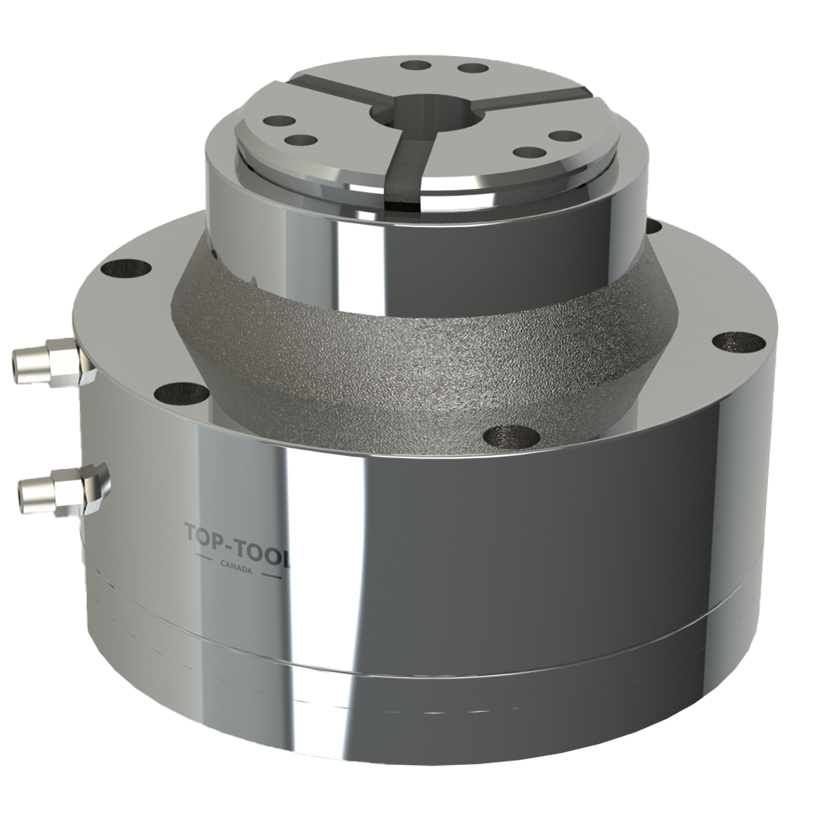
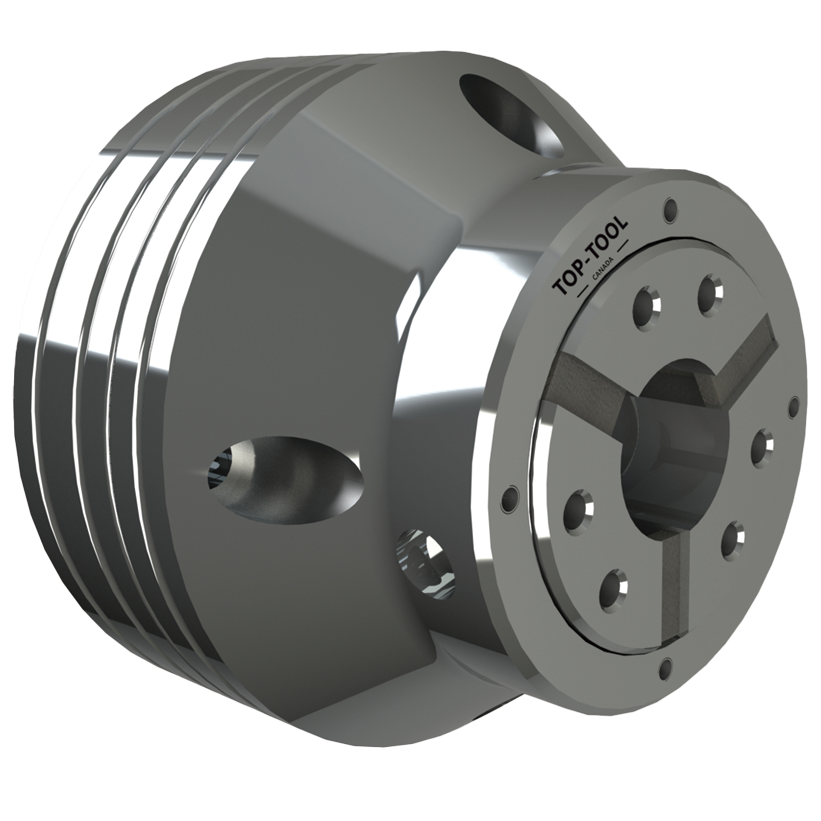
The Vertical Fixed Hydraulic Clamping Head Chuck holds the workpiece at a stationary machining station. A matching rubber-flex clamping head grips the outside diameter for CNC milling, drilling and other vertical processing operations.
How It Works
Hydraulic actuation opens and closes the matched clamping head while the chuck body remains fixed to the fixture or machine table. The steel segments contact the workpiece; vulcanized rubber connects the segments and supports their opening and closing movement.
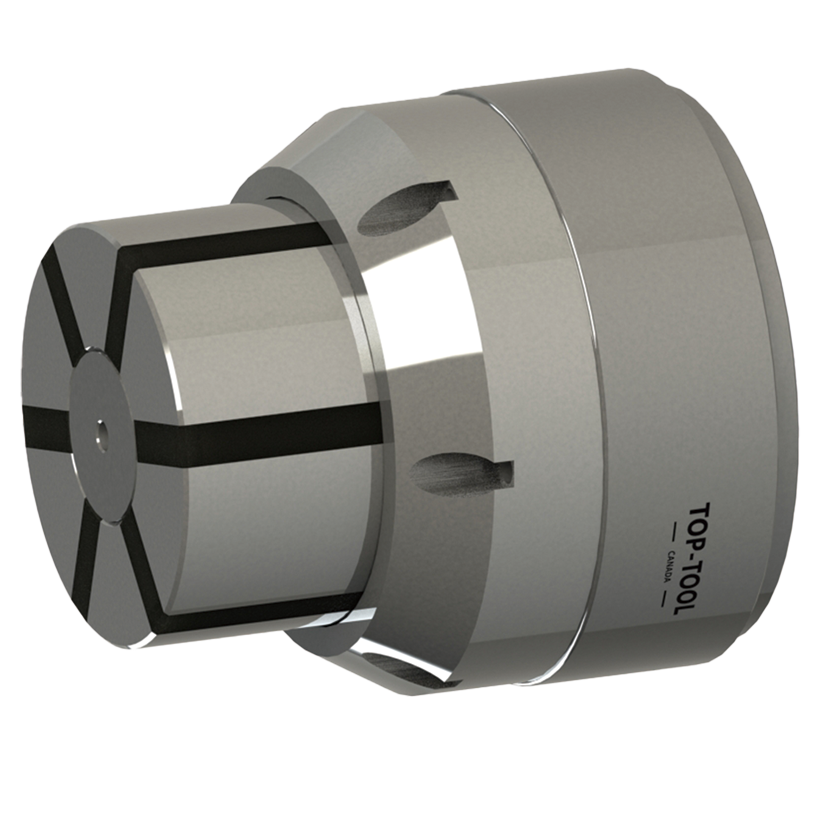
The metal clamping segments directly grip the workpiece. The vulcanized rubber connects the segmented metal structure, seals the slots, helps parallel clamping and supports stable release. The complete unit should be selected according to installation method, hydraulic interface, clamping diameter, workpiece drawing, spindle or fixture conditions and the required workstation layout.
It can be used for batch production, automation loading and unloading, finish machining, rough machining and higher-cycle operation when the model size, hydraulic conditions and machine rigidity are matched correctly.
Key Features
Stationary workholding
For milling, drilling and dedicated fixed workstations.
Hydraulic clamp and release
Integrate with the machine hydraulic circuit and control sequence.
Replaceable clamping head
Match the gripping head to the workpiece diameter and surface.
Mounting dimensions
Use A, B, L1 and the bolt-circle information to plan the fixture.
Typical Applications
- Vertical workstations and fixed clamping stations
- Automation cells and loading or unloading lines
- Special machines and secondary clamping stations
- Finish machining with repeat clamping requirements
- Rough machining when model size, hydraulic pressure and machine rigidity are confirmed
- Higher-cycle batch production layouts
- Projects that need to coordinate hydraulic interface, installation dimensions and machine space
Technical Data: Vertical Fixed Hydraulic Clamping Head Chuck
The matching rubber-flex collets may be referenced according to KORRETTO rubber-flex collet series data: collet accuracy ≤ 0.01 mm, chuck body accuracy ≤ 0.005 mm, and collet hardness HRC 58–62. These values describe the rubber-flex collet series and should not be treated as a single guaranteed accuracy value for every complete Vertical Fixed Hydraulic Clamping Head Chuck assembly.
Use the structure drawing and model table to check the installation dimensions, mounting bolt pattern and clamping range. Hydraulic interface, allowable speed and drive conditions should be confirmed against the full application layout.
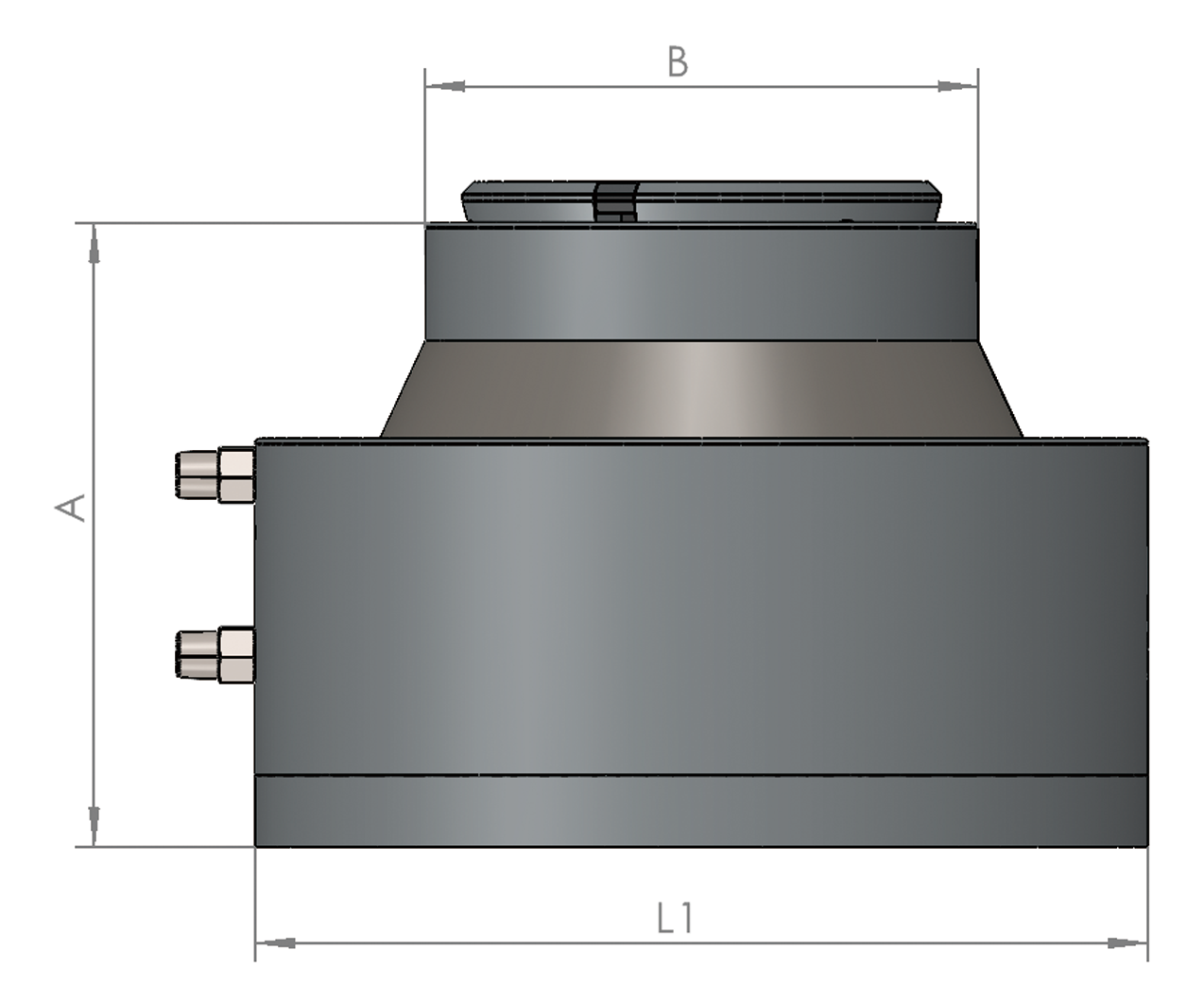
| Model | A (mm) | B (mm) | L1 (mm) | Catalog accuracy (mm) | Mounting bolts | Clamping range (mm) |
|---|---|---|---|---|---|---|
| 52 | 120 | 125 | 154 | 0.01 | PCD Ø157 (M8) | 6–52 |
| 65 | 130 | 130 | 174 | 0.01 | PCD Ø180 (M8) | 6–65 |
| 80 | 130 | 160 | 186 | 0.01 | PCD Ø194 (M8) | 16–80 |
| 100 | 140 | 220 | 229 | 0.01 | PCD Ø240 (M8) | 26–100 |
Selection and Inquiry Information
Please prepare the following information before quotation or technical review:
- Workpiece drawing
- Outside diameter or clamping diameter
- Clamping length
- Material
- Blank condition
- Whether anti-slip serration is required
- Machine brand and model
- Installation method and available space
- Hydraulic interface
- Drawbar or drive conditions
- Target cycle time
- Machining type
- Current clamping method and existing clamping issues
What to Provide Before Quotation
- Mounting layout and hydraulic interface
- Workpiece diameter, height and machining access
- Clamping head specification and cycle requirements
Related Products
FAQ
What is the Vertical Fixed Hydraulic Clamping Head Chuck used for?
It is used for machine tools, special machines and fixtured workstations that require fixed-mounted, vertical or automation-ready hydraulic clamping. Selection should confirm the installation method, hydraulic interface, clamping range, workpiece size and available workstation space.
How is it different from a standard hydraulic chuck?
Standard hydraulic chucks usually refer to rotating power chucks with 2-jaw, 3-jaw or 4-jaw structures. This product is a Vertical Fixed Hydraulic Clamping Head Chuck designed around segmented clamping head clamping and workstation installation.
How is it different from a replaceable segmented clamping head?
A segmented clamping head is the replaceable clamping element. This product is the complete vertical fixed hydraulic chuck unit that works with the matching segmented clamping head, hydraulic actuation and installation interface.
Does the rubber directly contact the workpiece?
No. The metal clamping segments directly grip the workpiece. The vulcanized rubber connects the segmented metal structure, helps parallel clamping, seals the slots and supports stable release.
Can it be used for rough machining or high-cycle production?
It can be used for repeat production when the chuck size, hydraulic conditions and fixture rigidity match the cutting load. For rough machining, check gripping length, workpiece support and tool access. This chuck remains stationary; machining spindle speed is a separate machine parameter.
What information is needed for quotation?
Please provide the workpiece drawing, clamping diameter, clamping length, material, blank condition, machine model, installation method, hydraulic interface, available space, target cycle time, machining type, current clamping method and existing clamping issues.