Two-jaw through-hole hydraulic power chuck for shaped parts, opposing-jaw clamping and custom jaws.
2-Jaw Hollow Hydraulic Power Chuck
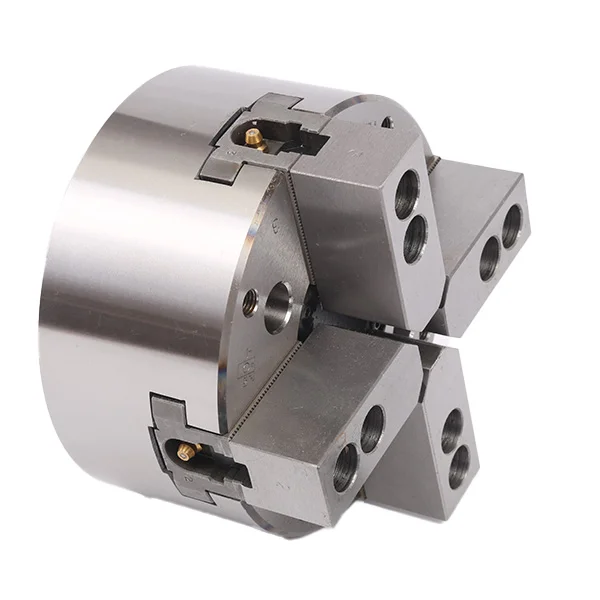
KORRETTO 2-jaw hydraulic power chuck is designed for workpieces that cannot be held correctly by a standard 3-jaw chuck. It is suitable for symmetrical shaped parts, square or rectangular profiles, opposing-jaw clamping, custom soft jaws and applications where two-point clamping is more appropriate. The hollow or through-hole structure supports through-spindle passage when bar or tube clearance is required.
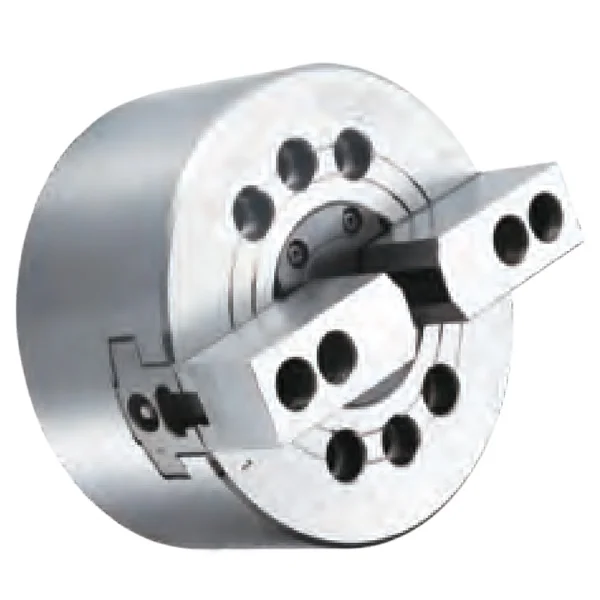
Product Overview
The 2-jaw hydraulic power chuck uses synchronized two-jaw clamping and is often selected together with custom jaws or machined soft jaws. It is useful when the workpiece profile requires two opposing contact areas rather than three-point clamping on a CNC lathe power chuck setup.
This page only covers the 2-jaw hollow hydraulic chuck. No confirmed 2-jaw solid hydraulic chuck data is included in this page.
How a 2-Jaw Power Chuck Holds Shaped Parts
- Opposed jaw movement: A rotary hydraulic cylinder moves the drawtube, and the chuck mechanism moves two opposing jaws together. The jaw profile defines how the workpiece is located.
- Locate against a defined surface: Match formed soft jaws to the gripping faces and provide suitable axial positioning. Two contact directions alone do not locate every irregular part.
- Leave space for the operation: Check the open jaw position, workpiece loading path, tool clearance and clamped rotation before selecting the chuck diameter.
Key Features
| Feature | Description |
|---|---|
| 2-jaw synchronized clamping | Suitable for symmetrical shaped parts and custom jaw designs. |
| Hollow structure | Allows through-spindle clearance when the workpiece or material requires it. |
| Custom jaw compatibility | Can be used with formed soft jaws or special jaws based on the workpiece shape. |
| CNC lathe hydraulic actuation | Works with compatible rotary hydraulic cylinder and drawbar setup. |
| Alternative to 3-jaw clamping | Used when a standard 3-jaw hydraulic chuck cannot contact the part correctly. |
Typical Applications
- Symmetrical shaped components
- Square or rectangular parts
- Special profiles requiring custom jaws
- Workpieces needing two-point clamping
- CNC lathe jobs requiring through-hole clearance
Technical Data and Dimensions
Use the drawing and parameter table to check chuck size, through-hole diameter, jaw stroke, mounting dimensions, clamping force, speed and compatible machine conditions.
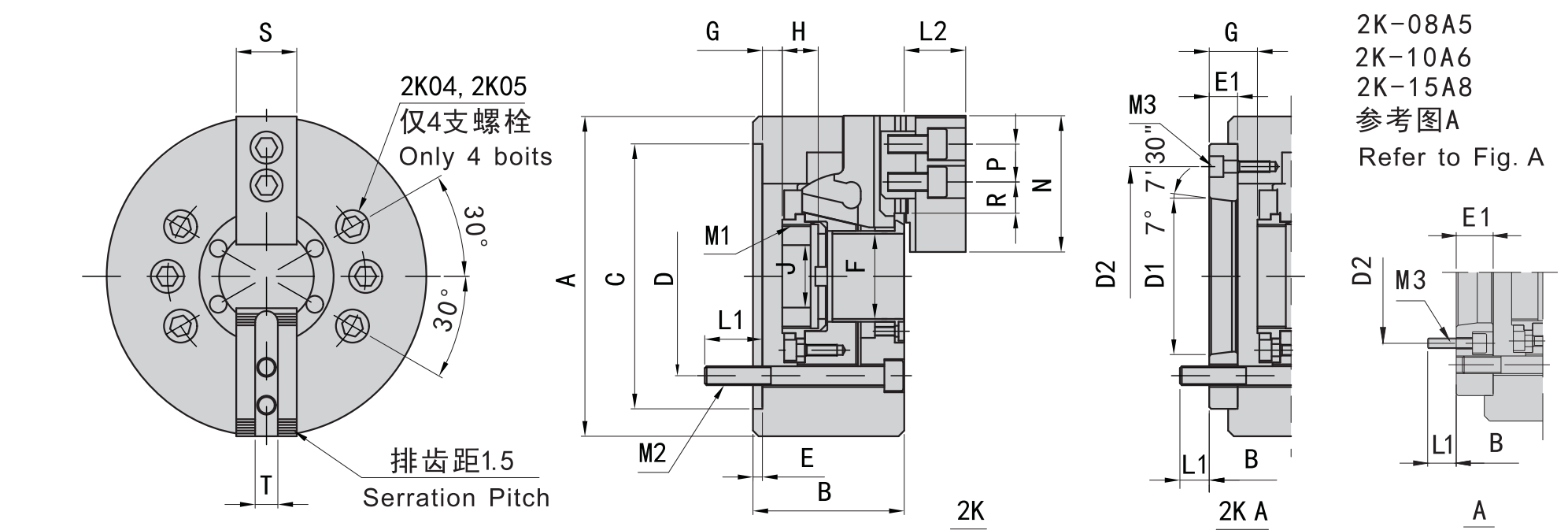
Use this drawing to confirm main dimensions, jaw stroke and through-hole details.
| Model | Spindle Nose | A | B | C (H6) | D | D1 | D2 | E | E1 | F | G max | G min | H | J |
|---|---|---|---|---|---|---|---|---|---|---|---|---|---|---|
| 2K-04 | — | 110 | 59 | 85 | 70.6 | — | — | 4 | — | 26 | 3.5 | -6.5 | 17.5 | 12 |
| 2K-05 | A4 | 135 | 60 / 71 | 110 | 82.6 | 63.51 | 96 | 4 | 15 | 33 | 1 / 16 | -9 / 6 | 20 | 12 |
| 2K-06 | A5 | 169 | 81 / 91 | 140 | 104.8 | 82.56 | 116 | 5 | 15 | 45 | 11 / 26 | -1 / 14 | 19 | 20 |
| 2K-08 | A5 | 210 | 91 / 109 | 170 | 133.4 | 82.56 | 104.8 | 5 | 23 | 52 | 14.5 / 37.5 | -1.5 / 21.5 | 20.5 | 30 |
| 2K-08 | A6 | 210 | 91 / 103 | 170 | 133.4 | 106.38 | 150 | 5 | 17 | 52 | 14.5 / 31.5 | -1.5 / 15.5 | 20.5 | 30 |
| 2K-10 | A6 | 254 | 100 / 120 | 220 | 171.4 | 106.38 | 133.4 | 5 | 25 | 75 | 8.5 / 33.5 | -10.5 / 14.5 | 25 | 45 |
| 2K-10 | A8 | 254 | 100 / 113 | 220 | 171.4 | 139.72 | 190 | 5 | 18 | 75 | 8.5 / 26.5 | -10.5 / 7.5 | 25 | 45 |
| 2K-12 | A8 | 304 | 110 / 122 | 220 | 171.4 | 139.72 | 190 | 6 | 18 | 91 | 8 / 26 | -15 / 3 | 28 | 50 |
| 2K-15 | A8 | 381 | 133 / 160 | 300 | 235 | 139.72 | 171.4 | 6 | 33 | 120 | 11 / 44 | -12 / 21 | 39 | 60 |
| 2K-15 | A11 | 381 | 133 / 149 | 300 | 235 | 196.87 | 260 | 6 | 22 | 120 | 11 / 33 | -12 / 10 | 39 | 60 |
| Model | Spindle Nose | L1 | L2 | M1 | M2 | M3 | N | P | R max | R min | S | T |
|---|---|---|---|---|---|---|---|---|---|---|---|---|
| 2K-04 | — | 16 | 24 | M32*1.5 | 4-M10 | — | 52 | 14 | 11.3 | 6.8 | 25 | 10 |
| 2K-05 | A4 | 15 / 15 | 31 | M40*1.5 | 4-M10 | 4-M6 | 62 | 14 | 19.8 | 7.8 | 25 | 10 |
| 2K-06 | A5 | 16 / 16 | 37 | M55*2 | 6-M10 | 4-M6 | 73 | 20 | 22.8 | 9.3 | 31 | 12 |
| 2K-08 | A5 | 20 / 17 | 38 | M60*2 | 6-M12 | 6-M10 | 95 | 25 | 29.8 | 14.8 | 35 | 14 |
| 2K-08 | A6 | 20 / 18 | 38 | M60*2 | 6-M12 | 4-M6 | 95 | 25 | 29.8 | 14.8 | 35 | 14 |
| 2K-10 | A6 | 22 / 18 | 43 | M85*2 | 6-M16 | 6-M12 | 110 | 30 | 33.8 | 14.3 | 40 | 16 |
| 2K-10 | A8 | 22 / 24 | 43 | M85*2 | 6-M16 | 4-M8 | 110 | 30 | 33.8 | 14.3 | 40 | 16 |
| 2K-12 | A8 | 23 / 25 | 51 | M100*2 | 6-M16 | 4-M8 | 130 | 30 | 45.8 | 15.8 | 50 | 21 |
| 2K-15 | A8 | 30 / 24 | 63 | M130*2 | 6-M20 | 6-M16 | 165 | 43 | 47.3 | 18.2 | 62 | 25.5 or 22 |
| 2K-15 | A11 | 30 / 28 | 63 | M130*2 | 6-M20 | 4-M10 | 165 | 43 | 47.3 | 18.2 | 62 | 25.5 or 22 |
Paired dimensions and weights list 2K / 2KA; the A-series spindle interface applies to the corresponding 2KA version. Jaw stroke is measured on diameter. T = 25.5 or 22 mm identifies alternative jaw locating widths; confirm the required width when ordering.
| Model | Spindle Nose | Plunger Stroke (mm) | Jaw Stroke on Diameter (mm) | Max. Pull kN (kgf) | Max. Gripping Force kN (kgf) | Max. Speed (r/min) | Clamping Range (mm) | Moment of Inertia (kg·m²) | Weight (kg) | Matching Cylinder | Max. Pressure MPa (kgf/cm²) |
|---|---|---|---|---|---|---|---|---|---|---|---|
| 2K-04 | — | 10 | 5.4 | 9.2 (940) | 18.9 (1930) | 8000 | 7-110 | 0.01 | 3.8 | KY-428T | 1.9 (19) |
| 2K-05 | A4 | 10 | 5.4 | 11.7 (1190) | 23.9 (2440) | 7000 | 12-135 | 0.02 | 6.5 / 7.3 | KY-536T | 1.8 (18) |
| 2K-06 | A5 | 12 | 5.5 | 14.4 (1470) | 37.9 (3870) | 6000 | 15-168 | 0.06 | 11.5 / 13.3 | KY-646T | 1.7 (17) |
| 2K-08 | A5 | 16 | 7.4 | 23.1 (2360) | 57.2 (5840) | 5000 | 13-210 | 0.17 | 21.3 / 24.2 | TK-852T | 1.9 (19) |
| 2K-08 | A6 | 16 | 7.4 | 23.1 (2360) | 57.2 (5840) | 5000 | 13-210 | 0.17 | 21.3 / 22.4 | TK-852T | 1.9 (19) |
| 2K-10 | A6 | 19 | 8.8 | 28.4 (2900) | 73.9 (7540) | 4200 | 31-254 | 0.31 | 33.5 / 40.5 | KY-1075T | 1.8 (18) |
| 2K-10 | A8 | 19 | 8.8 | 28.4 (2900) | 73.9 (7540) | 4200 | 31-254 | 0.31 | 33.5 / 39 | KY-1075T | 1.8 (18) |
| 2K-12 | A8 | 23 | 10.6 | 36.7 (3740) | 95.8 (9780) | 3300 | 34-304 | 0.70 | 59.7 / 62.7 | KY-1291T | 1.8 (18) |
| 2K-15 | A8 | 23 | 10.6 | 46.9 (4790) | 119.6 (12200) | 2500 | 50-381 | 2.42 | 115 / 129 | KY-1512T | 1.7 (17) |
| 2K-15 | A11 | 23 | 10.6 | 46.9 (4790) | 119.6 (12200) | 2500 | 50-381 | 2.34 | 115 / 122 | KY-1512T | 1.7 (17) |
Related Power Chuck Pages
What to Provide Before Quotation
Opposing gripping faces
Send the drawing and material, identifying the two gripping faces, width tolerance, gripping length and locating datum.
Jaw profile and loading
Include the existing or proposed jaw profile, required opening, loading direction and areas that must remain accessible to the tool.
Machine and actuation
Provide the spindle nose, cylinder model, drawbar thread and stroke, together with the operation, intended speed and required runout.
FAQ
What is a 2-jaw hydraulic power chuck used for?
It is used for shaped parts, symmetrical components, square or rectangular workpieces and CNC lathe jobs where two-point or opposing-jaw clamping is more suitable than standard 3-jaw clamping.
How is a 2-jaw hydraulic power chuck different from a 3-jaw hydraulic chuck?
A 3-jaw hydraulic chuck is usually preferred for round bars, tubes and standard rotational parts. A 2-jaw hydraulic power chuck is often selected for opposing-surface clamping, shaped parts and custom jaw applications.
Can this hydraulic chuck use soft jaws or custom jaws?
Yes. 2-jaw hydraulic chucks are often used with soft jaws, formed jaws or custom jaws machined to match the workpiece profile.
Why should the through-hole structure be confirmed before selection?
The through-hole structure is important when bar stock, tube stock or longer material must pass through the spindle. The chuck through-hole, spindle through-hole and drawbar layout must be checked together.
Does this chuck need a rotary hydraulic cylinder?
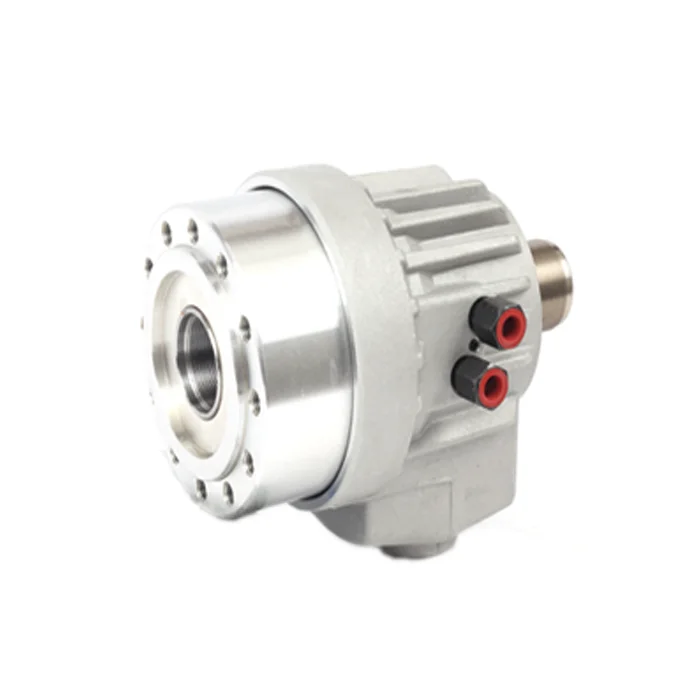
In most CNC lathe applications it is used together with a rotary hydraulic cylinder, drawbar and hydraulic system. The chuck, cylinder and drawbar should be matched as one clamping system.
Can it be used for automated production or bar feeding?
Yes, if the workpiece shape, jaw setup, spindle through-hole and machine loading method are suitable. Hydraulic clamping is commonly used for repeat production and automated cycles.
What should be checked before installation?
Check spindle nose, mounting dimensions, drawbar stroke, cylinder thrust, jaw stroke, through-hole requirement, maximum speed and the workpiece contact area.
What information is needed for quotation?
Provide the workpiece drawing, workpiece shape, clamping diameter, machine model, spindle nose, spindle through-hole, drawbar data, rotary cylinder model and whether custom jaws are required.