2026-06-19 · Workholding Guide
What Is a Drawdown Chuck? Pull-Back Clamping Principle and Applications
A drawdown chuck is a chuck that clamps the workpiece and pulls it back against a locating surface at the same time. The pull-back movement helps seat the workpiece against a datum face, reducing axial float and improving repeatability when the workpiece must stay firmly located during machining.
In CNC workholding, drawdown chuck, draw down chuck, pull-down chuck and pull-back chuck are often used by buyers to describe this same clamping idea. In this article, drawdown chuck refers to a chuck structure that uses clamping force together with axial pull-back seating.
How a Drawdown Chuck Works
A standard chuck mainly clamps the workpiece radially. A drawdown chuck adds an axial seating action. When the chuck clamps, the jaw or expanding element moves in a designed direction that also pulls the workpiece toward a fixed locating face.
This is useful when the workpiece must be positioned against a shoulder, end face, stop, fixture surface or reference datum before machining. Instead of only gripping the part, the chuck helps keep the part seated in a repeatable axial position.
The basic working sequence is:
- The workpiece is loaded against the locating face or stop.
- The hydraulic or mechanical actuation system moves the clamping mechanism.
- The jaws or expanding elements grip the workpiece.
- At the same time, the designed wedge or jaw movement pulls the workpiece toward the locating surface.
- The workpiece is clamped and seated for machining.
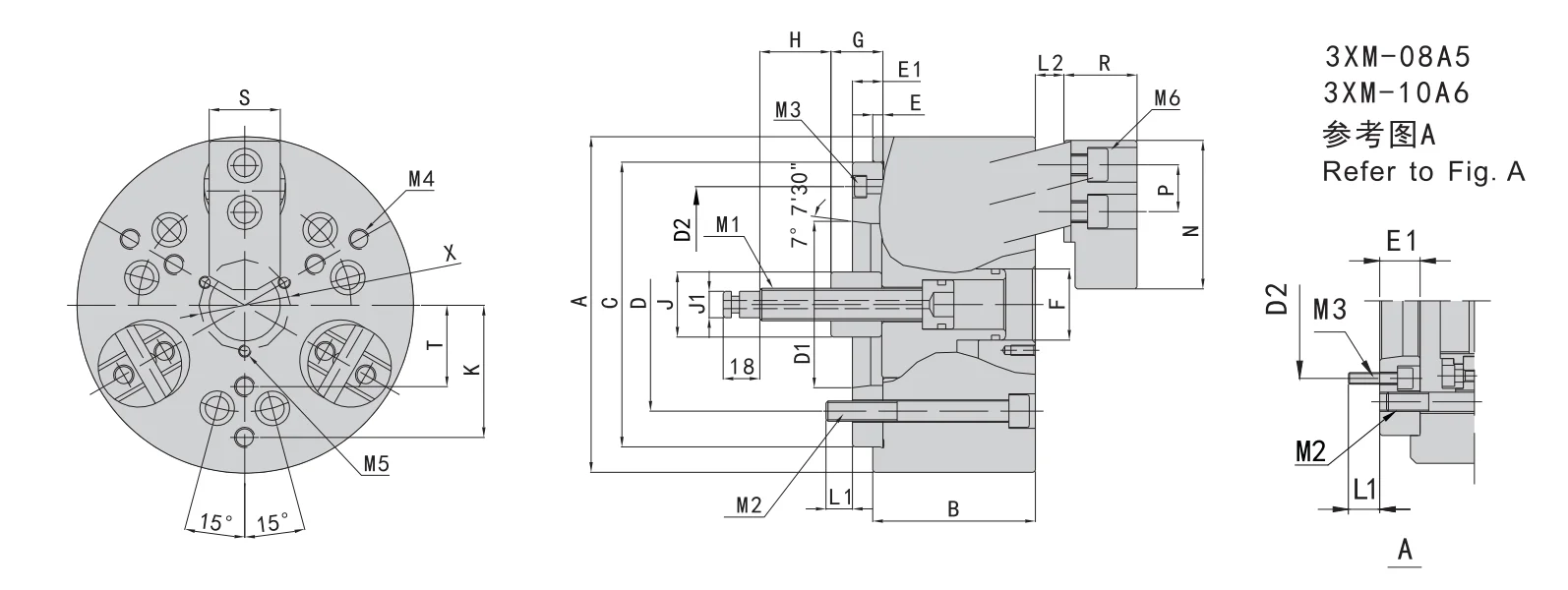
External Clamping and Internal Expanding Drawdown Chuck Structures
Drawdown chuck structures can be divided into two main types according to how the workpiece is held: external clamping and internal expanding clamping.
An external clamping drawdown chuck grips the outside diameter of the workpiece. During clamping, the jaw structure pulls the workpiece back toward the locating face. This type is suitable when the outside diameter can be used as the clamping surface and when the workpiece needs stable axial seating during turning, facing, boring or other machining operations.
An internal expanding drawdown chuck works from the bore or internal diameter of the workpiece. The expanding element grips the inside surface and pulls the workpiece against an end face or locating surface. This type is useful when the outside surface must remain open for machining, or when the internal bore is the preferred locating feature.
These two structures are not the same. The base-jaw inclination direction is opposite between the external clamping type and the internal expanding type. For this reason, the chuck cannot be selected only by name. The first selection question should be: does the workpiece need to be clamped on the outside diameter, or expanded from the inside diameter?
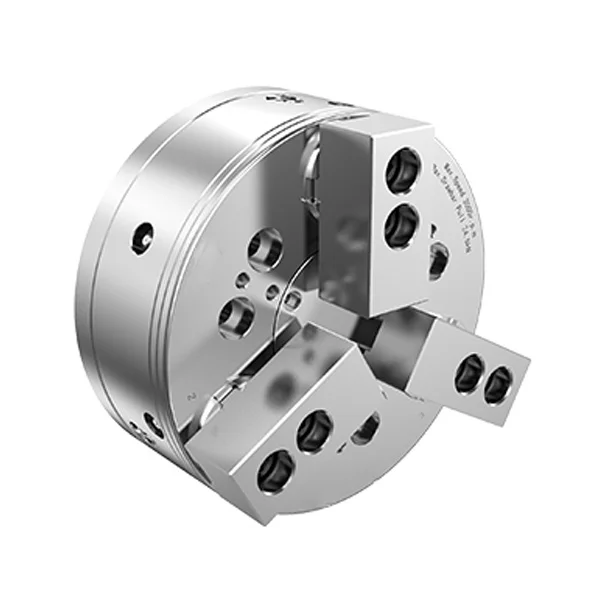
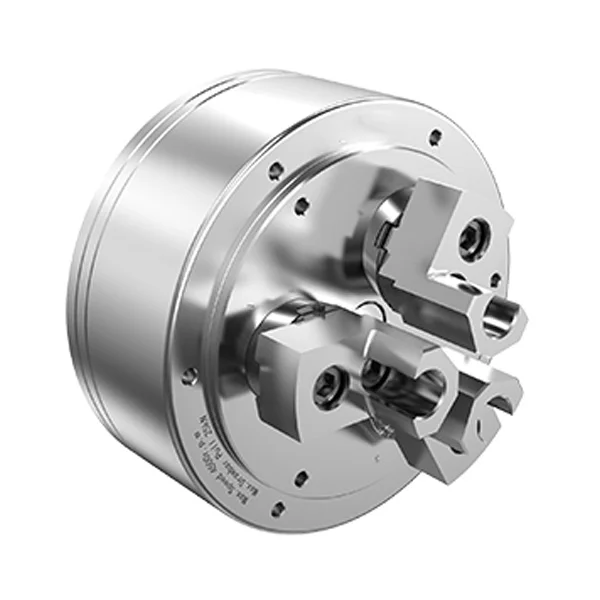
Why Pull-Back Seating Matters
Pull-back seating is important when axial position affects machining accuracy. If the workpiece is only clamped radially, a small gap may remain between the part and the locating face. Cutting force, loading variation or part tolerance may then change the final axial position.
A drawdown chuck reduces this problem by combining clamping and seating. The workpiece is held radially and pulled toward the datum face during the same clamping movement. This helps improve process stability, especially for parts that need repeatable face location, bore depth control, shoulder location or multi-step machining.
Drawdown Chuck vs Standard Hydraulic Chuck
| Feature | Standard hydraulic chuck | Drawdown chuck |
|---|---|---|
| Main action | Radial clamping | Radial clamping plus axial pull-back seating |
| Axial location | Usually depends on loading and stops | Helps pull the workpiece against a locating face |
| Typical use | General turning and clamping | Parts that need stable axial seating |
| Structure | Conventional jaw movement | Jaw or expanding structure designed for pull-back action |
| Selection focus | Diameter, stroke, clamping force | Clamping method, seating direction, datum face and workpiece geometry |
Suitable Applications
A drawdown chuck is suitable when the workpiece must be clamped and seated against a reference surface. Common applications include:
- parts with strict axial positioning requirements
- workpieces that must sit against an end face or stop
- flange-type parts
- ring-shaped parts
- sleeve-type parts
- parts where bore depth, face position or shoulder position must remain repeatable
- workpieces requiring more stable seating than a standard chuck can provide
External clamping drawdown chucks are usually selected when the outside diameter is available for gripping. Internal expanding drawdown chucks are considered when the bore is used for location or when the outside surface must remain clear for machining.
Less Suitable Applications
A drawdown chuck is not always the best choice. It may be unnecessary for simple parts where normal radial clamping is enough. It may also be unsuitable when the workpiece has no reliable locating face, when the clamping surface is too short, or when the part cannot tolerate axial pull-back force.
For thin-wall or easily deformed parts, the chuck structure, contact area, clamping force and locating surface must be reviewed carefully. In some cases, a special hydraulic chuck, diaphragm chuck, collet chuck or expanding mandrel may be more suitable.
Key Parameters to Review
| Parameter | Why it matters |
|---|---|
| Clamping method | Determines whether the part is held on the outside diameter or expanded from the inside diameter. |
| Locating face | Confirms where the workpiece is pulled and seated. |
| Pull-back direction | Must match the required seating direction and chuck structure. |
| Clamping force | Must be enough for machining but not excessive for the workpiece. |
| Clamping stroke | Must match loading clearance and workpiece tolerance. |
| Workpiece diameter | Determines chuck size and jaw or expanding element design. |
| Workpiece length and weight | Affects support, spindle load and machining stability. |
| Machining operation | Cutting force and direction affect chuck selection. |
| Machine interface | Spindle nose, drawbar, hydraulic cylinder and mounting dimensions must be checked. |
What Information Is Needed for Selection?
For a drawdown chuck review, provide the following information:
- workpiece drawing
- material
- outside diameter and inside diameter
- clamping surface
- required locating face
- machining operation
- required accuracy
- machine model
- spindle nose or mounting interface
- hydraulic cylinder or drawbar information if available
- whether the part should be clamped outside or expanded inside
With this information, KORRETTO can review whether an external clamping drawdown chuck, internal expanding drawdown chuck or another workholding solution is more suitable.
Related KORRETTO Pages
FAQ
What is a drawdown chuck?
A drawdown chuck is a chuck that clamps the workpiece while pulling it back against a locating surface. This helps improve axial seating and repeatability.
Is a drawdown chuck the same as a pull-back chuck?
In many customer searches, the two names refer to the same pull-back seating idea. The actual structure still needs to be checked according to the workpiece and clamping method.
What is the difference between external clamping and internal expanding drawdown structures?
External clamping grips the outside diameter and pulls the workpiece back. Internal expanding clamping grips inside a bore and pulls the workpiece against a locating face. The base-jaw inclination direction is opposite between the two structures.
When should I use a drawdown chuck?
Use a drawdown chuck when the workpiece needs stable axial seating against a locating face, stop or datum surface during machining.
Can a drawdown chuck be used for thin-wall parts?
It can be considered, but the workpiece structure, contact area, clamping force and deformation risk must be reviewed carefully.
What information is needed to select a drawdown chuck?
Provide the workpiece drawing, clamping surface, locating face, machining operation, required accuracy, machine model and whether the part should be clamped outside or expanded inside.