CNC lathe soft jaws and hard jaws for profile matching and repeat workholding.
Lathe Soft Jaws & Hard Jaws
KORRETTO lathe soft jaws and hard jaws are CNC chuck jaws used with compatible hydraulic chucks, manual chucks and other lathe chuck systems to match different workpiece shapes and cutting conditions. Soft jaws can be machined to the workpiece profile for repeat CNC turning and improved contact. Hard jaws are used for general gripping, durability and heavier clamping conditions.
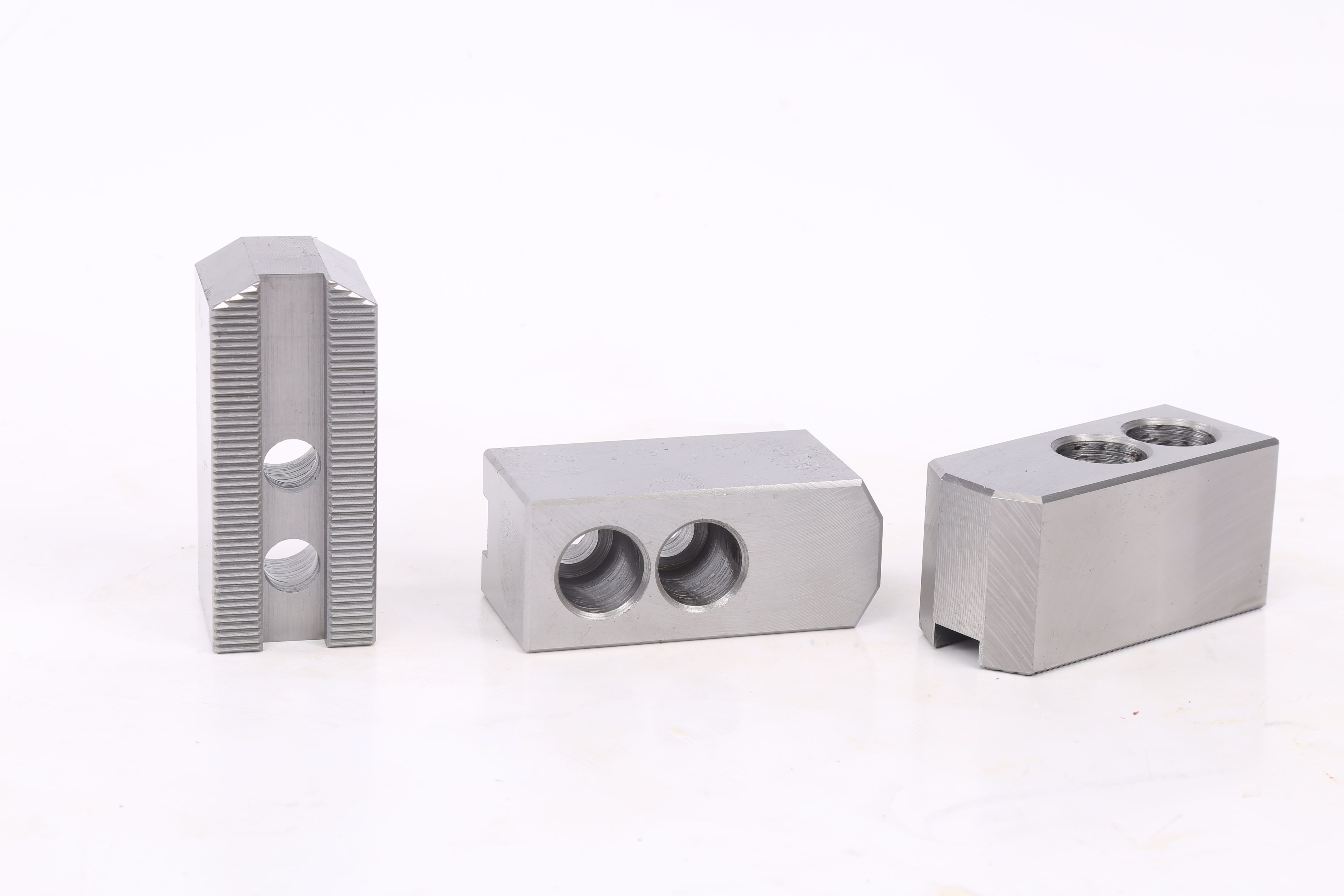
Product Overview
Soft jaws and hard jaws are supporting components for lathe chuck systems, including hydraulic chucks, manual chucks and other compatible CNC lathe workholding setups. They should be selected by chuck model, jaw interface, serration, mounting hole pattern, workpiece shape, gripping diameter, clamping surface and machining load.
How to Match Soft Jaws and Hard Jaws
- Match the mounting interface: Check serration pitch and angle, locating width, bolt spacing and thread. A nominal chuck size alone does not identify an interchangeable jaw.
- Choose the gripping surface: Soft jaws are machined to suit the workpiece; hardened jaws provide a reusable gripping profile. Use the contact area and surface condition to choose between them.
- Check the completed setup: After installation and any soft-jaw machining, verify seating, gripping length, remaining jaw section and clearance. Assess the permitted speed with the actual jaw height and mass.
Product Types
| Type | Description | Typical use |
|---|---|---|
| Lathe Soft Jaws | Machinable soft jaws used to match the workpiece profile. | Repeat CNC turning, profile-matched clamping, improved contact area and reduced marking risk. |
| Lathe Hard Jaws | Hardened jaws for general or heavier gripping. | General clamping, heavier cutting, rougher work and durable hard jaw use on compatible lathe chucks. |
Soft Jaw and Hard Jaw Technical Data
Lathe Soft Jaws
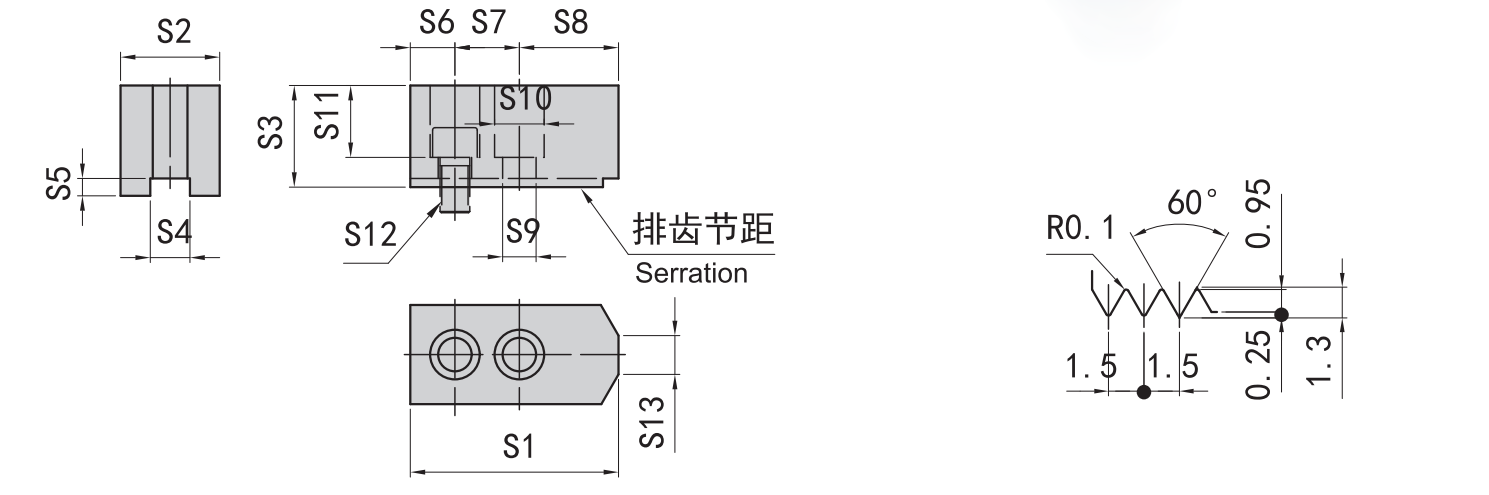
Use this drawing to check soft jaw dimensions, serration, mounting hole pattern and compatible chuck interfaces.
| Model | S-1 | S-2 | S-3 | S-4 | S-5 | S-6 | S-7 | S-8 | S-9 | S-10 | S-11 | S-12 | S-13 | Compatible Chuck | Weight (kg) |
|---|---|---|---|---|---|---|---|---|---|---|---|---|---|---|---|
| SJ-04 | 52 | 23 | 23 | 10 | 4 | 10 | 14 | 28 | 9 | 14 | 13 | M8 | 3 | 3K-04 / 3S-04 | 0.5 |
| SJ-05 | 62 | 25 | 30 | 10 | 5 | 10 | 14 | 38 | 9 | 14 | 16 | M8 | 3.5 | 3K-05 / 3S-05 | 0.7 |
| SJ-06 | 73 | 31 | 36 | 12 | 5 | 15 | 20 | 38 | 11 | 17 | 20 | M10 | 14 | 3K-06 / 3S-06 | 1.5 |
| SJ-08 | 95 | 35 | 37 | 14 | 5 | 24 | 25 | 46 | 13 | 19 | 22 | M12 | 16 | 3K-08 / 3S-08 | 2.5 |
| SJ-10 | 110 | 40 | 42 | 16 | 5 | 30 | 30 | 50 | 13 | 19 | 27 | M12 | 18 | 3K-10 / 3S-10 | 3.7 |
| SJ-12 | 130 | 50 | 50 | 21 | 5 | 49 | 30 | 61 | 18 | 26 | 30 | M16 | 18 | 3K-12 | 6.2 |
| SJ-12-1 | 130 | 50 | 50 | 18 | 5 | 49 | 30 | 61 | 16 | 23 | 30 | M14 | 18 | 3S-12 | 6.3 |
| SJ-15 | 165 | 62 | 62 | 25.5 | 5 | 37 | 43 | 85 | 21 | 32 | 38 | M20 | 18 | 3K-15 | 12.6 |
| SJ-15-1 | 165 | 62 | 62 | 22 | 8 | 37 | 43 | 85 | 21 | 32 | 38 | M20 | 18 | 3S-15 | 12.7 |
Lathe Hard Jaws
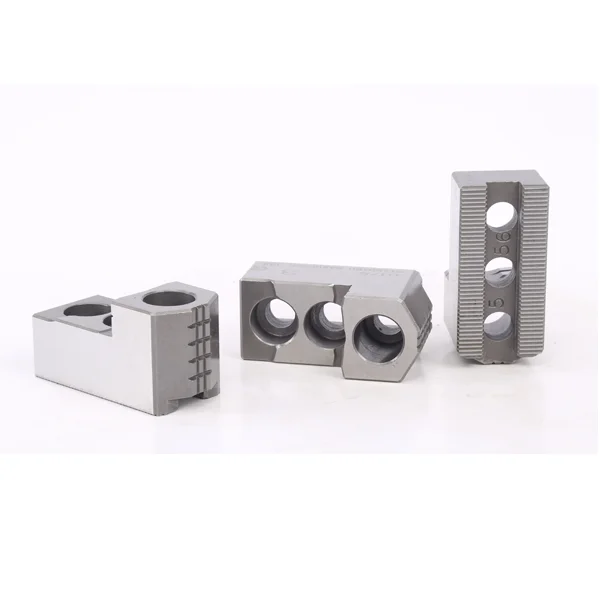
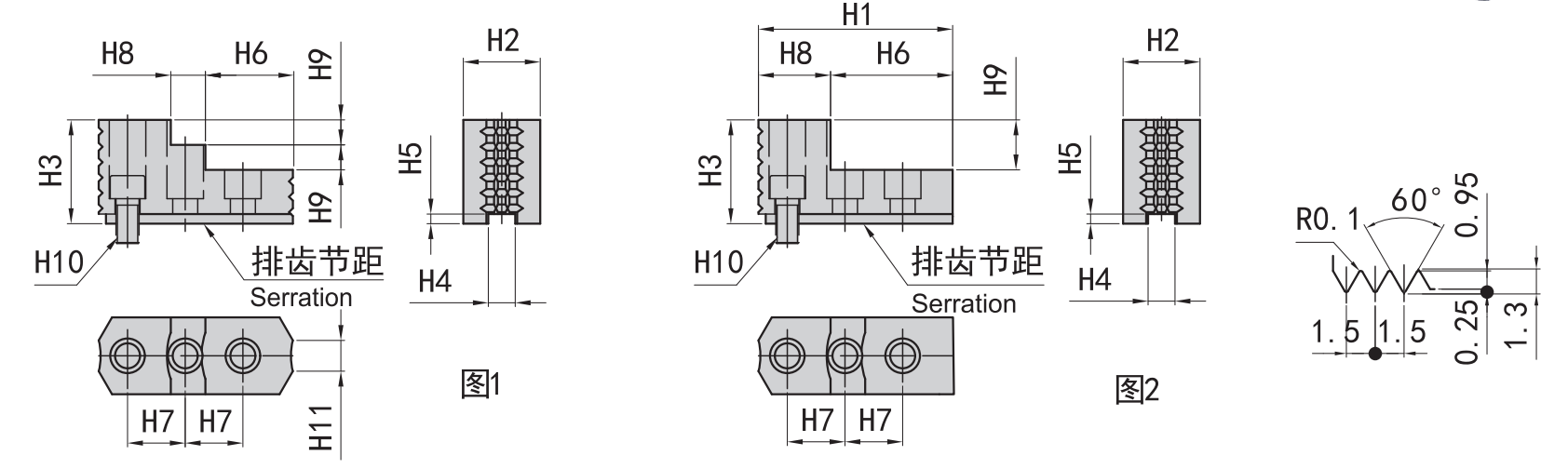
Use this drawing to check hard jaw dimensions, serration, mounting hole pattern and compatible chuck interfaces.
| Model | H-1 | H-2 | H-3 | H-4 | H-5 | H-6 | H-7 | H-8 | H-9 | H-10 | H-11 | Compatible Chuck | Weight (kg) | Reference Figure |
|---|---|---|---|---|---|---|---|---|---|---|---|---|---|---|
| HJ-05 | 53 | 23 | 28 | 10 | 4 | 30.5 | 14 | 22.5 | 10 | M8 | 6 | 3K-04 / 3K-05 / 3S-05 | 0.4 | 2 |
| HJ-06 | 67 | 31 | 35 | 12 | 5 | 40 | 20 | 26.6 | 12 | M10 | 10 | 3K-06 / 3S-06 | 1.0 | 2 |
| HJ-08 | 88 | 35 | 51 | 14 | 5 | 31 | 25 | 18 | 12 | M12 | 12 | 3K-08 / 3S-08 | 1.95 | 1 |
| HJ-10 | 101 | 40 | 54 | 16 | 5 | 43 | 30 | 17 | 13 | M12 | 13 | 3K-10 / 3S-10 | 1.95 | 1 |
| HJ-12 | 103 | 50 | 52 | 21 | 5 | 62.5 | 30 | 40.5 | 17 | M16 | 30 | 3K-12 | 2.65 | 2 |
| HJ-12-1 | 103 | 50 | 52 | 18 | 5 | 62.5 | 30 | 40.5 | 17 | M14 | 30 | 3S-12 | 2.7 | 2 |
| HJ-15 | 149 | 62 | 86 | 25.5 | 8 | 63 | 43 | 34 | 20 | M20 | 43 | 3K-15 | 9.4 | 1 |
| HJ-15-1 | 149 | 62 | 86 | 22 | 8 | 63 | 43 | 34 | 20 | M20 | 43 | 3S-15 | 9.5 | 1 |
Soft Jaw and Hard Jaw Selection Notes
- Confirm the chuck model, jaw interface and serration before selecting soft jaws or hard jaws.
- Use soft jaws when the jaw profile needs to be machined to match the workpiece for repeat CNC turning.
- Use hard jaws for general gripping or heavier workholding conditions.
- Check jaw height, serration, mounting hole pattern, gripping diameter and clamping range.
- Do not select chuck jaws only by chuck diameter; jaw interface and chuck model must match.
Related Power Chuck and Workholding Pages
What to Provide Before Quotation
Existing chuck
Send the chuck manufacturer, complete model and photographs of the master jaw and current top jaws.
Mounting dimensions
Provide serration pitch, locating width, bolt spacing, thread and required jaw length and height.
Workpiece and quantity
Include the workpiece drawing, gripping direction, machining operation, required gripping profile and quantity.
FAQ
What are lathe soft jaws used for?
Lathe soft jaws are machined to match the workpiece profile, helping improve contact area and repeat clamping consistency in CNC turning or other compatible lathe chuck workholding.
What are hard jaws used for?
Hard jaws are used for general gripping, rougher work and applications where jaw durability and repeat use are more important than machining the jaw profile.
Can soft jaws and hard jaws be used on the same chuck?
They can be used on compatible chuck systems, but the jaw interface, serration, mounting hole pattern and chuck model must match.
Do soft jaws reduce workpiece marking?
They can help reduce marking when machined correctly to match the workpiece, but the result depends on material, contact area, clamping force and cutting load.
What information should I provide for jaw selection?
Provide the chuck model, chuck size, jaw interface, serration, mounting hole pattern, workpiece drawing, gripping diameter, material, required clamping surface and machining load.
What is a soft jaw boring ring used for?
A soft jaw boring ring preloads the jaws while their gripping faces are machined, helping reproduce the loaded condition used to hold the workpiece.
Select the ring or preload fixture for the gripping direction, jaw design and available stroke. Follow the chuck manual and verify contact and machining accuracy by trial clamping and test cutting.