Power Chuck Selection Guide
Power Chuck Jaw Stroke and Clamping Range: What to Check Before Selection
Jaw stroke on a power chuck is the movement available at the chuck jaws during opening and closing. Clamping range is the workpiece diameter range that can be held with a specific chuck, master jaw position and top jaw set. They are related, but they are not the same thing.
Before selecting or replacing a CNC lathe power chuck, check the chuck model, master jaw travel, top jaw position, workpiece diameter, loading clearance, drawbar or draw tube stroke, rotary cylinder stroke and the required jaw type. A chuck may have the correct number of jaws but still fail to fit the part if the usable jaw opening, top jaw profile or loading clearance is not enough.
What Jaw Stroke Means on a Power Chuck
In a power chuck, jaw stroke describes how far the jaws can move between the open and closed positions. In many catalog tables, this may appear as jaw stroke, jaw stroke on diameter, plunger stroke, wedge stroke or a related stroke field.
The important point is that jaw stroke is not only a number on the chuck body. The usable movement depends on the full clamping system, including the chuck mechanism, master jaws, top jaws, drawbar or draw tube, and the hydraulic or pneumatic actuator behind the spindle.
For selection work, jaw stroke should be checked together with the actual workpiece diameter and the jaw position that will be used in production.
Jaw Stroke vs Clamping Range
Jaw stroke and clamping range are often confused. Jaw stroke is the movement available. Clamping range is the diameter range that can actually be held in a stable and safe way.
A larger jaw stroke does not automatically mean that every diameter inside that stroke can be machined. The top jaw shape, serration position, jaw height, contact area, workpiece surface and available loading clearance all affect the practical range.
| Term | What it means | Why it matters |
|---|---|---|
| Jaw stroke | Jaw movement during opening and closing | Determines how much jaw movement is available |
| Master jaw travel | Movement of the chuck's base jaw or master jaw | Must match the chuck mechanism and actuator stroke |
| Top jaw position | Where the soft jaw or hard jaw is mounted on the master jaw | Changes the usable gripping diameter and clearance |
| Clamping range | Practical workpiece diameter range for a specific jaw setup | Determines whether the part can be loaded, clamped and machined |
| Loading clearance | Extra opening needed to place or remove the workpiece | Important for manual loading, robot loading and bar or tube handling |
Master Jaw Travel vs Top Jaw Position
Master jaw travel is the movement provided by the chuck mechanism. Top jaw position is the actual position of the replaceable jaw mounted on the master jaw. These two points must be considered together.
Moving a top jaw outward may allow a larger workpiece diameter, but it may reduce overlap, affect rigidity or create interference with the chuck body, tool path or machine guard. Moving a top jaw inward may help smaller parts, but it can reduce loading space or change the contact position.
For repeat production, the jaw setup should be checked with the real workpiece drawing, not only with the nominal chuck size.
Why Top Jaws Affect Usable Diameter Range
Soft jaws and hard jaws change the practical clamping range of a power chuck.
Hard jaws are often used for general holding when the part shape and surface allow it. Soft jaws can be bored or machined to match a specific workpiece diameter, which improves contact area and repeatability. However, soft jaws do not remove the mechanical limits of the chuck, master jaw travel or actuator stroke.
If the soft jaw is bored too deep, mounted in the wrong position or used with a diameter outside the practical range, the part may still be difficult to load, clamp or machine consistently.
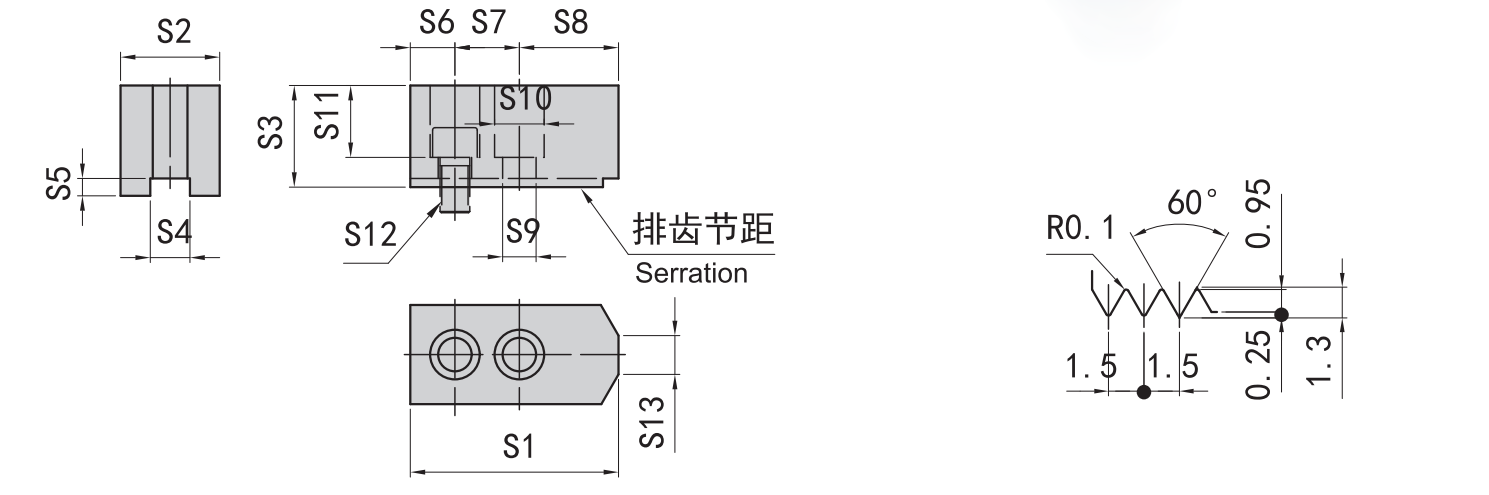
Loading Clearance Before Clamping
Loading clearance is the space needed to place the workpiece into the jaws before the chuck closes.
This is especially important when parts are loaded by robot, gantry loader, bar feeder, tube feeding system or operator with limited access. The chuck may be able to clamp the final diameter, but the jaws may not open far enough to let the part pass into position.
When reviewing a chuck, check the largest part diameter during loading, not only the final clamping diameter.
Why the Correct Jaw Count May Still Not Fit the Workpiece
Jaw count and jaw stroke solve different problems.
A 3-jaw power chuck may be suitable for many round parts, a 2-jaw chuck may suit opposing flat surfaces or custom jaws, and a 4-jaw chuck may be used for four-sided or special support conditions. But jaw count alone does not confirm that the part can be loaded and clamped.
A chuck with the correct number of jaws may still be unsuitable if the jaw stroke is too short, the top jaw position is wrong, the contact area is too small, the workpiece diameter varies too much, or the actuator stroke does not match the chuck requirement.
Drawbar Stroke and Actuator Stroke as System Background
A hydraulic power chuck normally works as part of a system. The rotary cylinder moves the drawbar or draw tube. That movement is transferred through the chuck mechanism and becomes jaw movement at the front of the spindle.
Because of this, chuck jaw stroke should not be checked in isolation. The rotary cylinder stroke, drawbar length, drawbar thread, chuck model and machine spindle interface must be compatible.
This article does not provide machine-specific adjustment instructions. Those details should be checked against the machine builder, chuck catalog and KORRETTO engineering review.
What to Check Before Ordering or Retrofitting
Before ordering or retrofitting a power chuck, prepare the following information:
- Workpiece drawing
- Minimum and maximum clamping diameter
- Loading diameter and loading method
- Required jaw count
- Soft jaw or hard jaw requirement
- Top jaw height, width and mounting interface
- Chuck model and chuck size
- Spindle nose and mounting interface
- Through-hole or solid-center requirement
- Drawbar or draw tube data
- Rotary cylinder model and stroke
- Required clamping stability and machining operation
- Tool path, machine guard and loading interference risk
Common Mistakes to Avoid
Common mistakes include checking only the chuck diameter, using jaw count as the only selection factor, confusing jaw stroke with clamping range, ignoring loading clearance, assuming soft jaws can solve every diameter problem, and checking the chuck without the rotary cylinder or drawbar data.
For replacement projects, the existing chuck, cylinder, drawbar and machine interface should be checked as a system. For new projects, the workpiece drawing and loading method should be reviewed before confirming the chuck model.
Related Power Chuck Resources
For the broader category, start with the power chuck overview. For the hydraulic actuation chain, see the hydraulic power chuck and drawbar system. For center structure selection, compare through-hole and solid power chuck selection.
For jaw count and jaw material decisions, review the 2-jaw, 3-jaw and 4-jaw power chuck comparison and soft jaws and hard jaws.
Related Resources
FAQ
What is jaw stroke on a power chuck?
Jaw stroke is the movement available at the chuck jaws during opening and closing. It is related to the chuck mechanism, master jaws and actuator system. It should be checked together with workpiece diameter, jaw setup and loading clearance.
Is jaw stroke the same as clamping range?
No. Jaw stroke is the available jaw movement. Clamping range is the practical workpiece diameter range that can be held with a specific chuck, master jaw position and top jaw set. The two values should be reviewed together.
Why can a chuck have the right number of jaws but still not fit the part?
Jaw count only describes the contact layout. A chuck may still be unsuitable if the jaw stroke is too short, the top jaw position is wrong, the part cannot be loaded, or the drawbar and actuator stroke do not match the chuck.
How do soft jaws affect clamping range?
Soft jaws can be machined to match a workpiece profile and improve contact area. They can help with repeatability, but they cannot exceed the mechanical limits of the chuck, master jaw travel or actuator stroke.
Why is loading clearance important?
The workpiece must pass into the jaws before clamping. In manual loading, robot loading or bar and tube handling, the jaw opening must provide enough clearance for the part to enter safely before the chuck closes.
What information is needed before selecting a power chuck?
Prepare the workpiece drawing, clamping diameter range, loading method, jaw type, machine model, spindle nose, drawbar or draw tube data, rotary cylinder information and any interference limits around the chuck.